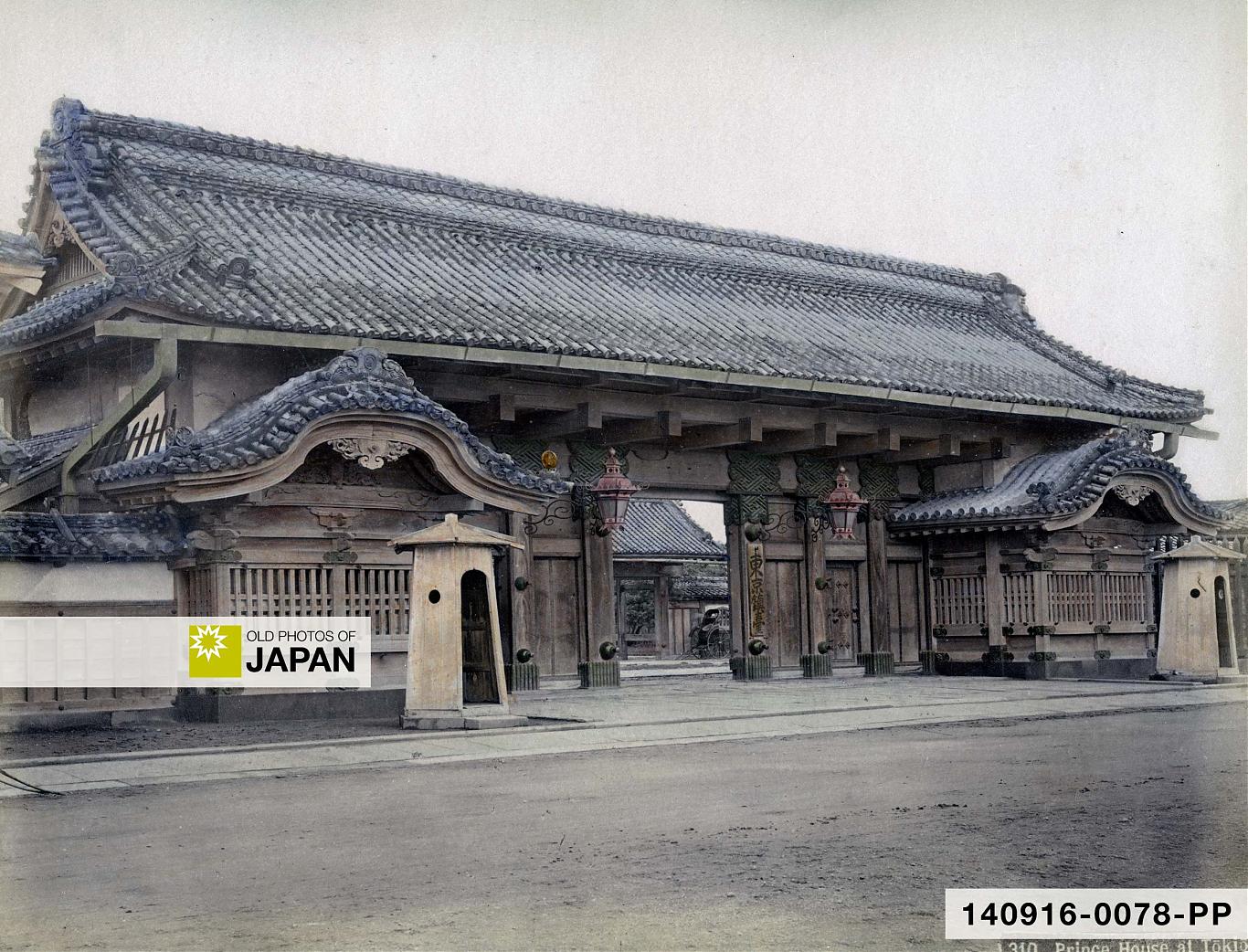
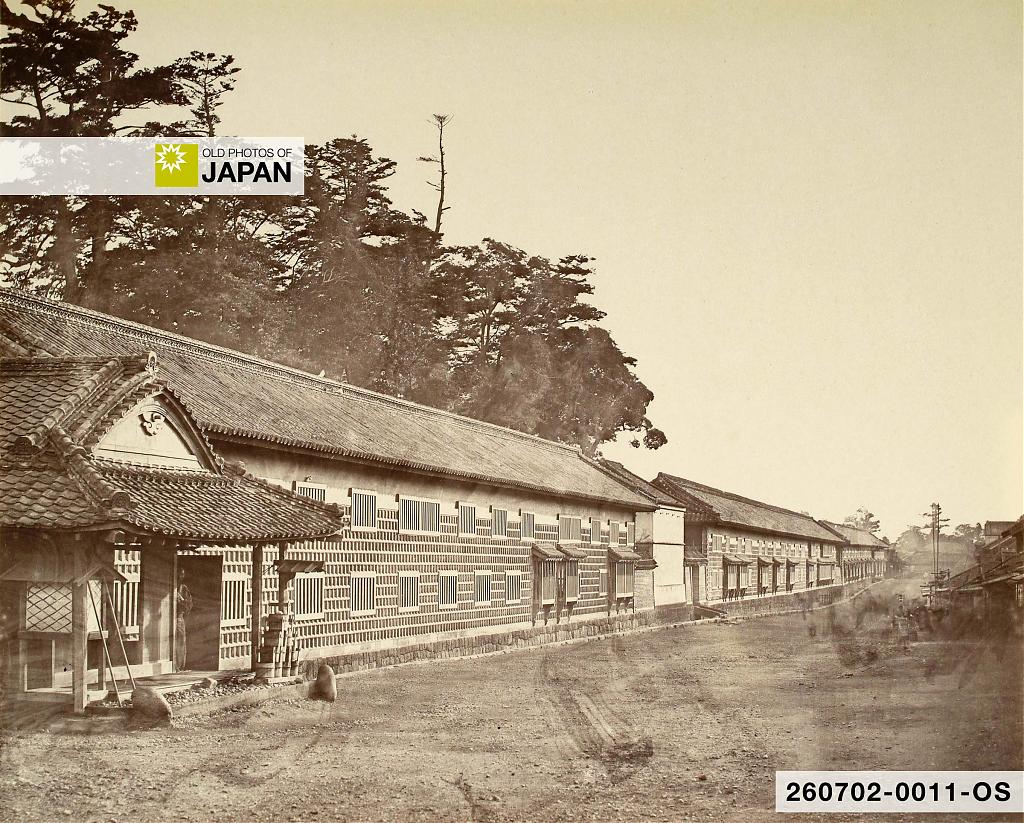
The former main gate of a feudal lord’s residence in Edo. In the early 1600s, feudal lords began sending hostages to Edo to show their loyalty to Tokugawa Ieyasu. The hundreds of estates they built pushed Edo’s boundaries all the way to Ueno.
How Ueno Tells the Story of Japan
This is Part 4 of an essay about the history of Tokyo’s Ueno district.
This rescue project is funded by readers like you
Old Photos of Japan provides thoroughly researched essays and rare images of daily life in old Japan free of charge and advertising. Most images have been acquired, scanned, and conserved to protect them for future generations.
I rely on readers like you to keep this online museum going.
Ueno’s Hidden Roots
The article Ueno Before the Quake briefly introduced the area in front of Tokyo’s Ueno Park just before the 1923 Great Kantō Earthquake turned it to ashes. It was a vibrant maze of geisha houses, rendezvous teahouses, and top-class restaurants, many with a breathtaking view of the lotus-filled Shinobazu Pond.
In A Castle in a Marsh, we jumped back in time to the 1500s. We saw how Tokugawa Ieyasu (1543–1616) established absolute control over Japan and built the massive Edo Castle in a marshy, low-lying wetland encircled by a vast, finger-like plateau system.
Edo: Japan’s New Center of Power described how the matriarch of one of Japan’s most influential clans was taken hostage by Ieyasu just before the pivotal Battle of Sekigahara. Following his victory, leading daimyō (feudal lords) began visiting Edo to pay homage to him. In return, they received land in Edo to build vast residences.
This article explores how voluntary acts of loyalty evolved into sankin kōtai (alternate attendance), a policy under which daimyō alternated between their domains and Edo while their wives and children remained permanently in Edo as hostages. This system reshaped Edo and launched the urbanization of Ueno.
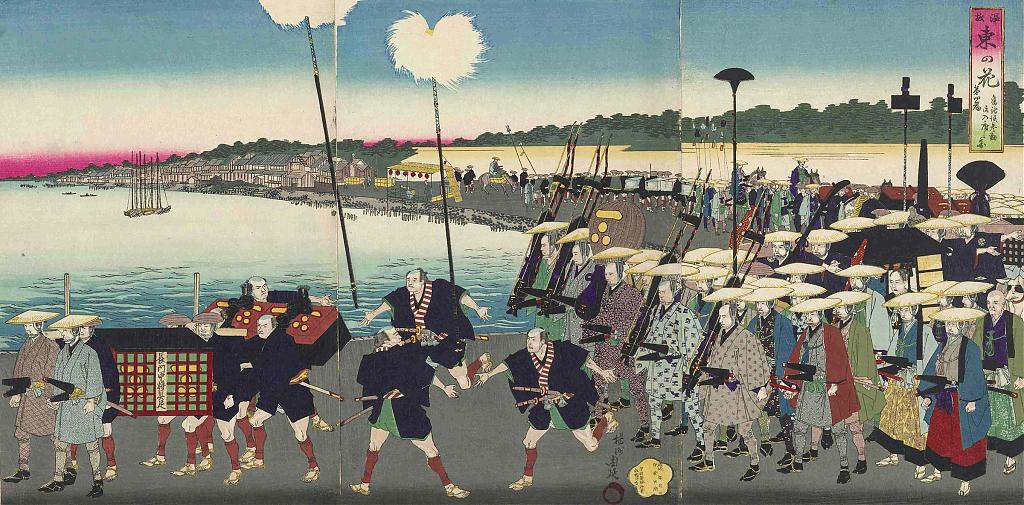
Voluntary Hostages
When the Maeda clan’s 54-year-old matriarch, Hōshun’in, left Kyoto in 1600 to become Ieyasu’s hostage in Edo and thereby guarantee her clan’s cooperation, one of her ladies-in-waiting recorded their shared distress:18
We bade farewell to our loved ones. Whether leaving or staying, there was no difference in the depth of grief. We repeatedly looked back at the mountains of Kyoto, which were disappearing from our sight gradually. What a forlorn journey it was.
After Ieyasu’s overwhelming victory at Sekigahara a few months later, growing numbers of people from across Japan were sent to Edo as hostages. They must have felt as distressed as Hōshun’in and her lady-in-waiting when they said their farewells to family and friends. Like them, many must have glanced back one last time, not knowing whether they would ever return.
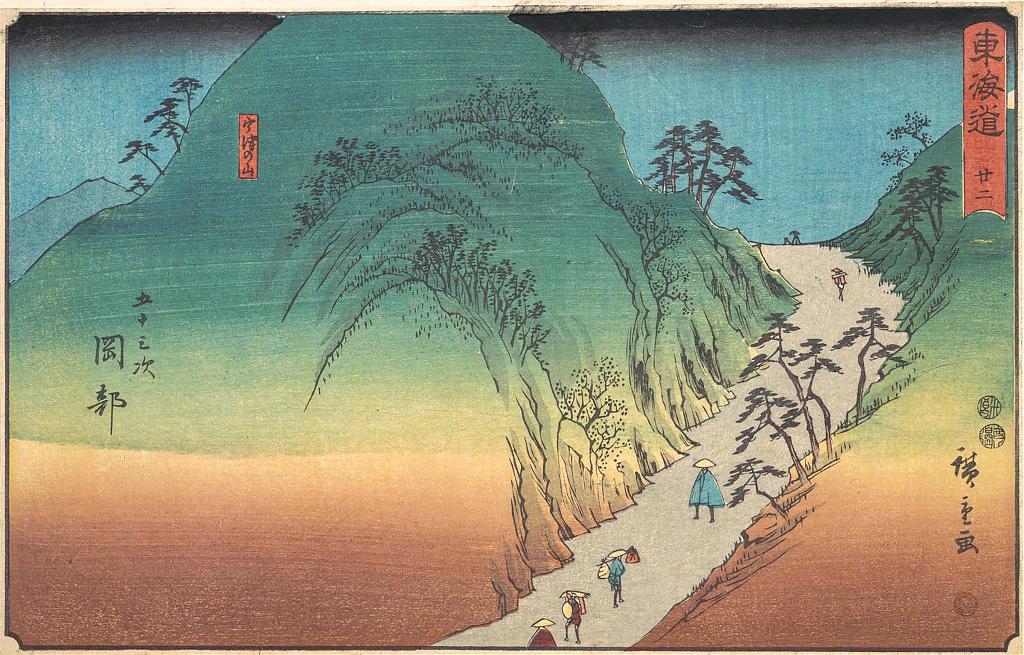
The thirty-one-year-old Asano Haruhime (浅野春姫, 1593–1637), wife of Ieyasu’s son Tokugawa Yoshinao (徳川義直, 1601–1650), was sent from Nagoya to Edo in 1633 (Kan’ei 10). As she crossed Mt. Utsu near Shizuoka, she expressed this sorrow in a poem, ending it with a sad question:19
Longing for the people
at home, I cannot help but
write to them,
asking them,
“Do you see the
same clouds in the gloomy sky?”
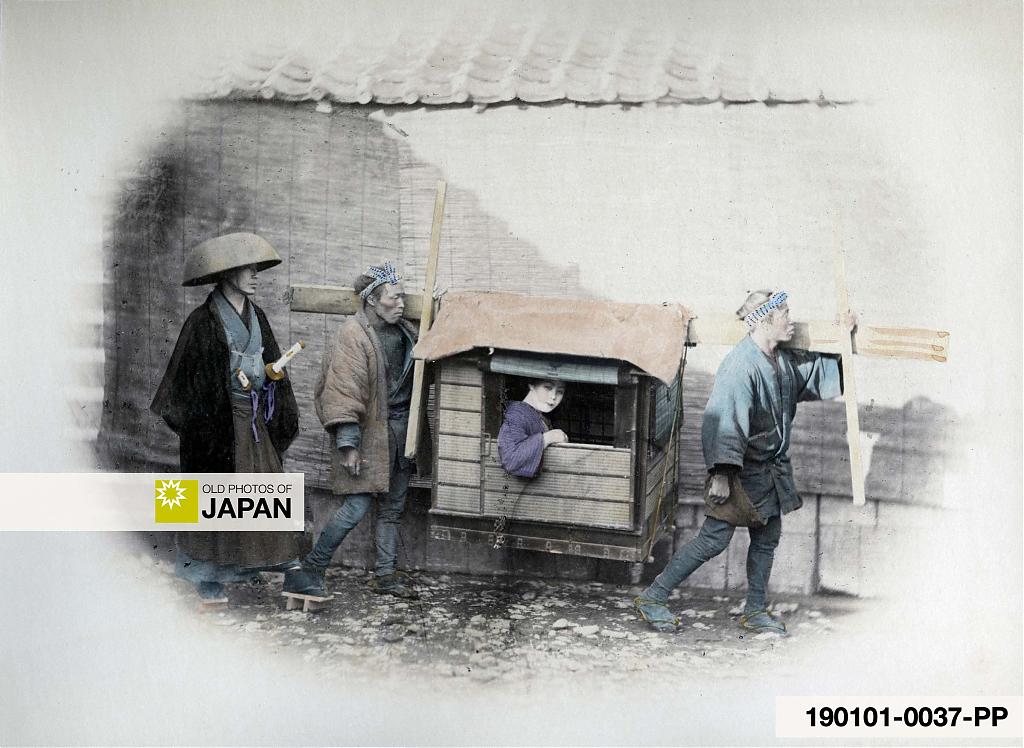
The Tokugawa hostage system is usually described as a policy to control the daimyō. But surprisingly, most of the early hostages were sent to Edo voluntarily. The reason was simple. Daimyō who sent family members to Edo were richly rewarded. They also received land in Edo to build residences.
Many daimyō did their utmost to please Ieyasu in pursuit of these rewards. Tōdō Takatora (藤堂高虎, 1556–1630), a daimyō from Shikoku, was so adept at this that it transformed him from a minor daimyō into a major one. In 1604 (Keichō 9), he successfully proposed that all daimyō should maintain residences in Edo. Two years later, he brought his family to Edo and also persuaded a family member to do so. In return, the shogunate reduced their obligations by half.20
However, as time went on, the Tokugawa gradually began to wield their power. The first major step came when Ieyasu became shogun in 1603 (Keichō 8). Edo became the shogunate’s official seat and daimyō were required to provide labor and materials for the expansion of Edo Castle and other public works. Forced to work in the city, many daimyō built residences and settled their families there.21
Within just a few years, Edo Castle was surrounded by a massive number of magnificent residences, known as Edo Yashiki (江戸屋敷). When the Jesuit missionary Francesco Pasio (1554–1612) visited Edo in 1607 (Keichō 12), he marveled not only at Edo Castle’s “immense profusion of gold and of paintings by the hands of the greatest artists,” but also at the many hundreds of vast yashiki. They formed a city of their own, he wrote:22
The principal Lords had also built sumptuous residences, and these immense and numerous edifices formed another city by the side of that inhabited by the merchants and the people.
Increasingly, attendance in Edo became difficult to avoid. In 1609 (Keichō 14), Shogun Hidetada (徳川秀忠, 1579–1632) introduced the first official form of compulsory attendance when he ordered all daimyo to appear in Edo for the New Year. The following year, they were ordered to send the families of their chief retainers as hostages.23
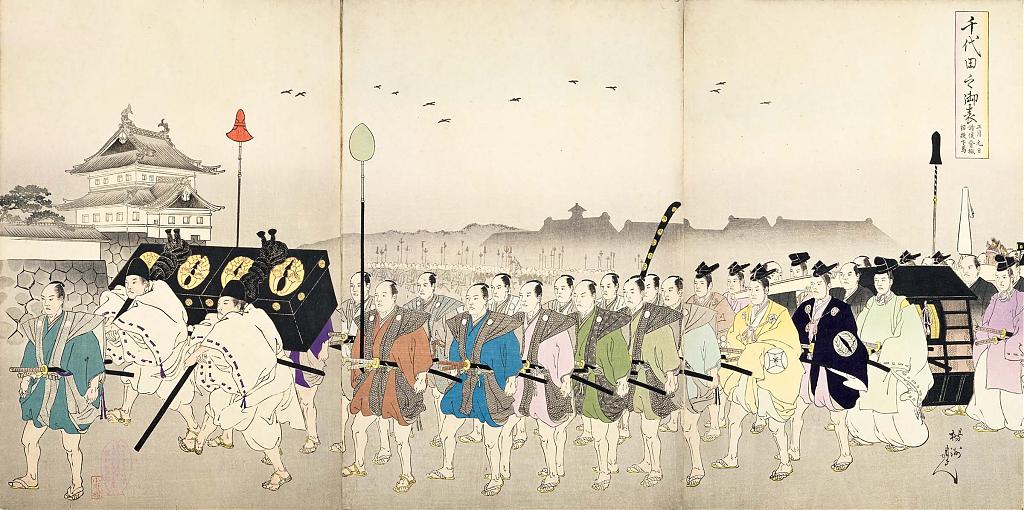
By the time the Toyotomi clan was destroyed in 1615 (Genna 1), the principal daimyō all had estates and hostages in Edo and frequently visited to pay homage to the shogun. Twenty years later, in 1635 (Kan’ei 12), Shogun Iemitsu (徳川家光; 1604–1651) made these practices an official institution.24
Known as sankin kōtai (参勤交代, alternating attendance), the system required daimyō to spend alternate years in Edo and their domains.25 Arrival and departure schedules were fixed. Only the fudai daimyō (譜代大名), hereditary vassals of the Tokugawa from before Sekigahara, were exempt from this obligation.
However, from 1642 (Kan’ei 19), when a younger generation had succeeded the fudai lords who had fought at Sekigahara, sankin kōtai applied to them as well.26
Now, the wives and children of all daimyō had to permanently reside in Edo.
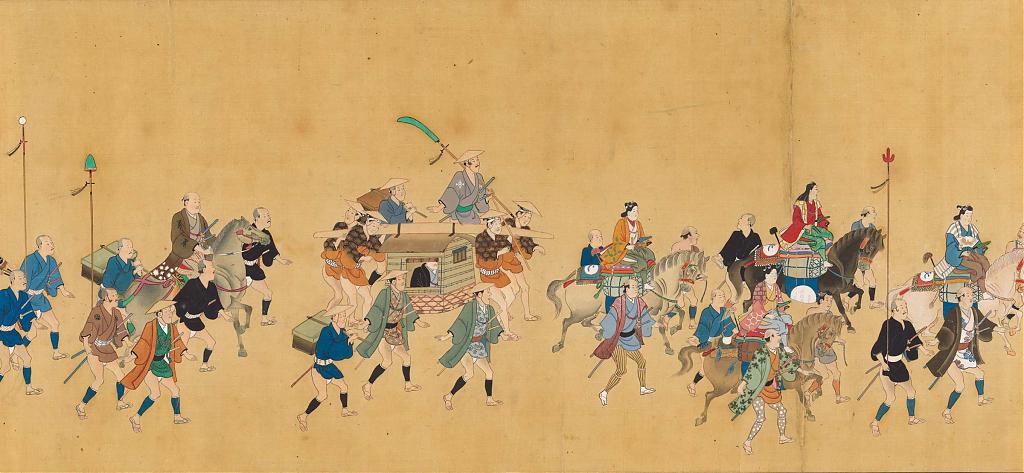
A New Metropolis
Sankin kōtai did not just bring a few hundred women and children to Edo. Each wife brought an extensive entourage of female relatives, ladies-in-waiting, and servants. The more than 250 daimyō traveled with entourages of thousands, most of whom stayed in Edo for the duration of their lord’s stay. Then there were the clans’ permanent Edo-based samurai, with the families of senior retainers also forced to remain in the city.
Housing this growing population required an enormous building program. During the initial construction boom between 1590 and 1615, hundreds of large tracts of land were granted to daimyō. After they became legally required to keep their wives and heirs permanently in Edo, hundreds of new yashiki were built to house the many tens of thousands of additional people settling in Edo.
The scale of this expansion becomes clear from the number of new residences the shogunate granted between 1620 and 1650. The sharp increases shown in the table below reflect the introduction of sankin kōtai in 1635 and its extension to the fudai daimyō in 1642.27
| Years | New Residences Granted |
| 1620–1624 | 3 |
|---|---|
| 1625–1629 | 8 |
| 1630–1634 | 16 |
| 1635–1639 | 67 |
| 1640–1644 | 48 |
| 1645–1649 | 131 |
Many daimyō maintained multiple Edo Yashiki, bringing the total to between 600 and 1,000.28 Some were enormous. The primary yashiki of the Owari Tokugawa (see photo below) occupied 248,000 square meters (61 acres), almost 34 times the footprint of New York’s Empire State Building.29 Kaga Domain‘s primary yashiki was even larger, covering more than 292,000 square meters (72 acres).30
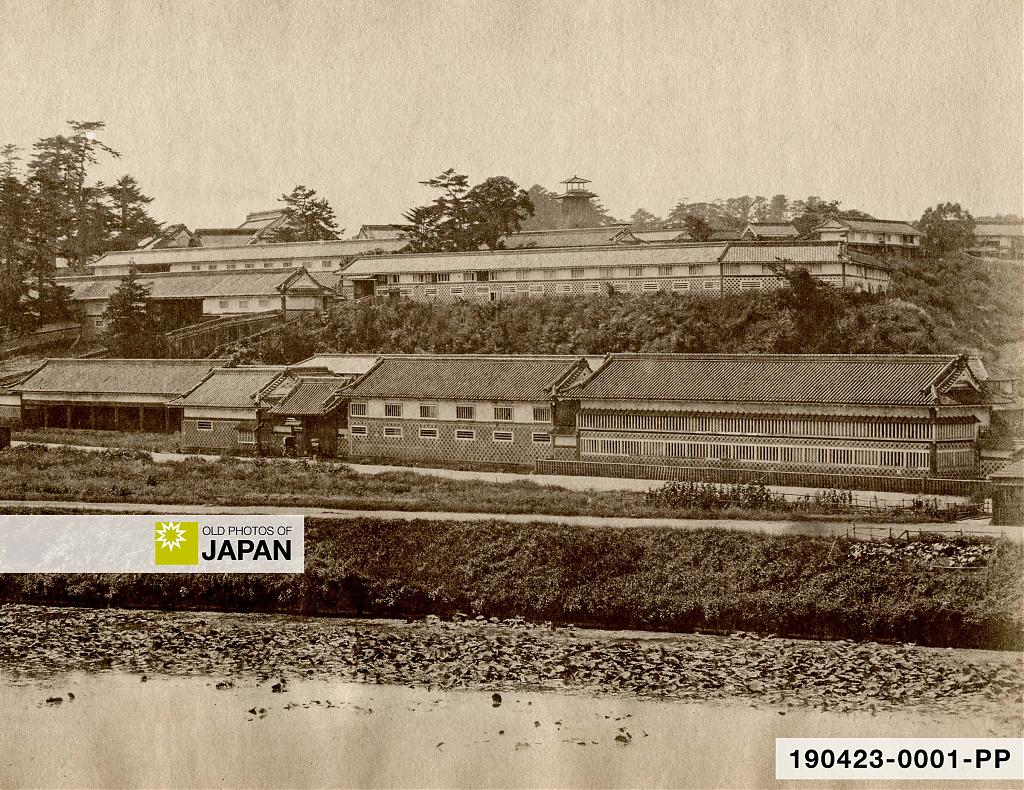
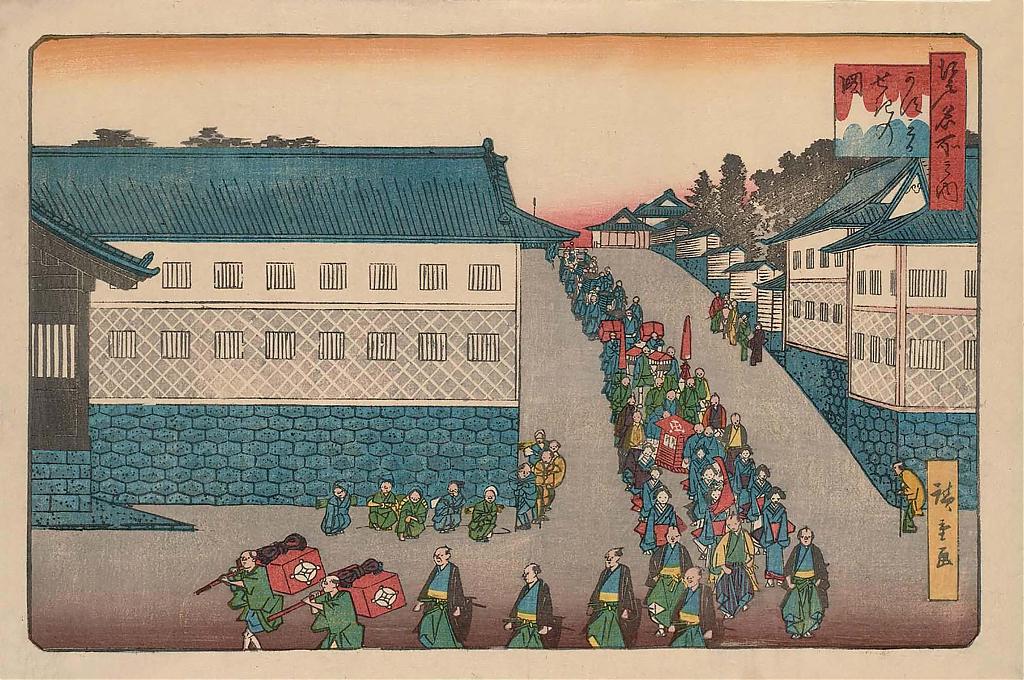
The shogunate also granted thousands of additional residential plots to the wider samurai population. Together, these plots and the daimyō estates accounted for almost 80 percent of Edo.31 Although yashiki occupied only about half of this land, their imposing, fortress-like compounds and sprawling gardens dominated the landscape. They invariably impressed both Japanese and foreign visitors.
Only a year after Japan opened its doors to foreign trade in 1859 (Ansei 6), British bishop George Smith (1815–1871) visited Edo. The city reminded him of London’s leafy Kensington, with its park-like surroundings and grand estates:32
It is sometimes difficult to realise in such a spot the fact of being in the heart and centre of a couple of millions of people. The whole surrounding aspect is that of a succession of Hyde Parks or Kensington Gardens, — a city of green slopes and overhanging groves, with broad spacious roads sometimes expanding to the dimensions of an open field and everywhere lined with a succession of sparsely diffused dwellings. … I have heard the opinion expressed by a friend who has visited all the capitals in Europe but one, that in the external beauty of its well-wooded scenery and the general picturesque appearance of the surrounding view Yeddo surpasses every city of western countries.

Sankin kōtai helped transform the former marshland into a sprawling metropolis. By 1650 (Keian 3), Edo had become one of Japan’s largest cities, home to over 430,000 inhabitants.33
As the city grew, new development pushed outward from Edo Castle. The first daimyō residence is believed to have reached Ueno, 3.4 kilometers (2.1 miles) away from the castle, as early as 1610 (Keichō 15). It heralded the start of the area’s urbanization.
The next article shows how an ambitious and politically savvy Buddhist priest turned Ueno into a sacred place for the Tokugawa Shogunate after winning a contentious religious argument over the worship of Ieyasu.
Continue to Part 5: Worshipping a Warrior.
Top Photo
The top photo was taken during the 1890s. Now popularly known as the Kuromon (黒門), this Nagayamon (長屋門) style gate was originally the main gate to the Edo mansion of the Ikeda clan from the Inaba Domain, now part of Tottori. It was located in Marunouchi, but was moved to Takanawadai-machi in 1892 (Meiji 25), and served as the main gate for the palace of the crown prince (東宮御所正門, Togu Gosho Seimon). It was designated an Important Cultural Property in 1951 (Showa 26) and moved to the Tokyo National Museum in 1954 (Showa 29).
Unattributed, hand colored albumen print, Pump Park Collection.
Notes
18 Shiba, Keiko; Ezaki, Motoko (2012). Literary Creations on the Road: Women’s Travel Diaries in Early Modern Japan. Lanham, MD: University Press of America.
The quote is from Azumaji no Ki (東路記), an account of the journeys made by Hōshun’in when she traveled from Osaka to Edo as a Tokugawa hostage in the fifth month of Keichō 5 (1600), and later, in the third month of Keichō 7 (1602), when she journeyed to the Arima hot springs for medical treatment. The work was traditionally attributed to Hōshun’in herself, but a study published in 1993 came to the conclusion that “it was actually written by one of the ladies-in-waiting who accompanied her, especially one who was particularly close to her and wrote with sympathy for Hōshun’in’s feelings.”
See: 門玲子 (1993)「〈翻〉東路記 高祖妣御記 全―付、前田芳春院と「東路記」について」in『江戸期おんな考 第4号』桂文庫, 108–110.
19 ibid.
In traveling clothes—
awakened to the loneliness of journey
on a sleepless night,
do I hear a dog barking loudly
as if to intensify my melancholy
All I can do
is to sail across the floating world
like a small boat—
appearing and disappearing on the
surface of the rapid stream of water
Traveling east—
is it real or a dream,
I cross the ridge of
the mountain of [Utsu], walking
down the narrow ivy-covered paths
Longing for the people
at home, I cannot help but
write to them,
asking them,
“Do you see the
same clouds in the gloomy sky?”
20 Tsukahira, Toshio George (1966). Feudal Control in Tokugawa Japan: the Sankin Kotai System. Cambridge, Massachusetts: Harvard University Press, 47–49.
The relative was Ikoma Kazumasa (生駒 一正, 1555-1610), daimyō of the Takamatsu Domain.
Another example of a daimyō pleasing Ieyasu for the rewards is Asano Nagamasa (浅野長政, 1546–1611). When he transferred his headquarters and family to Edo in 1605 (Keichō 10), Ieyasu rewarded him with a new fief of 50,000 koku. One koku represented the amount of rice needed to feed one person for a year.
21 ibid, 39.
22 Murdoch, James; Yamagata, Isoh (1903). A History of Japan. Kobe: The Chronicle, 511.
Murdoch mistakenly calls him “Father Paez.” Pasio described his visit to Edo in an annual missive that was circulated in Europe. The manuscript is archived within the Japonica-Sinica collection at the Roman Archives of the Society of Jesus in Rome under Jap.Sin. 55, ff. 367-372v.
23 Tsukahira, Toshio George (1966). Feudal Control in Tokugawa Japan: the Sankin Kotai System. Cambridge, Massachusetts: Harvard University Press, 42.
24 ibid, 36.
“It may be said to have been in effective operation by 1615, twenty years before the first sankin kotai law was adopted. By that time it had already become the general custom for the daimyo to visit Edo at frequent intervals to pay homage to the shogun. The principal lords had all built their mansions at the capital and had submitted hostages to Edo. Conformity to these practices was not yet enforced by statute, but the power and prestige of the bakufu and the force of custom had made compliance virtually universal.”
25 ibid, 28.
“As far as can be determined, the combined term sankin kōtai was not used before the time of the third Tokugawa shogun, lemitsu, who in 1635 first instituted the alternation of tours of duty at Edo. The term sankin alone, however, appears in Japanese literature as early as the thirteenth century.”
26 ibid, 45–46.
The hereditary fudai and the outside tozama daimyō (外様大名, daimyō who became hereditary vassals after Sekigahara) were not treated the same. They were divided into separate, highly strategic rotation tracks to maintain national security.
The tozama daimyō were split largely along geographical lines (East Japan vs. West Japan). One half stayed in Edo while the other half remained on their domains, preventing a multi-regional coalition against the Tokugawa.
The sixty-nine fudai domains were split into two balanced groups chosen by lot. Because fudai lords held crucial administrative positions in the shogunate, the lot system ensured a balanced rotation of bureaucrats. Half were in Edo to keep the government running, while the other half managed the provinces.
27 Nishiyama, Matsunosuke; Groemer, Gerald (1997). Edo Culture: Daily Life and Diversions in Urban Japan, 1600-1868. Honolulu: University of Hawai’i Press, 27.
28 Tsukahira, Toshio George (1966). Feudal Control in Tokugawa Japan: the Sankin Kotai System. Cambridge, Massachusetts: Harvard University Press, 91.
“The han yashiki or residential estates of the daimyo in Edo numbered over 600 in all …”
Vaporis, Constantine (2008). Tour of Duty: Samurai Military Service in Edo, and the Culture of Early Modern Japan. Honolulu: University of Hawai’i Press, 131.
“… between nine hundred and a thousand daimyo compounds.”
29 The footprint of the Owari Tokugawa yashiki in Ichigaya originates from: Tokyo Metropolitan Library, 市ヶ谷牛込絵図. Retrieved on 2026-07-28.
It states that the yashiki measured 75,000 tsubo. One tsubo is roughly 3.306 m²: 75,000 × 3.306 = 247,950 m².
The information about the footprint of the Empire State Building — “79,288 square feet (about 7,340 square meters)” — originates from: The Empire State Building, Empire State Building Facts: All You Need To Know. Retrieved on 2026-07-28.
30 The primary yashiki of Kaga Domain measured 88,482 tsubo (292,521 m²). 宮崎勝美, 東京大学コレクションX:江戸本郷の加賀屋敷. Retrieved on 2026-07-28.
31 内藤昌 (1983)「都市構造における職人町のありかた」, 『歴史公論』, 9巻 (8号, 通巻93号), 76–82.
32 Smith, George (1861). Ten weeks in Japan. London: Longman, Green, Longman and Roberts, 303–304.
33 内藤昌 (1983)「都市構造における職人町のありかた」, 『歴史公論』, 9巻 (8号, 通巻93号), 76–82.
Published
Updated
Reader Supported
Old Photos of Japan aims to be your personal museum for Japan's visual heritage and to bring the experiences of everyday life in old Japan to you.
To enhance our understanding of Japanese culture and society I track down, acquire, archive, and research images of everyday life, and give them context.
I share what I have found for free on this site, without ads or selling your data.
Your support helps me to continue doing so, and ensures that this exceptional visual heritage will not be lost and forgotten.
Thank you,
Kjeld Duits
Reference for Citations
Duits, Kjeld (). Tokyo 1890s: Edo: A Metropolis of Hostages, OLD PHOTOS of JAPAN. Retrieved on October 20, 2026 (GMT) from https://www.oldphotosjapan.com/photos/999/edo-a-metropolis-of-hostages

There are currently no comments on this article.