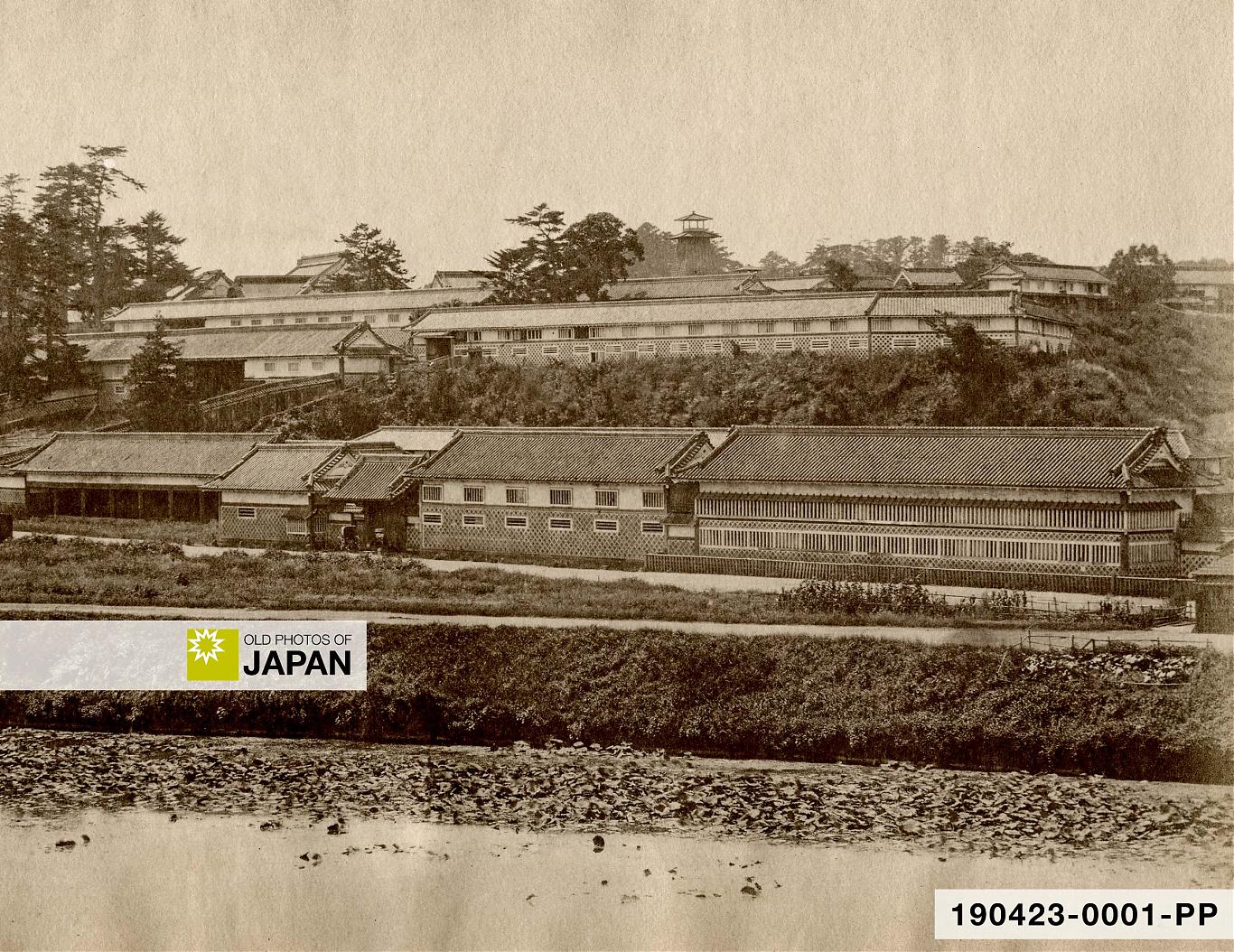
The residence of the Owari Tokugawa clan in Ichigaya, ca. 1872. During the 1600s, over 250 feudal lords built multiple estates like this in Edo (present-day Tokyo). They transformed a marshy wetland into Japan’s new center of power and a sprawling metropolis.
How Ueno Tells the Story of Japan
This is Part 3 of an essay about the history of Tokyo’s Ueno district.
This rescue project is funded by readers like you
Old Photos of Japan provides thoroughly researched essays and rare images of daily life in old Japan free of charge and advertising. Most images have been acquired, scanned, and conserved to protect them for future generations.
I rely on readers like you to keep this online museum going.
Ueno’s Hidden Roots
The article Ueno Before the Quake briefly introduced the area in front of Tokyo’s Ueno Park just before the 1923 Great Kantō Earthquake turned it to ashes. It was a vibrant maze of geisha houses, rendezvous teahouses, and top-class restaurants, many with a breathtaking view of the lotus-filled Shinobazu Pond.
In A Castle in a Marsh, we jumped back in time to the 1500s to understand how Ueno’s unique culture could emerge. We saw how Tokugawa Ieyasu (1543–1616) established absolute control over Japan and built the massive Edo Castle in a marshy, low-lying wetland encircled by a vast, finger-like plateau system.
Starting with this article, we examine how Ieyasu and his successors built the world’s largest city around this castle based on a new social order, laying the foundation for Ueno as a one-of-a-kind place of commerce and entertainment.
The story starts with a 54-year-old mother taken hostage by Ieyasu just before the pivotal Battle of Sekigahara.
A Hostage in Edo
Sometime around 1610, a worried mother in Edo wrote a letter to her daughter in “far away” Kanazawa in Kaga Domain. She mentioned how she worried about her son’s illness and her disappointment at being unable to visit:1
I have received many letters about Toshinaga’s illness from Kanazawa. I am so far away, and I worry about him so much. I have tried various approaches to get permission to go back to Kanazawa, but nothing has worked. How disappointed I am.
The author of this letter was not just any mother. She was Hōshun’in (芳春院, 1547–1617), the widow of Maeda Toshiie (前田利家, 1538–1599), a prominent general during the Sengoku period (戦国時代), the Warring States period.2
Toshiie’s career mirrored the fortunes of the men who unified Japan. He first served Oda Nobunaga, whose conquests began to end more than a century of civil war, and then Toyotomi Hideyoshi, who completed that unification after Nobunaga’s death.
His decades of loyal service culminated in a reward of remarkable consequence: control of the provinces of Kaga, Noto, and Etchū, collectively known as Kaga Domain. Covering present-day Ishikawa and Toyama prefectures, Kaga’s fertile plains generated immense agricultural wealth. This made the Maeda family one of the richest daimyō (feudal lord) houses outside Tokugawa control.
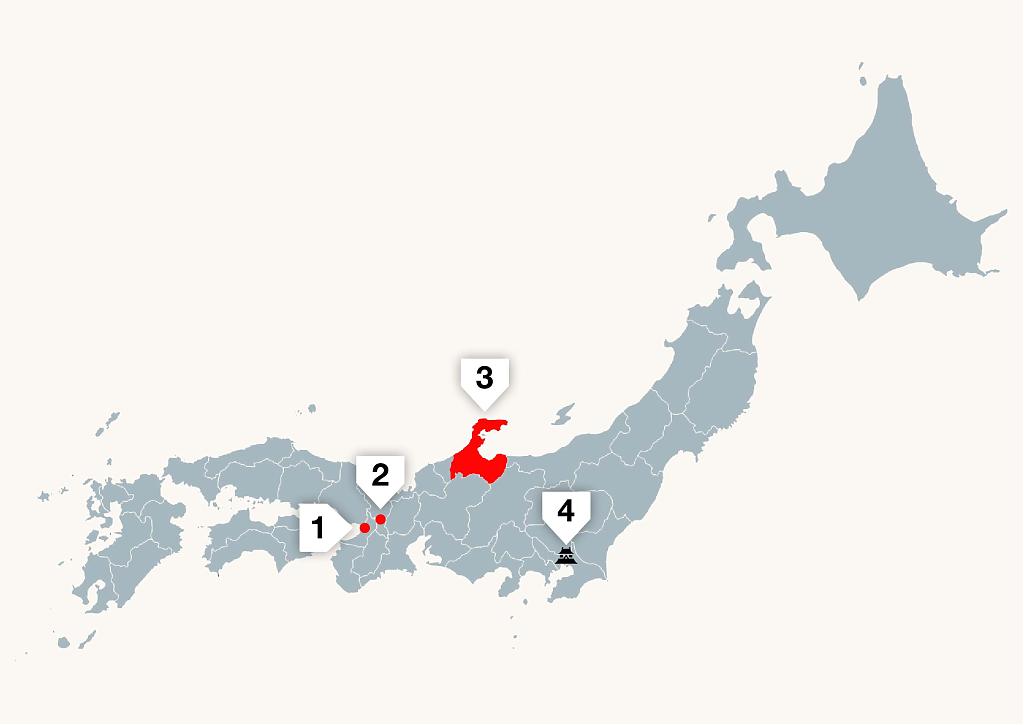
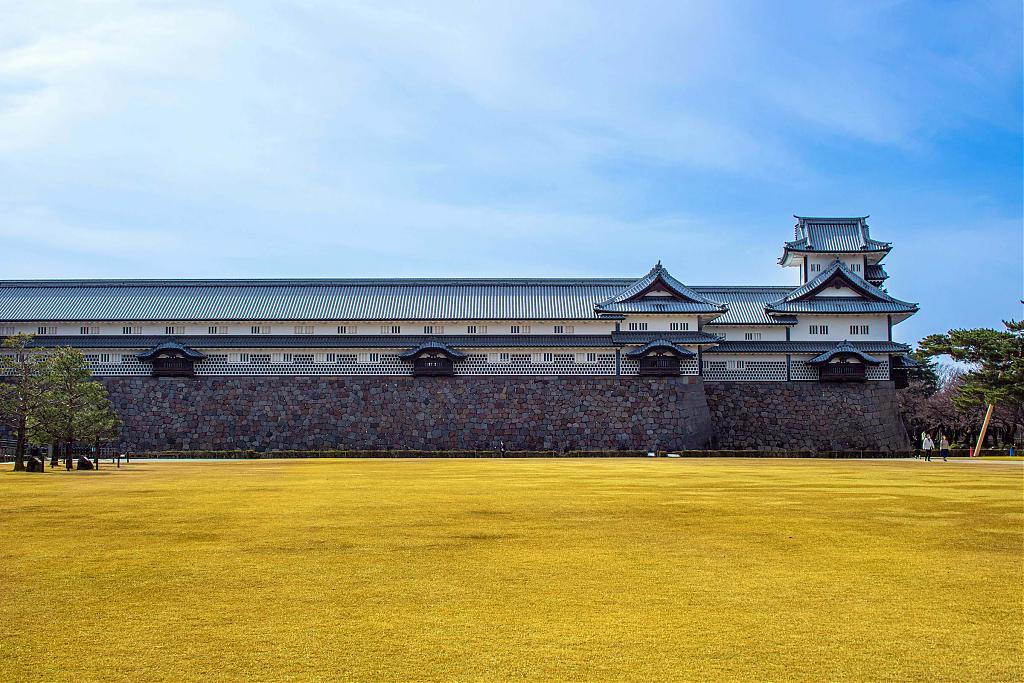
When Hideyoshi died in 1598 (Keichō 3), his heir was only five years old. To protect him, Hideyoshi had entrusted governance to the Council of Five Elders (五大老, Go-Tairō) until the boy came of age. Toshiie and Tokugawa Ieyasu both served on the council, but only Toshiie possessed the military strength, seniority, and personal prestige to keep Ieyasu’s growing ambitions in check.
However, Toshiie died of illness only seven months after Hideyoshi. With the only man capable of restraining Ieyasu gone, the fragile balance of power collapsed. Ieyasu quickly began consolidating his position, prompting many of Japan’s great lords to choose sides. Japan’s warlords split into two rival camps, Ieyasu’s alliance and the daimyō led by Ishida Mitsunari (石田三成, 1559–1600).
As tensions mounted, Ieyasu received word that the powerful Maeda clan, now led by Toshiie’s eldest son Toshinaga (前田利長, 1562–1614), was involved in an anti-Tokugawa plot engineered by Mitsunari. Ieyasu immediately started planning to attack the Maeda headquarters in Kanazawa.3
Toshinaga hastily built fortifications and prepared for a siege of the castle.4 At the same time, he dispatched his most trusted retainer, Yokoyama Nagachika (横山長知, 1568–1646), to tell Ieyasu that the Maeda clan was not involved in any plot.
Toshinaga’s wife and mother were then staying at Fushimi, Japan’s political center after Hideyoshi’s death.5 If the negotiations failed, they would be dangerously exposed to Tokugawa retaliation. Before Nagachika departed, Toshinaga gave him chilling final instructions:6
If, even after this, they still do not accept, then in the end you must decide the matter according to your own judgment. My mother and wife, who are at Fushimi, are to be stabbed to death. Set fire to the residence and perish there yourselves. As for me, here in this castle I shall take the affairs of the realm upon myself, fight as I see fit, and die a clean death in battle. You may set your mind at ease on that point.
Negotiations dragged on for months and multiple proposals were discussed, including the surrender of Etchū Province and the adoption of a Tokugawa prince. The parties finally settled on sending the respected matriarch of the Maeda clan, Hōshun’in, to Edo as a political hostage.7
Modern accounts often describe Hōshun’in as having volunteered to become a hostage. None of the Edo-period sources examined for this study records such a proposal. According to the fullest surviving account, when Ieyasu stated that she should accompany him to Edo, Nagachika replied, “My lord’s honored mother will surely submit to Your Lordship’s wishes.”8 Hōshun’in’s own views are not recorded.
It was also agreed that Toshinaga’s half-brother Toshitsune (前田利常, 1594–1658), the heir-apparent, would marry a daughter of Ieyasu’s son Hidetada (徳川秀忠, 1579–1632).9 Toshinaga’s wife was allowed to return home.
On July 16, 1600, just two months before the pivotal Battle of Sekigahara, the 54-year old Hōshun’in arrived in Edo, a still barely developed frontier town far away from her home and family.10
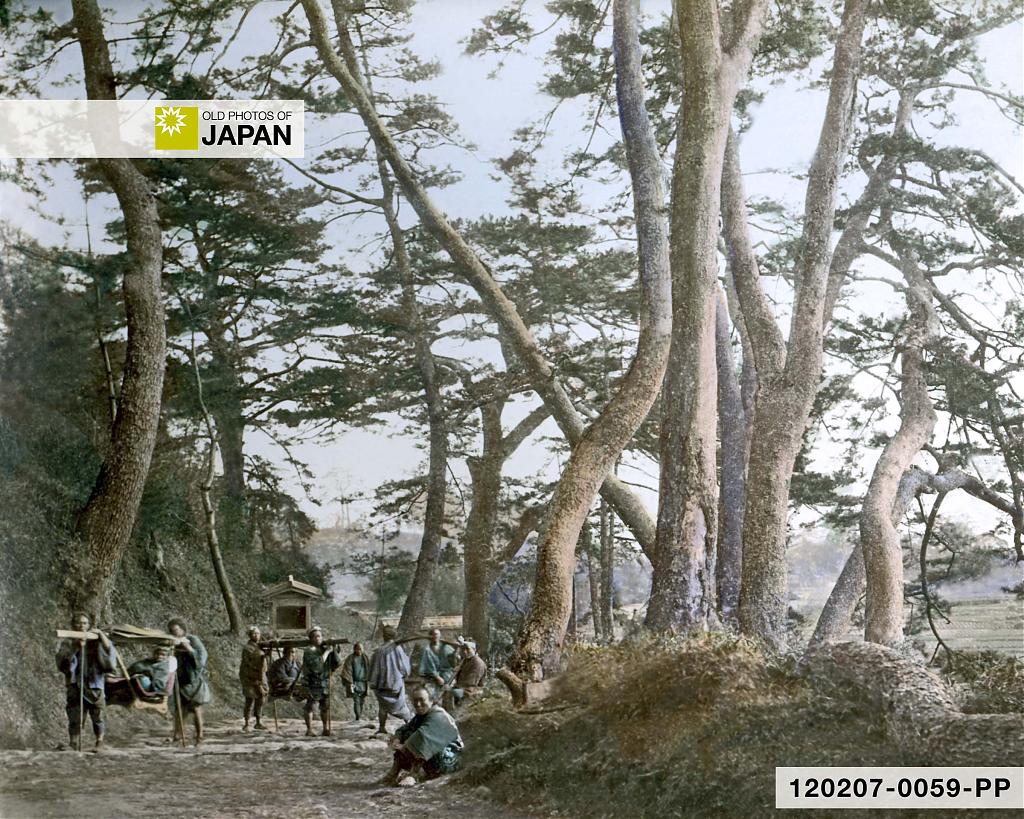
Toshinaga honored his pledge. Although he did not fight at Sekigahara, his armies campaigned against Ishida supporters along the Sea of Japan throughout the summer. After the victory at Sekigahara, Ieyasu rewarded Toshinaga with the remaining districts of southern Kaga, solidifying the Maeda clan’s enormous wealth for more than 260 years.11
Hōshun’in would remain in Edo for fourteen years, far longer than even Ieyasu had foreseen.12 For a woman who longed to return to her family in Kanazawa and whose health was beginning to fail, those years were not easy.
Yet life as a hostage in Edo was not without its comforts. Ieyasu’s son Hidetada built a “fine residence” for her near Edo Castle’s principal Ōtemon gate, many retainers from Kanazawa remained with her, and family members visited her regularly.13 An astute politician and diplomat, her presence in Edo also allowed her to defend Maeda clan interests.
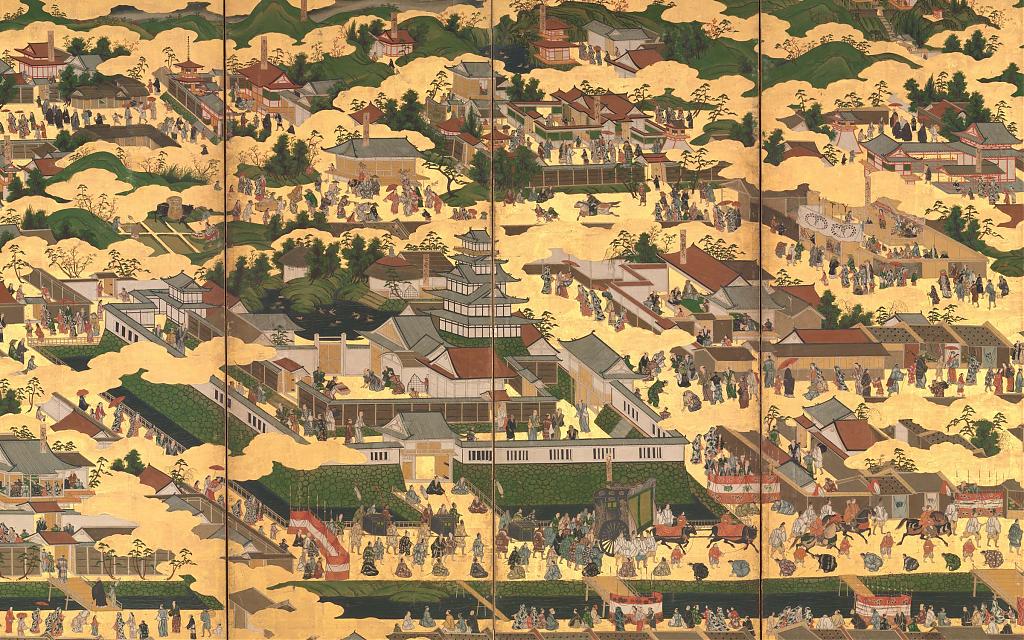
Political hostages were common, and Hōshun’in was not the Tokugawa clan’s first hostage in Edo.14 Yet she was no ordinary hostage. During her husband’s lifetime, she had served as his trusted advisor, attended councils, and even accompanied him on military campaigns.
She also built an extensive diplomatic network for the Maeda clan through the marriages of several of her nine daughters. One was adopted by Hideyoshi, another became his concubine, and Hōshun’in herself enjoyed the confidence of Hideyoshi’s wife, Nene (ねね, ?–1624), and his mother, Ōmandokoro (大政所, 1516–1592). She even served as nanny to Hideyoshi’s young heir, Hideyori.
Following her husband’s death in 1599, she became a Buddhist nun and took the name Hōshun’in. By then, she had already established herself as one of the most influential women in Japan.15 As a nun, she could continue representing Maeda clan interests while posing little political threat to rival leaders.
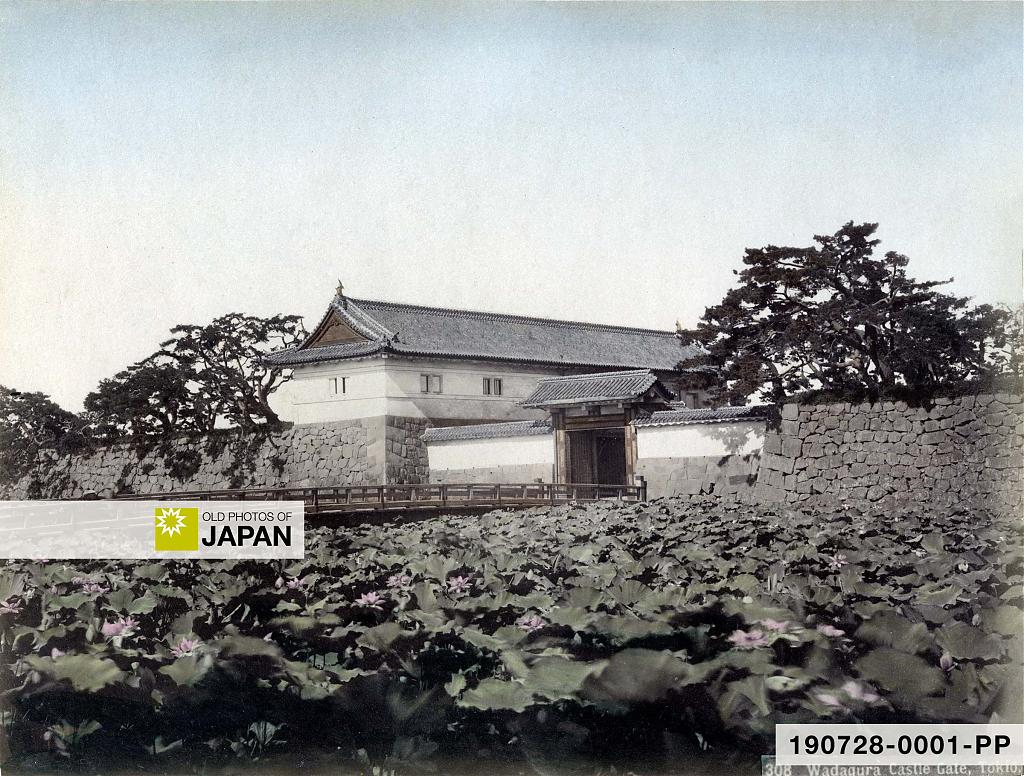
Hōshun’in’s move to Edo as a political hostage marked a turning point. It signaled Edo’s emergence as Japan’s new center of political power and the Maeda clan’s acceptance of Tokugawa supremacy. The settlement benefited both sides. Ieyasu gained the loyalty of one of Japan’s wealthiest daimyo houses outside Tokugawa control, while the Maeda secured their political survival.
The additional rewards proved extraordinary. After Sekigahra, Ieyasu granted the Maeda the right to use the Tokugawa family’s ancestral surname Matsudaira, elevating the clan to a status similar to the Tokugawa inner cadet branches. He also arranged for Toshinaga’s adopted heir Toshitsune to receive imperial court ranks and offices.
Moreover, Toshinaga’s younger brother, Toshimasa (前田利政, 1578–1633), who had fought against Ieyasu, was spared execution. His lands were confiscated, but they were transferred to Toshinaga, keeping them within the Maeda family. Together with the grant of the remaining districts of southern Kaga, the Maeda emerged from the conflict stronger and wealthier than ever.
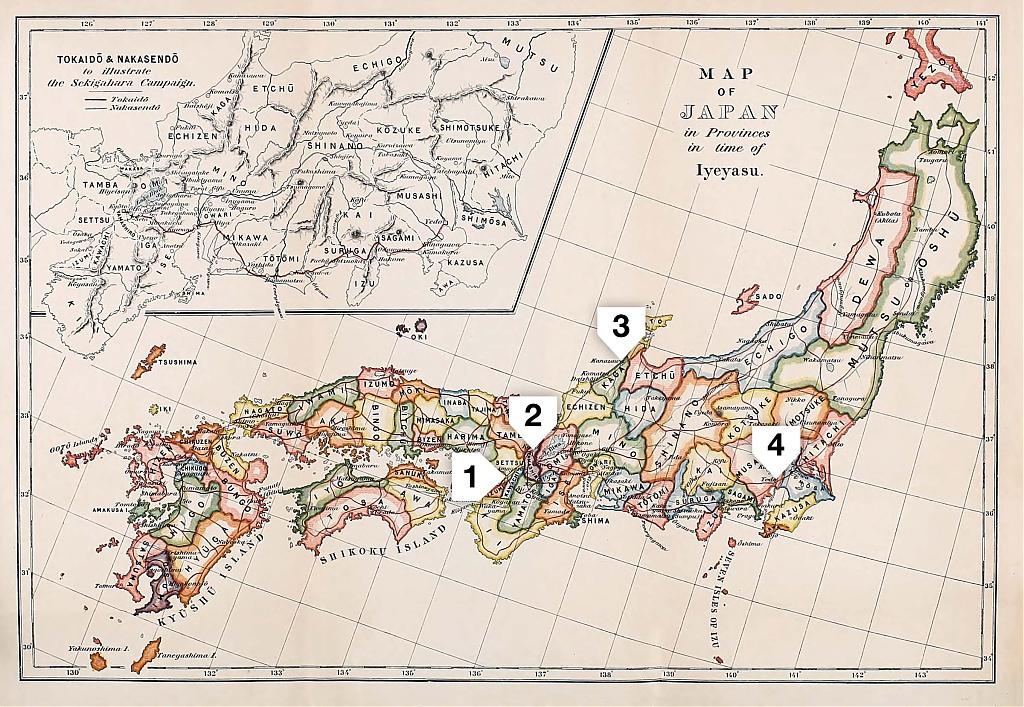
The Maeda were not the only clan rewarded after Sekigahara, but their rewards were exceptional. Only months earlier, Ieyasu had been preparing to attack them. Yet now they ranked among the most honored daimyō houses. They had also become the wealthiest.
The contrast with the fate of those who fought against Tokugawa was stark. Some 87 clans were stripped of their lands and dissolved. Major leaders were executed. The message to the remaining daimyō was unmistakable: loyalty was rewarded; resistance brought ruin.
In the years following Sekigahara, leading daimyō began visiting Edo to pay homage to Ieyasu. In return, they received land in Edo to build vast residences, like the Owari estate in the top photo.16 Many also voluntarily sent their sons or other close relatives to Edo, often receiving rewards in return.17
Over the following decades, these voluntary acts of loyalty evolved into sankin kōtai (参勤交代, alternate attendance), under which daimyō alternated between their domains and Edo. Their wives and children remained permanently in Edo. From an isolated frontier fort, Edo exploded into Japan’s largest city, reaching as far as Shinobazu Pond, 3.7 kilometers (2.3 miles) away from Edo Castle.
Sankin kōtai shaped Edo itself, determining where and how people lived and played. In the next article, we will see how this system transformed Edo.
Continue to Part 4: Edo: A Metropolis of Hostages.
About the Top Photo
This photograph of the Owari Tokugawa clan’s kamiyashiki (upper residence) in Ichigaya was published in The Far East in 1872 (Meiji 5). In 1878 (Meiji 11), it became the Army Academy, which later became the Ministry of Defense.
Postscript July 24, 2026
I wrote, “Hōshun’in’s own views are not recorded.” Since then, I have found studies of a journal describing the journey to Edo, written by one of Hōshun’in’s ladies-in-waiting. This near-contemporary account portrays Hōshun’in reluctantly accepting the decision, but does not suggest that she herself proposed becoming a hostage.
It includes the following passage:
“For my lord, for the realm, and with my heart blinded by love for my children, how could I possibly consider any other course?”
The “lord” (君) is believed to refer to Toyotomi Hideyori.
門玲子 (1993)「〈翻〉東路記 高祖妣御記 全―付、前田芳春院と『東路記』について」『江戸期おんな考』第4号, 桂文庫, pp. 101–110.
「君の御ため、世のため、又ハ子を思ふ心のやミには何をか思ひわきまへ侍らん」
The complete transcription of the journal appears on pages 101–108, the relevant passage appears on page 102.
Notes
More information about the Owari Tokugawa clan.
1 Pitelka, Morgan; Tanimura, Reiko; Masuda, Takashi (2022). Japan Research Monograph 20. Letters from Japan’s Sixteenth and Seventeenth Centuries: Correspondence of Warlords, Tea Masters, Zen Priests, and Aristocrats. Berkeley: University of California, Institute of East Asian Studies, 82.
2 Hōshun’in’s birth name was Matsu (まつ). She was also known as Omatsu no Kata (お松の方). She became a Buddhist nun after her husband Toshiie’s death and changed her name to Hōshun’in, also spelled as Hōshun-in.
3 McClain, James L. (1982). Kanazawa: a Seventeenth-Century Japanese Castle Town. New Haven, London: Yale University Press, 25–26.
“To this day, historians are not certain of the extent to which Toshinaga was involved with Ishida. Certainly he must have been pulled by conflicting emotions. His father’s will had enjoined him to support the Toyotomi heir. At the same time, Toshinaga realized that he commanded the second largest fighting force in the country and, with the reunification drama entering its final, culminating act, the notion of a contest with the Tokugawa for national hegemony must have been a strong temptation. But Toshinaga was also well aware that his father had become a great daimyō by supporting others who thirsted for national leadership, and, in the end, he decided that he could best advance his family’s interests by adopting the same tactic.”
4 前田育徳会 (1980)『加賀藩史料 第1編 (天文七年~慶長十年)』清文堂出版, 723, 729.
「一、慶長四年初冬より、凶徒石田が黨、大坂にて虚言を吐いて、利長公を神君に讒し、既に加州御進發可 有之由天下に隠なし。然でも利長公は秀頼公に對し、可企野心道尠以雖無之、神君此思召の上は不及是非もて、俄に金澤廻りの惣構を築き、〔割注:私曰惣構の堀河も二十日に出來と也〕頻に籠城の用意堅固なり。」
「十二月。金澤城外を繞りて塹壕を掘鑿せしめ、萬一の異變に備ふ。明年正月に至りて成る。」
5 Following Toyotomi Hideyoshi’s death at Fushimi Castle in late 1598, the Council of Five Elders governed the nation. The most powerful regent, Tokugawa Ieyasu, moved into Fushimi Castle’s main keep in 1599, making it the administrative center of the realm.
6 前田育徳会 (1980)『加賀藩史料 第1編 (天文七年~慶長十年)』清文堂出版, 732.
「此上にも於無承引ば、畢竟汝分別を相究、伏見に在之母並妻を刺殺し、屋敷に火を掛可自滅。予は於當城天下を引請、思儘の途闘戦、潔く可討死、其段可心易旨被仰舍。」
7 Exchanging political hostages to guarantee mutual trust was an established custom in Japan. They usually were wives, heirs, or trusted retainers. Ieyasu himself had spent much of his youth as a hostage. Traditionally, hostages were integrated into the receiving household. They received a good education and built genuine emotional bonds. Sending an heir to live with a superior or allied daimyō also served as a way to learn customs, build networks, and maintain diplomatic ties. Because filial piety was deeply ingrained in samurai culture, mothers were particularly prized as hostages. In 1586, Hideyoshi sent his mother as a hostage to Ieyasu to convince him to travel to Kyoto and formally submit to his rule.
8 前田育徳会 (1980)『加賀藩史料 第1編 (天文七年~慶長十年)』清文堂出版, 725.
「老母事は定て可任御意」
In a brief biography of Hōshun’in published in 1977, Japanese historian Renko Mizue (水江漣子, 1925–1993) also stressed that there were no historical sources proving that this was truly her own active choice:
水江漣子 (1977) 『芳春院』in『人物日本の女性史 第4巻 (戦国乱世に生きる)』集英社, 169.
「ただ江戸下向が、本当に彼女の積極的な意志であったかどうか、知りたいのは芳春院のその心の動きであるが、史料としてはなにものこされていない。」
9 McClain, James L. (1982). Kanazawa: a Seventeenth-Century Japanese Castle Town. New Haven, London: Yale University Press, 26.
10 前田育徳会 (1980)『加賀藩史料 第1編 (天文七年~慶長十年)』清文堂出版, 743–744.
The Kaga Domain Historical Materials state that Lady Hōshun’in arrived on the sixth day of the sixth month of Keichō 5, which corresponds to July 16, 1600 on the Gregorian calendar.
11 McClain, James L. (1982). Kanazawa: a Seventeenth-Century Japanese Castle Town. New Haven, London: Yale University Press, 26.
After Toshiie’s death, Toshinaga’s younger brother, Maeda Toshimasa, was given his own fief in Noto province. During the 1600 Sekigahara Campaign, Toshinaga aligned with Tokugawa Ieyasu, while Toshimasa sided with the western army. Following the Tokugawa victory, Toshimasa was forced to retire, and his lands were absorbed into Toshinaga’s territory.
12 水江漣子 (1977.)『芳春院』in『人物日本の女性史 第4巻 (戦国乱世に生きる)』集英社, 175.
In a letter to Murai Nagayori, one of Hōshun’in’s closest retainers, Ieyasu wrote that “once the forces of Ishida in the capital region had been defeated, he wished to come personally to escort Hōshun’in home.” The letter was dated the twenty-sixth day of the eighth month of Keichō 5 (October 3, 1600).
「家康には、慶長五年(一六〇〇)八月二十六日付の村井豊後守長頼にあてた自筆の手紙がある。村井長頼は、芳春院が利家の妻になるまえからの側近の家臣であるが、芳春院にしたがって江戸へ下っていた。そのころ利長は、家康の命令にしたがい石田三成に応じた加賀の大聖寺城を攻めて戦功をあげていた。家康はこの手紙のなかで、利長の手柄と忠節をほめ、上方の石田がたを討伐したならば、芳春院をおむかえにまいりたいと書いている。」
During Hōshun’in’s stay in Edo, she was allowed to travel outside the confines of the city at least twice. In Keichō 7 (1602), she visited the hot springs at Arima near present-day Kobe. In Keichō 16 (1611), she made a pilgrimage to the Ise Grand Shrine, and on her return journey visited Kamakura. 水江漣子 (1977.)『芳春院』in『人物日本の女性史 第4巻 (戦国乱世に生きる)』集英社, 178.
13 ibid, 159–180.
14 Tsukahira, Toshio George (1966). Feudal Control in Tokugawa Japan: the Sankin Kotai System. Cambridge, Massachusetts: Harvard University Press, 48.
“Among those who submitted hostages to Edo before Sekigahara were Tōdō Takatora, Hori Hideharu (1575-1606), Asano Nagamasa (1546-1611), Hosokawa Tadaoki, and Maeda Toshinaga. In 1599 Asano, Hosokawa, and Maeda were accused of plotting against Ieyasu by Masuda Nagamori (1545-1615), one of Hideyoshi’s councilors, who hoped thereby to alienate Ieyasu and his potential allies. Asano, who as result had been ordered confined to his fief in Kai, protested his loyalty and sent his son, Nagashige (1588-1632), to Hidetada in Edo as proof of his good faith. Hosokawa and Maeda likewise submitted hostages to Ieyasu to disprove the charge of disloyalty. Hosakawa’s third son, Tadatoshi (1586-1641), arrived in Edo in the first month of 1600. Maeda’s mother was first sent to Fushimi but was transferred to Edo in the sixth month.”
15 前田利祐 (2001)『おまつと利家:加賀百万石を創った人びと』集英社.
16 Tsukahira, Toshio George (1966). Feudal Control in Tokugawa Japan: the Sankin Kotai System. Cambridge, Massachusetts: Harvard University Press, 36–39, 47–48.
The estates were known as yashiki (屋敷), daimyō yashiki (大名屋敷), Edo yashiki (江戸屋敷), buke yashiki (武家屋敷), or Edo hantei (江戸藩邸).
17 ibid, 48–49.
Published
Updated
Reader Supported
Old Photos of Japan aims to be your personal museum for Japan's visual heritage and to bring the experiences of everyday life in old Japan to you.
To enhance our understanding of Japanese culture and society I track down, acquire, archive, and research images of everyday life, and give them context.
I share what I have found for free on this site, without ads or selling your data.
Your support helps me to continue doing so, and ensures that this exceptional visual heritage will not be lost and forgotten.
Thank you,
Kjeld Duits
Reference for Citations
Duits, Kjeld (). Tokyo 1872: Edo: Japan's New Center of Power, OLD PHOTOS of JAPAN. Retrieved on October 24, 2026 (GMT) from https://www.oldphotosjapan.com/photos/998/edo-japan-s-new-center-of-power


There are currently no comments on this article.