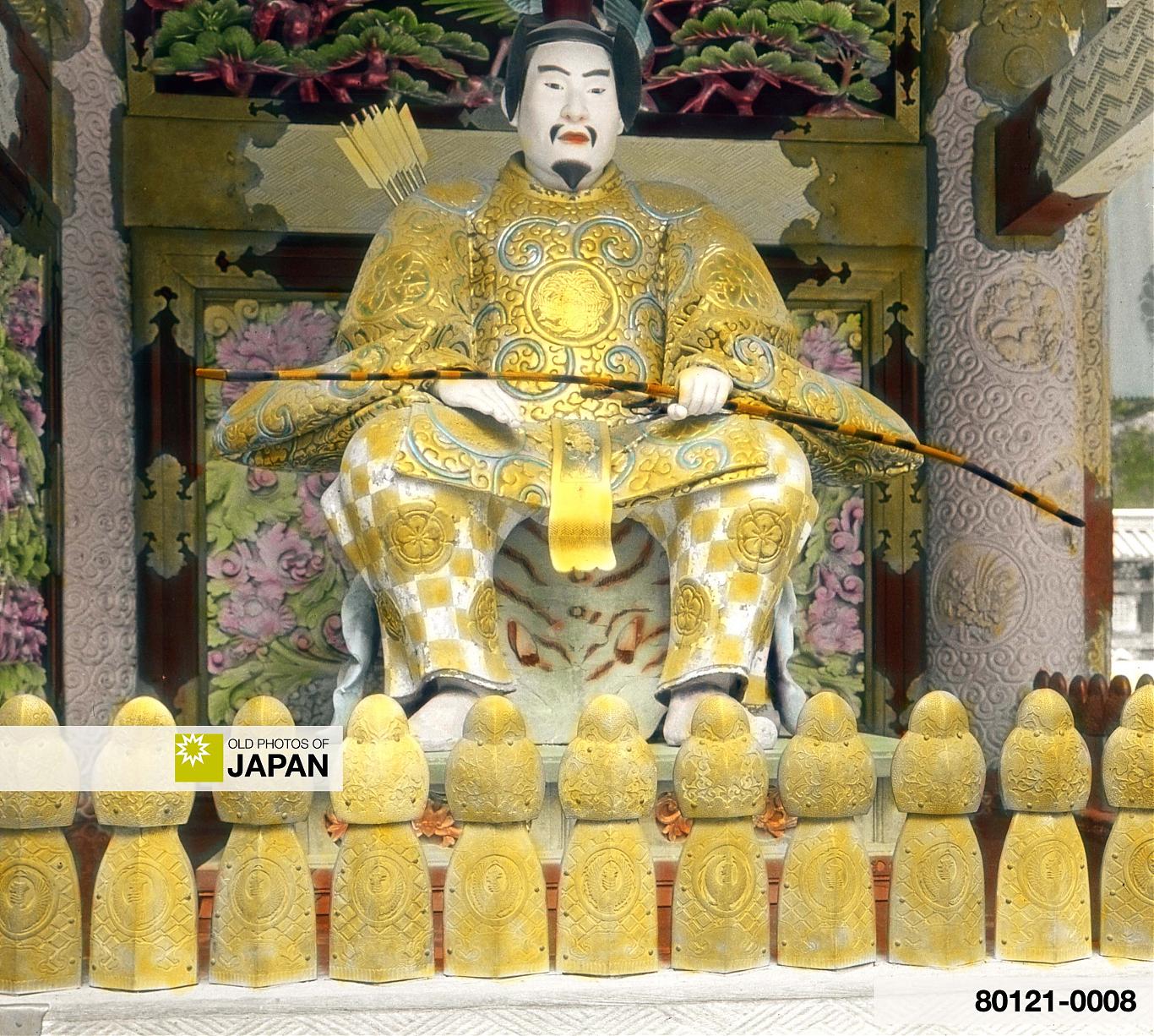
A Zuijin warrior-guardian figure at Tōshōgu Shrine in Nikkō. Dedicated to Shogun Tokugawa Ieyasu, the shrine was the vision of an ambitious and politically savvy Buddhist priest. His vision reached Ueno in 1625.
How Ueno Tells the Story of Japan
This is Part 5 of an essay about the history of Tokyo’s Ueno district.
This rescue project is funded by readers like you
Old Photos of Japan provides thoroughly researched essays and rare images of daily life in old Japan free of charge and advertising. Most images have been acquired, scanned, and conserved to protect them for future generations.
I rely on readers like you to keep this online museum going.
Ueno’s Hidden Roots
In Ueno Before the Quake we learned that Ueno in the 1910s was a vibrant maze of geisha houses, rendezvous teahouses, and top-class restaurants, many with a breathtaking view of the lotus-filled Shinobazu Pond.
In A Castle in a Marsh, we jumped back in time to the 1500s to see how Tokugawa Ieyasu (1543–1616) built a massive castle in a marshy, low-lying wetland.
Edo: Japan’s New Center of Power described how the matriarch of one of Japan’s most influential clans was taken hostage by Ieyasu just before the pivotal Battle of Sekigahara, starting off a system of sending hostages to Edo.
Edo: A Metropolis of Hostages explored how sending hostages to Edo developed into a system that turned it into a massive city, reaching Ueno in the 1610s.
This article shows how an ambitious and politically savvy Buddhist priest turned Ueno into a sacred place for the Tokugawa Shogunate after winning a contentious religious argument over the worship of Ieyasu.
Fertile Fields
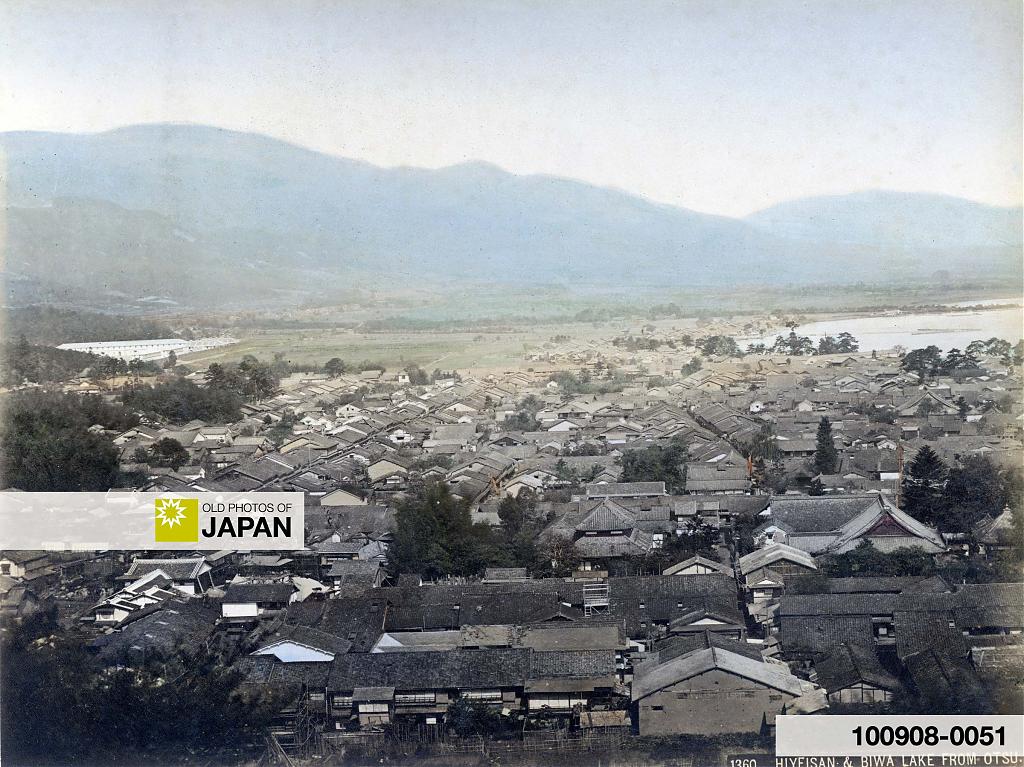
By the 1610s, the city of Edo was slowly reaching the Ueno district, then better known as Shitaya (下谷). Villagers still lived on Ueno Hill, but the shogunate granted three daimyō (lords) land for residences. One of them was Tōdō Takatora. In 1604 (Keichō 9), he had helped launch Edo’s massive growth when he proposed that all daimyō should maintain residences in the shogun’s new city.34
Shitaya was however still thoroughly rural. When Ieyasu entered the Kantō area in 1590 (Tenshō 18), the banks of Shinobazu Pond were “unstable marshland, thickly overgrown with tall reeds and thatching grass.”35
Since then, massive drainage programs had transformed Shitaya’s ponds and marshland, including the shores of Shinobazu Pond, into fertile agricultural fields. An early Edo Period poem exclaimed that in autumn the rice and millet of the “fertile lands of Shitaya” were like ten thousand bushels of shining pearls.36
But change was in the air. In 1616 (Genna 2), Tokugawa Ieyasu died at far away Sunpu Castle in present-day Shizuoka City. The ripples emanating from this event eventually erased Shitaya’s quiet rural character and transformed Ueno Hill into one of the Tokugawa Shogunate’s most sacred places.
Reaching for Eternity
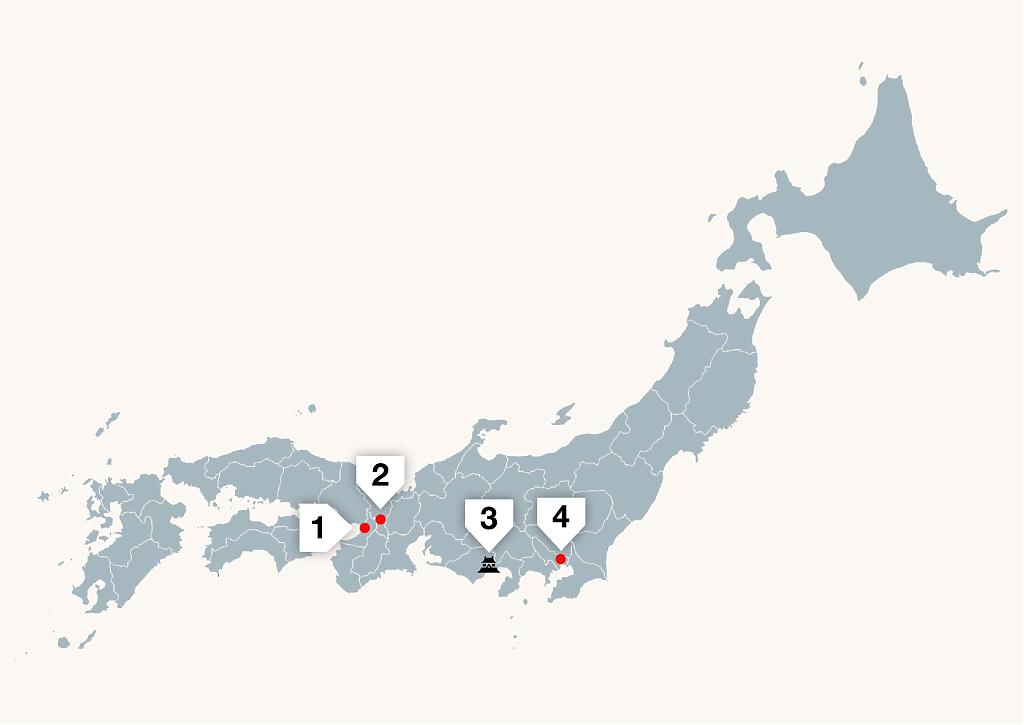
Ieyasu died on the morning of June 1, a cloudy day at the start of the rainy season. He was 73 years old. He had united Japan, brought peace after a century of war, and founded a new dynasty. To protect these accomplishments after his death, he had arranged to become a kami (god or deity).37
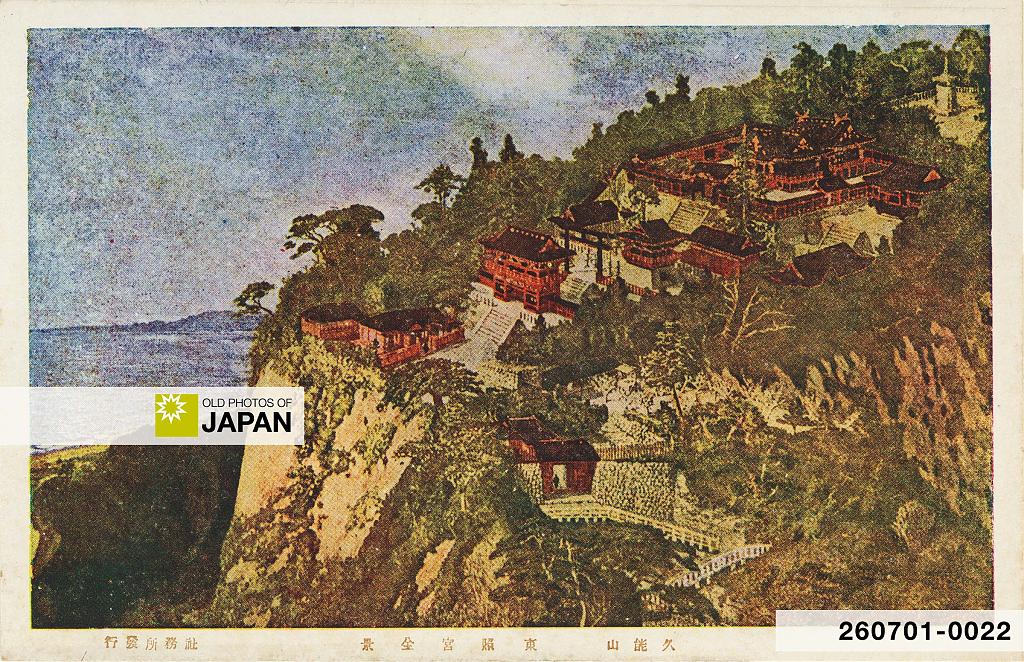
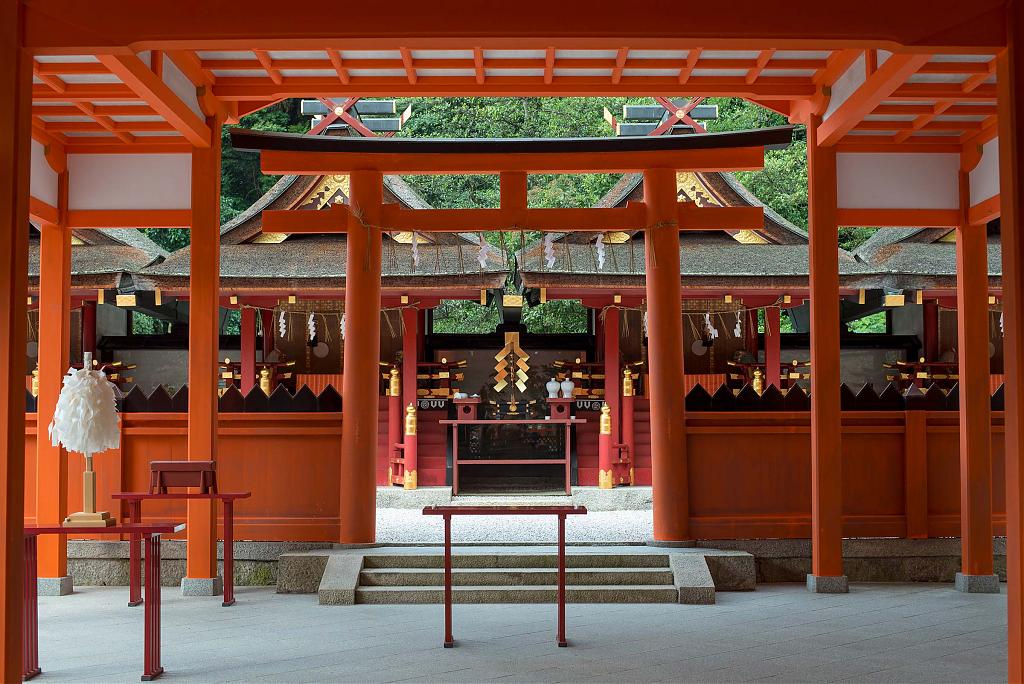
That night, his body was carried to Kunōzan, a nearby mountain with a castle built by the legendary warlord Takeda Shingen (武田信玄, 1521–1573). Two days later, a ceremony was held there to enshrine Ieyasu’s kami in a temporary shrine. The rites followed Yoshida Shintō, a tradition controlled by the Kyoto-based Yoshida family.
This powerful family of Shintō priests had been asserting authority over divine affairs for over a century.38 They had been the primary architects of Toyotomi Hideyoshi‘s transformation into a kami in 1598 (Keichō 3), and the head of the family held a prestigious imperial court rank.
Ieyasu’s ceremony was impressive. Around 10:00 pm, the route from the sacred torii gate to the temporary shrine was screened off with rolls of silk cloth. On the ground lay straw mats covered with white silk. Lights were extinguished.
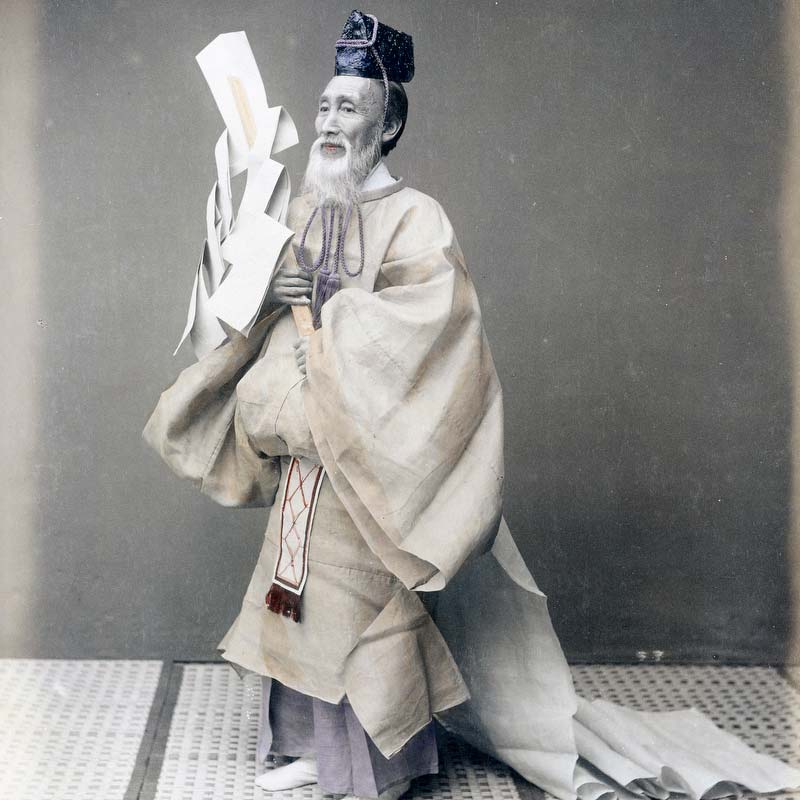
The procession to the shrine was headed by a person scattering rice. Next came a person holding a mirror, followed by the future head priest of the shrine holding a gohei, a sacred wooden wand with folded paper in a zigzag shape. He in turn was followed by the chief officiating priest holding a bell. After them followed a mikoshi (portable shrine). The procession concluded with an escort of warriors armed with bows, shields, spears, and arrows.
Following purification, the mirror was installed in the innermost sanctum of the main shrine building. The mirror served as the shintai, the home for the kami. After food offerings, further purifications, and the main ritual of inviting the kami, a prayer was read. The ceremony concluded, each person bowed and left.39
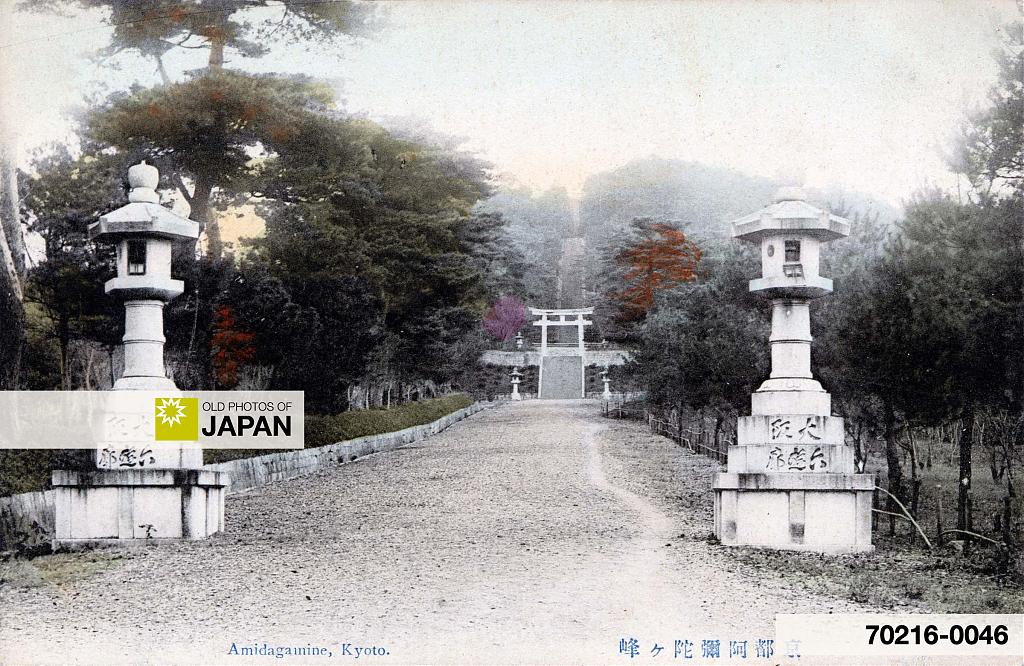
Three days after the ceremony, Shogun Hidetada (徳川秀忠, 1579–1632) visited his father’s shrine with three brothers, heads of the Tokugawa branch families.40 Everything seemed fine and complete. Ieyasu was officially a kami. The first shrine for Ieyasu had been founded. But in the shadows, a storm was brewing between his religious advisors, the Buddhist priests Ishin Sūden and Tenkai.
The Battle for Ieyasu’s Soul
Though they were religious advisors, Sūden and Tenkai wielded great political power. Their influence reached so far that they became known as black-robed chancellors (黒衣の宰相, kokui no saishō).
Sūden (以心崇伝, 1569–1633) served as the chief architect of the shogunate’s early religious, domestic, and foreign policies. He drafted several landmark laws, including the 1614 Anti-Christian Edict, which outlawed Christianity, and the 1615 law that regulated daimyō. He also managed foreign trade diplomacy.
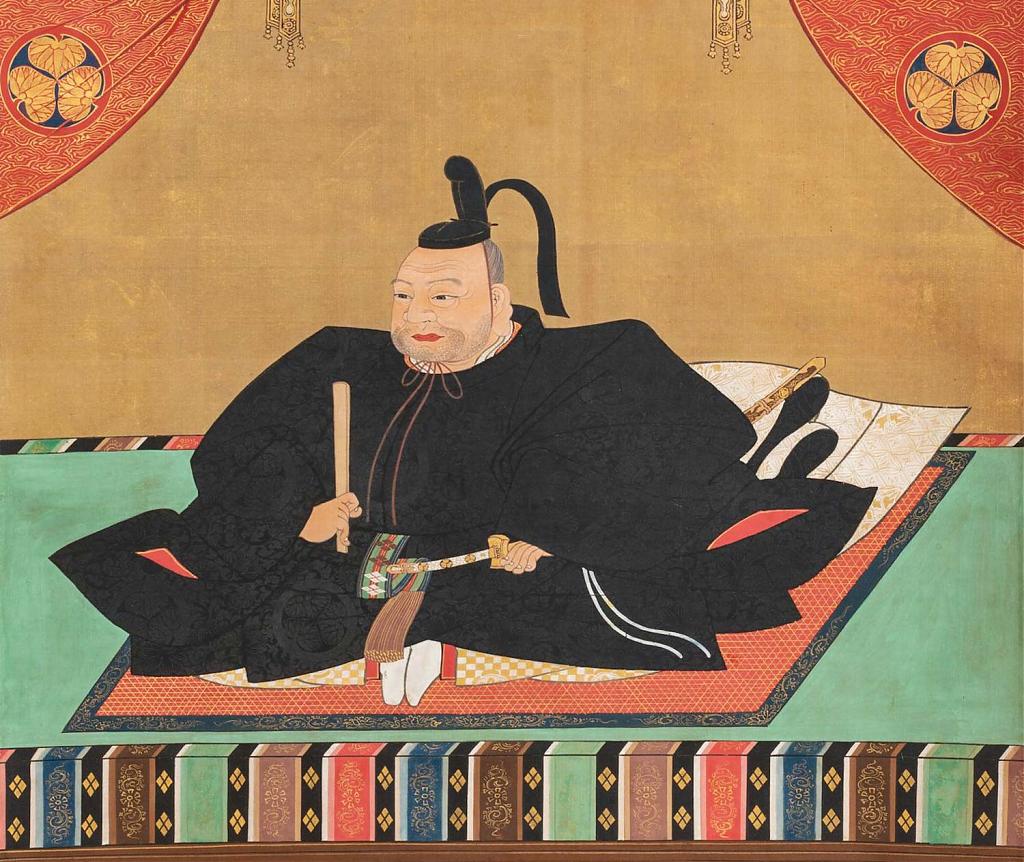
Tenkai (天海, 1536–1643) became Ieyasu’s religious teacher in 1611 (Keichō 16).41 Backed by Ieyasu, Tenkai moved the influential Tendai Sect’s center of gravity from Kyoto to Kantō.42 In 1613 (Keichō 18), Ieyasu tasked Tenkai with reviving the once powerful temple complex for Shintō-Buddhist mountain worship in Nikkō.43
Tenkai was both ambitious and effective. Dutch historian Willem Boot (1947) has called him “a charismatic religious entrepreneur.”44
The two priests came from temples that had been great rivals for centuries. Sūden was associated with Kyoto’s Nanzenji, the center of Zen Buddhism. Tenkai served Enryakuji, the center of the much older Tendai tradition. Interestingly, Ieyasu was initiated into the Tendai Sect in 1614 (Keichō 19).45
Their different backgrounds and relationships with Ieyasu led to a fierce conflict about his last wishes and how to implement them. Within days after Ieyasu’s death, tensions between them erupted into the open. A 1679 biography of Tenkai records that this happened at an audience that Shogun Hidetada held for the people who had nursed his father:46
Tenkai was sitting on his left and Sūden on his right. Sūden, who was a glib talker, reported that everything had been carried out in accordance with Ieyasu’s last will and testament. Thereupon Tenkai edged forward and said that apparently all of Ieyasu’s testaments were doomed to be short-lived.
Sūden got upset about being called a liar and an argument ensued. This got so out of hand that Honda Masazumi (本多正純, 1566–1637), a close advisor of Ieyasu and key administrator, furiously stormed out of the room threatening Tenkai:47
“It is a grave offence to say such things in the presence of the Shogun who, moreover, is still lamenting his loss; Tenkai should be banished without delay to a distant island.”
The clash between the two focused on a religious argument. Sūden had arranged Ieyasu’s ceremony according to Yoshida Shintō rites. He used Toyotomi Hideyoshi’s deification as a crucial precedent. Hideyoshi had become Hōkoku Daimyōjin (豊国大明神) after his death in 1598 (Keichō 3). Sūden wanted Ieyasu to be a daimyōjin (大明神, great shining deity) as well.48
Although the title combined Shintō and Buddhist elements, it was institutionalized by Yoshida Shintō, which considered Buddhism inferior. Tenkai saw Buddhism and Shintō as identical and insisted Sūden’s plan was not what Ieyasu wanted.49
Crucially, Ieyasu had destroyed the Toyotomi clan in 1615 (Keichō 20), leaving its lineage extinct. The Hōkoku Daimyōjin shrine had been closed and dismantled. Tenkai turned this into a powerful argument against daimyōjin.
Ieyasu, he argued, should instead be a gongen (権現), a manifestation of a Buddha in the form of a Shintō kami. Tenkai’s 1679 biography reconstructs his argument:50
Sūden: ‘Our deceased Lord wanted to be deified, remembering the recent example of the Hōkoku Daimyōjin. How, then, could it be against his wishes to deify him according to the rites of the Yoshida?’ Tenkai: ‘The one thing that our Lord wished for in his heart, day and night, was that his lineage (sō) would continue to exist for a long time. Because the lineage of the Hōkoku Daimyōjin has perished before our eyes, he always kept his distance from that god. To quote such ill-omened precedents amounts to calling down ill fortune over this house!’
This won the argument. Instead of being banished, Tenkai became more powerful. Hidetada sent him to the Imperial Court in Kyoto to secure the divine title. Ieyasu now became Tōshō Daigongen (東照大権現, Great Gongen, Light of the East).
Tōshō Daigongen was seen predominantly as a divine power that protected the Tokugawa. Although shrines for Ieyasu were built all over Japan, his worship was never made into a national religious cult. Instead, until the very end of the Edo Period (1603–1868), the shogunate expressed gratitude to Tōshō Daigongen for having brought peace to Japan.51
Tenkai in Power
The dispute between Sūden and Tenkai is often introduced as merely a religious argument. But much more was at play. For one, it was a power struggle between Yoshida Shintō and the Tendai Sect, and between Sūden and Tenkai.52
Japanese historian Satoshi Sonehara (曽根原理, 1961–2025) argued that it was also a struggle over whether Buddhism should be included in the official religion of the Japanese state. Ieyasu’s divine title made it clear that the shogunate saw “Japan not only as a land of the kami but also as a ‘buddha land.’”53
Tenkai’s victory over Sūden therefore made him extremely powerful as the most important Buddhist priest of the shogunate.54 With this power, he immediately started building a shrine for Ieyasu at the temple complex in Nikkō that Ieyasu had entrusted to him.
To build the shrine, Tenkai asked a man we already encountered twice: the daimyō Tōdō Takatora. He helped launch Edo’s growth by proposing that all daimyō maintain residences in Edo, and was one of the three daimyō with a residence on Ueno Hill. Remember his name, as you will encounter him again.
Tenkai next used his newfound power to claim Ieyasu’s body. On April 21, 1617 (Genna 3), over three hundred mounted men and one thousand foot soldiers came to Kunōzan to receive Ieyasu’s remains for a solemn procession to Nikkō:55
The mounted procession was splendidly arrayed, with Chinese-style saddles fitted to the horses. From the Hōi samurai serving as horse attendants to the miscellaneous attendants and runners, everyone was dressed in splendid finery and adorned with flowers.
Ieyasu was enshrined in Tenkai’s new shrine at Nikkō on May 10. This was the start of the magnificent memorial shrine and temple complex, which is now a famous UNESCO World Heritage Site. Over the following decades, shrines dedicated to Ieyasu were established all over Japan.56
In 1625 (Kan’ei 2), as his influence reached new heights, Tenkai founded Kan’ei-ji on Ueno Hill. The temple complex was dedicated to the Tokugawa and backed by Shogun Iemitsu (徳川家光, 1604–1651), who wanted to glorify his grandfather.
The ripples of Sūden and Tenkai’s dispute, and Edo’s explosive growth, reached Ueno virtually simultaneously. Together, they started the dramatic transformation that turned Ueno Hill and Shitaya from a place of rice into one of lotus.
We discover this place of lotus in the next article.
Notes
34 玉林晴朗 (1932)『下谷と上野』 東台社, 98–104.
The other two daimyō who had yashiki on Ueno Hill were Tsugaru Nobuhira (津軽信枚, 1586–1631) of the Hirosaki Domain, and Hori Naoyori (堀直寄, 1577–1639) of the Murakami Domain.
35 ibid, 90.
その兩岸は不安定な沼地の状態で一面の丈なす芦や萱等が生ひ茂つて居たのである。
36 ibid, 90–91.
『下谷耕田』 堀 杏庵
千村東作事西疇。 下谷膏腴百頃侔。
春雨一黎無價寶。 明珠萬斛稻梁秋。
37 Boot, W. J. (2000). The death of a Shogun: Deification in Early Modern Japan in Shinto in History: Ways of the Kami. Honolulu: University of Hawai’i Press, 144–166, particularly 158–159.
“He would become the tutelary deity (chinjushin) of the eight provinces of the Kanto.” (p. 147)
Boot, W.J. (2019). Tenkai in Brill’s Encyclopedia of Buddhism. Volume 2. Leiden: Brill, 1128–1133.
38 Conlan, Thomas (2016). When Men Become Gods: Apotheosis, Sacred Space, and Political Authority in Japan 1486–1599. Quaestiones Medii Aevi Novae, 94.
“Through the Yoshida monopolization of divine authority, the nature of belief of Japan’s gods became formalized into the corpus of belief known as Shintō today.”
39 Boot, W. J. (2000). The death of a Shogun: Deification in Early Modern Japan in Shinto in History: Ways of the Kami. Honolulu: University of Hawai’i Press, 149–150.
40 ibid, 150.
41 Boot, W.J. (2019). Tenkai in Brill’s Encyclopedia of Buddhism. Volume 2. Leiden: Brill, 1129–1130.
42 As abbot of Kita-in, he made it the main Tendai temple in Kantō.
43 Toyotomi Hideyoshi confiscated all of Nikkōzan’s estates in 1590 (Tenshō 18). Over two decades later, it was in a state of severe devastation, political isolation, and financial ruin.
44 Boot, W.J. (2019). Tenkai in Brill’s Encyclopedia of Buddhism. Volume 2. Leiden: Brill, 1129.
45 ibid, 1129–1130.
46 Boot, W. J. (2000). The death of a Shogun: Deification in Early Modern Japan in Shinto in History: Ways of the Kami. Honolulu: University of Hawai’i Press, 144–166, particularly 153–154.
This biography, titled the Jigendaishi Engi (東叡山開山慈眼大師縁起, Tōeizan Kaisan Jigen Daishi Engi), was written by the Buddhist monk Inkai (胤海, 1613–1689), a direct disciple of Tenkai since 1626 (Kan’ei 3) who lived alongside him for many years. It was completed in 1679 (Enpō 7) and printed in 1680 (Enpō 8).
47 ibid, 154.
48 Sonehara, Satoshi; Scheid, Bernhard (2021). Ieyasu’s Posthumous Title and the Tokugawa Discourse on “Divine Country” in Religion, Power, and the Rise of Shinto in Early Modern Japan. London: Bloomsbury Academic, 37–38.
49 ibid, 39.
“What, then, was the real difference between Yoshida Shinto’s notion of myōjin and the notion of gongen as advocated by Tenkai? The greatest contrast is certainly to be found in their respective relationship to Buddhism. For Yoshida Shinto, Buddhism was an inferior teaching, while for Tenkai, Buddhism and Shinto were identical.”
Yoshida Shintō sought to free Shintō from Buddhist dominance, whereas Tenkai believed in a fusion.
50 Boot, W. J. (2000). The death of a Shogun: Deification in Early Modern Japan in Shinto in History: Ways of the Kami. Honolulu: University of Hawai’i Press, 159.
51 ibid, 163.
“What we do not see, however, is that the bakufu seeks to legitimate its authority with references to the deified first Shogun. Gratitude for the fact that he had brought peace to the empire was a theme that was used in bakufu propaganda, but no attempt was made to make the worship of Ieyasu into a national religious cult, for example.”
52 ibid, 155.
The power struggle between Sūden and Tenkai becomes especially clear from a second conflict between the two. Because Ieyasu became a kami, no official period of mourning was declared after Ieyasu’s death. However, mourning rites were held at the Zōjōji temple in Edo. Tenkai designated this as a private affair of the Tokugawa family. Sūden was only allowed to say masses at Zōjōji, but was “forbidden to invite a delegation of monks from the Zen temples in Kyoto.” Meanwhile, large numbers of monks from Eastern Japan participated in the Zōjōji mourning rites.
53 Sonehara, Satoshi; Scheid, Bernhard (2021). Ieyasu’s Posthumous Title and the Tokugawa Discourse on “Divine Country” in Religion, Power, and the Rise of Shinto in Early Modern Japan. London: Bloomsbury Academic, 39.
It is important to note that Buddhism was seen as a bulwark against Christianity, which was designated an “enemy of the state.” Ieyasu had already begun “to demonize Christianity while defining Buddhism as the spiritual pillar of the divine country.” As early as 1614 (Keichō 19), Christians were forced to renounce their religion and obtain a non-Christian certificate from a Buddhist temple. By the late seventeenth century, Buddhist temples certified the non-Christian identity of each resident every year. See: Hur, Nam-lin (2021). Anti-Christian Temple Certification (terauke) in Early Modern Japan. Establishment, Practice, and Challenges in Religion, Power, and the Rise of Shinto in Early Modern Japan. London: Bloomsbury Academic, 22-25.
54 Boot, W. J. (2000). The death of a Shogun: Deification in Early Modern Japan in Shinto in History: Ways of the Kami. Honolulu: University of Hawai’i Press, 155.
Tenkai became the supreme spiritual guide to Shogun Hidetada and Shogun Iemitsu, while Sūden lost his influence in matters of state ritual and spiritual legacy. Tenkai now became able to build several massive shrines and temples dedicated to Tokugawa power, giving the Tendai Sect unparalleled political influence.
55 『徳川実紀 第1編』経済雑誌社, 明37-40, 850–851.
「騎馬の行粧は唐鞍うち。馬副の布衣侍雑色走衆にいたるまで。みな綺羅をかざり花を折たり。」
“Hōi samurai” (布衣侍, hōi-zamurai) refers to hatamoto (direct retainers of the shogun) who were permitted to wear hōi (布衣), a formal robe, during shogunate ceremonies and rituals.
56 According to research published in 1992 by the prominent Japanese Shinto priest, scholar, and author Harutoshi Takafuji (高藤晴俊, 1948), over 555 shrines dedicated to Ieyasu were established. See 高藤晴俊 (1992)『家康公と全国の東照宮 : 泰平と激動の時代を結ぶ東照宮めぐり』東京美術, 193–195. A directory of shrines dedicated to Ieyasu can be found on pages 199 through 234.
Initially, Tōshō Daigongen shrines were called Tōshō-sha (東照社). In 1645 (Shōhō 2), they were upgraded to Tōshō-gū (東照宮), a status traditionally reserved for shrines of imperial ancestor deities.
Published
Updated
Reader Supported
Old Photos of Japan aims to be your personal museum for Japan's visual heritage and to bring the experiences of everyday life in old Japan to you.
To enhance our understanding of Japanese culture and society I track down, acquire, archive, and research images of everyday life, and give them context.
I share what I have found for free on this site, without ads or selling your data.
Your support helps me to continue doing so, and ensures that this exceptional visual heritage will not be lost and forgotten.
Thank you,
Kjeld Duits
Reference for Citations
Duits, Kjeld (). Nikkō 1934: Worshipping a Warrior, OLD PHOTOS of JAPAN. Retrieved on October 14, 2026 (GMT) from https://www.oldphotosjapan.com/photos/1000/tenkai-worshipping-the-warrior-tokugawa-ieyasu


There are currently no comments on this article.