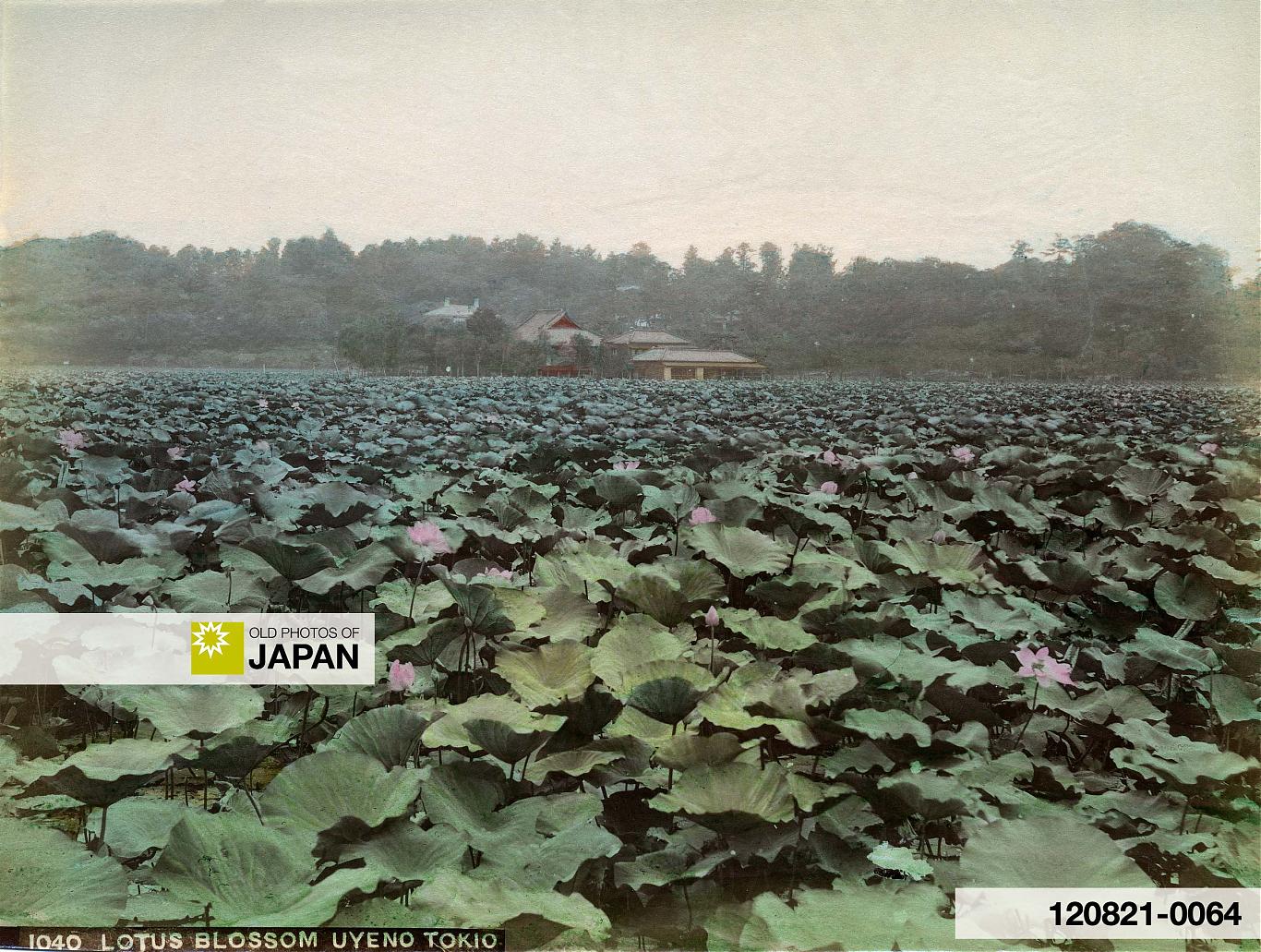
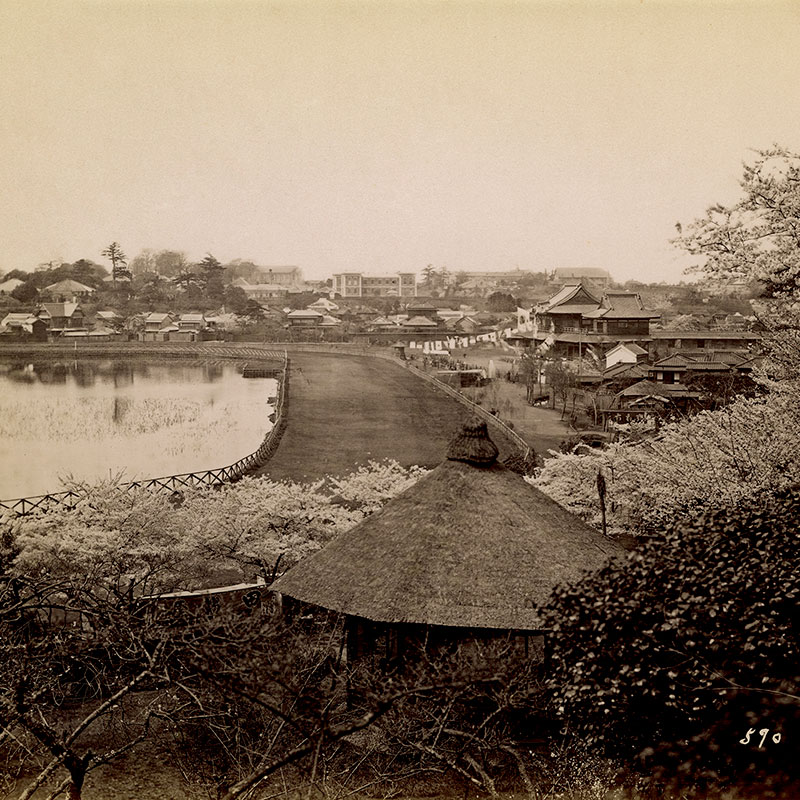
Lotus flowers in Tokyo’s Shinobazu Pond in the 1890s. One of Buddhism’s most recognizable symbols, lotus arrived at Shinobazu because of a visionary political project by the Buddhist priest Tenkai.
How Ueno Tells the Story of Japan
This is Part 6 of an essay about the history of Tokyo’s Ueno district.
This rescue project is funded by readers like you
Old Photos of Japan provides thoroughly researched essays and rare images of daily life in old Japan free of charge and advertising. Most images have been acquired, scanned, and conserved to protect them for future generations.
I rely on readers like you to keep this online museum going.
Introduction
In the previous five articles in this series about Tokyo’s Ueno district, we learned how Tokugawa Ieyasu (1543–1616) built a massive castle in a marshy, low-lying wetland; used imaginative strategies to develop a city around it; and was then deified by the politically savvy Buddhist priest Tenkai (天海, 1536?–1643).
Tenkai’s life and accomplishments were extraordinary. The religious-political structures that he designed governed Japanese life for over two centuries. Japanese historian Fumihiko Sueki (末木文美士, 1949–) has called him the most influential cleric of the early Edo period.57 Tenkai was instrumental in transforming Ueno from an isolated agricultural area with rice fields into a major political symbol of the Tokugawa Shogunate.
Who was Tenkai? Why was he so influential? And why did he select Ueno to build a Buddhist temple with political aims?
Ueno’s New Temple
Some dates are considered so significant that they are chiseled into impressive stone monuments. The events they commemorate are taught in basic history lessons and remembered regularly with celebrations or solemn ceremonies. They fill history books, are explored in documentaries, dramatized in novels and movies, and discussed at conferences. We recall their dates effortlessly.
Some consequential dates, however, escape collective memory. One such date is a forgotten day in December 1625 (Kan’ei 2).58 That month, the first building of a prayer temple for the Tokugawa Shogunate and the peace of the nation was completed on Edo’s Ueno Hill, now Tokyo’s Ueno Park.
Kan’ei-ji Temple (寛永寺) was located some three and a half kilometers northeast of Edo Castle and overlooked Shinobazu Pond in what was still a very rural area, with massive rice paddies. Kan’ei-ji’s 1680 foundational history, Tōeizan Engi (東叡山緣起), describes Ueno’s forested hills in the early 1620s as “quiet, secluded, and remote.”59
The hilly landscape was quiet, the woods secluded and remote, set apart from the mundane world. It was truly a sacred place for expounding the Dharma and opening the Way.
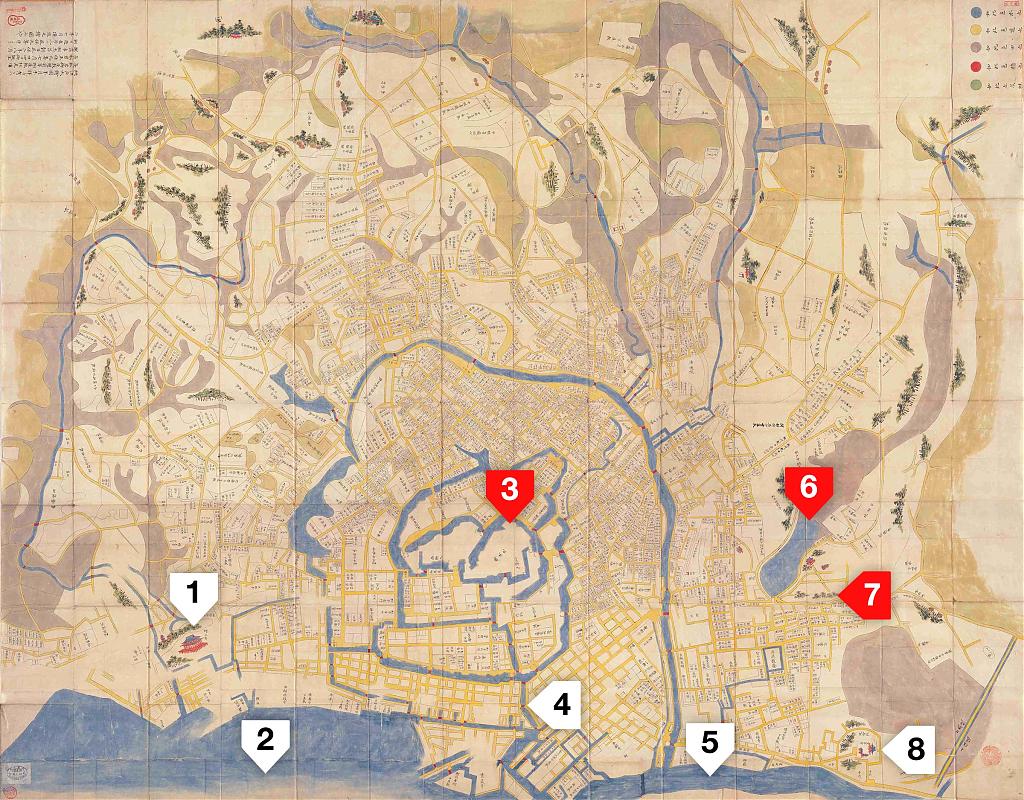
Kan’ei-ji would become a major Tokugawa funeral temple and grow into Edo’s largest temple complex. Around its magnificent temple buildings, countless cherry trees were planted, and Shinobazu Pond was filled with dozens of varieties of lotus. The temple grounds grew into a vision of earthly paradise.
The forested hills and rice farms forged from a marsh became a visually stunning, deeply sacred place representing the nation. Kan’ei-ji transformed Ueno into one of the most important symbols of Tokugawa power and authority.
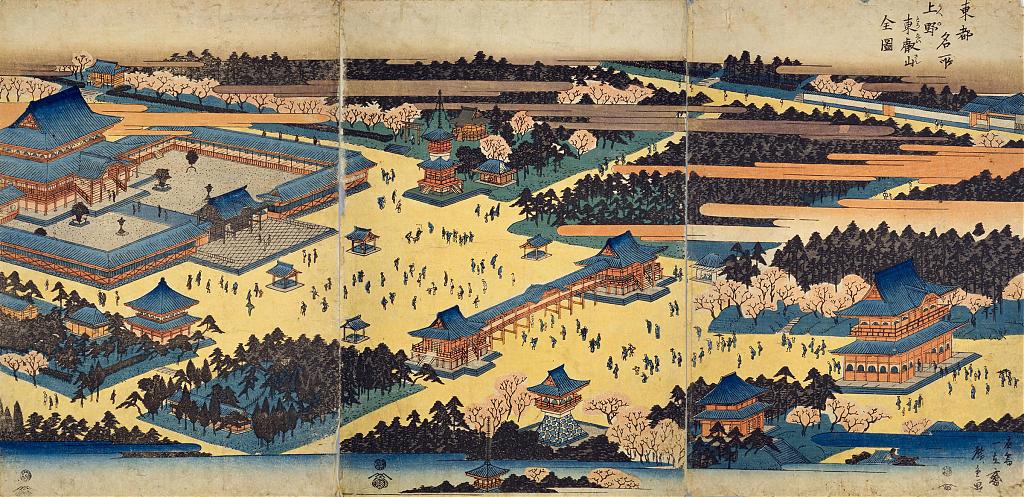
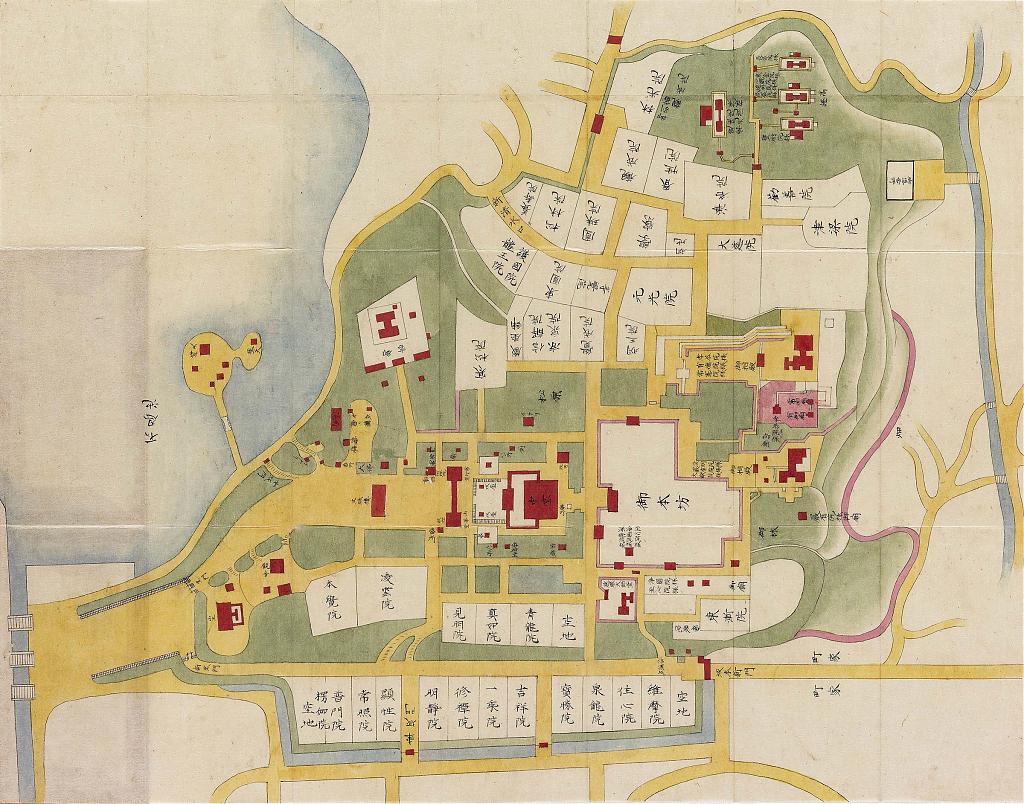
At its peak, Kan’ei-ji featured 36 sub-temples in addition to its main buildings. But for the first two years, it was just a single building: the Honbō (本坊), the head priest’s quarters. It was constructed from a former shogunal villa used for falconry and rest. Donated by Shogun Tokugawa Hidetada (徳川秀忠, 1579–1632), the villa was disassembled and transported from Takanawa to Ueno. Here it became the new home of Kan’ei-ji’s founder, Chief Abbot Tenkai.60
In a little over a decade, this ambitious Buddhist priest had risen from being a regional leader of the Tendai Sect into the most powerful religious advisor to three successive Tokugawa shoguns.
It began as an advisor-patron relationship with the first shogun, Tokugawa Ieyasu (1543–1616), around 1608 (Keichō 13). Ieyasu’s decisive victory at the Battle of Sekigahara had taken place only eight years earlier. He had been shogun for just five years, and the full consolidation of his power lay seven years in the future.61 Though rapidly expanding, Edo was still a new frontier town, its massive castle under construction and far from completed. Tens of thousands of workers were reshaping the surrounding marsh into a city.
At the time, Tenkai is believed to have been in his early seventies, with a storied career behind him. His experience and understanding of politics, statecraft, and military strategy, combined with his background as a Tendai monk, were of great value to a shogunate in the process of establishing itself.
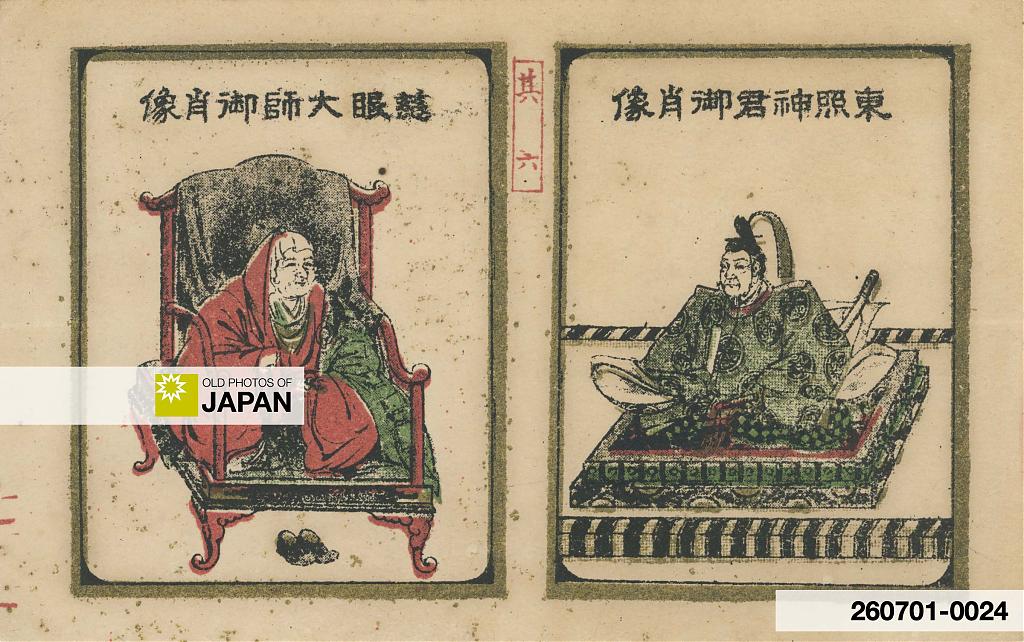
Blowing in the Wind
Tenkai was born in Aizu in present-day Fukushima Prefecture, then an area rife with war and clan rivalries. Buddhist temples offered stability, safety, and opportunities for education. So, at only eleven years old, he was ordained in the Inari-dō (稲荷堂), a temple that blended Buddhist and Shintō traditions.62 It was located inside Kurokawa Castle, Aizu’s geopolitical and military nerve center.
He spent his formative years at the intersection of religious ritual, high-stakes diplomacy, and brutal military realities. Growing up alongside samurai, generals, and political advisors, he was exposed to the ruthless mechanics of power and statecraft. Simultaneously, he learned to navigate two distinct religious systems.
In 1560 (Eiroku 3), Tenkai entered Japan’s premier secular university, the Ashikaga School in modern-day Tochigi Prefecture.63 It taught political monks and the sons of samurai subjects such as Confucianism, Daoism, Onmyōdō divination, and military strategy.
Rather than limiting himself to Tendai, Tenkai systematically studied the philosophies of other major Buddhist schools. He also studied Buddhism at major temples in western Japan: Kōfuku-ji in Nara, and Enryaku-ji and Mii-dera in Otsu.64 All three are major tourist destinations today.
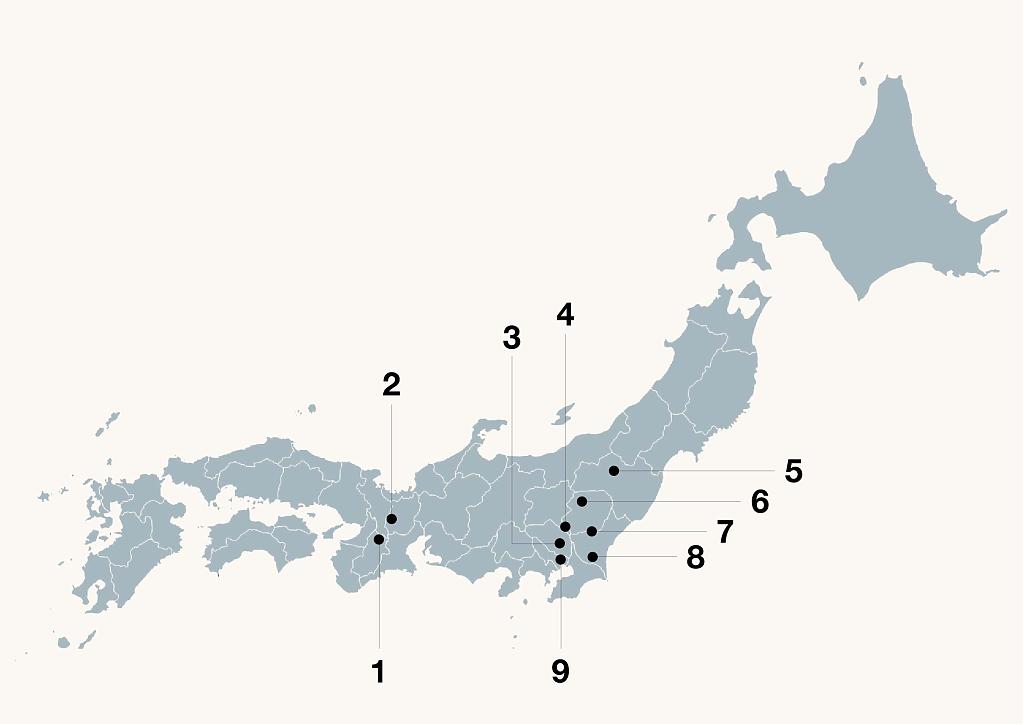
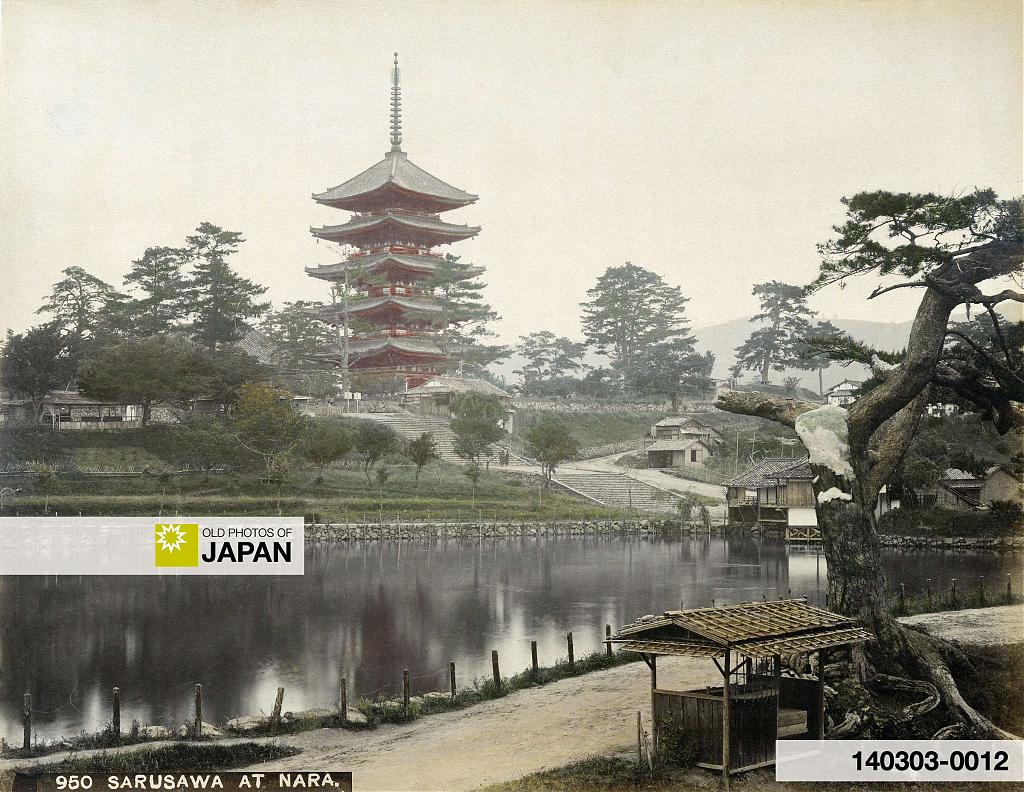
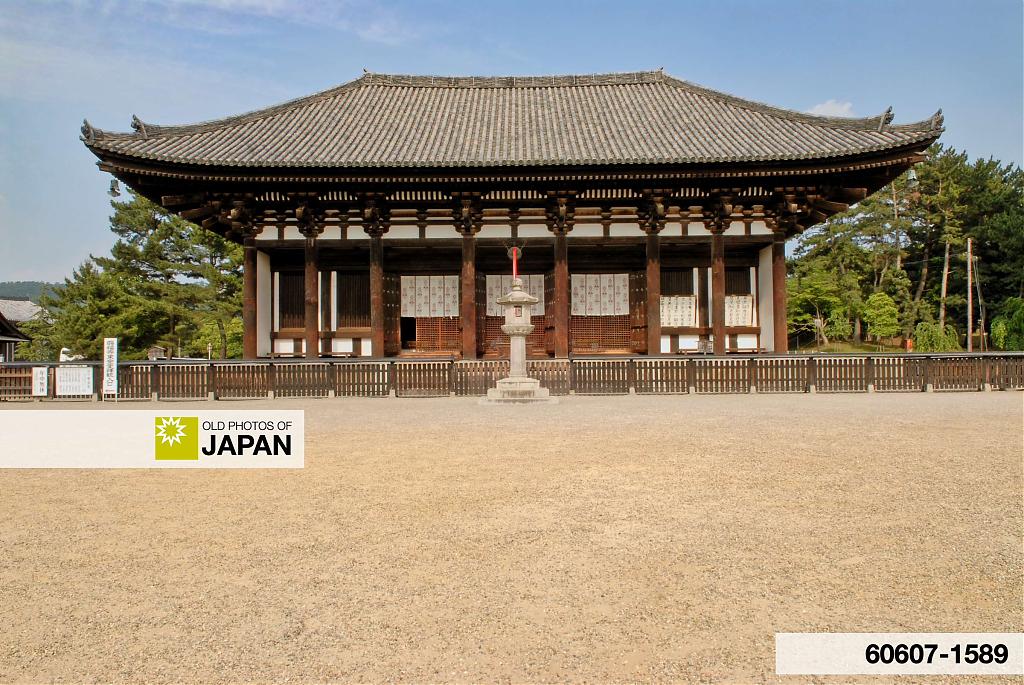
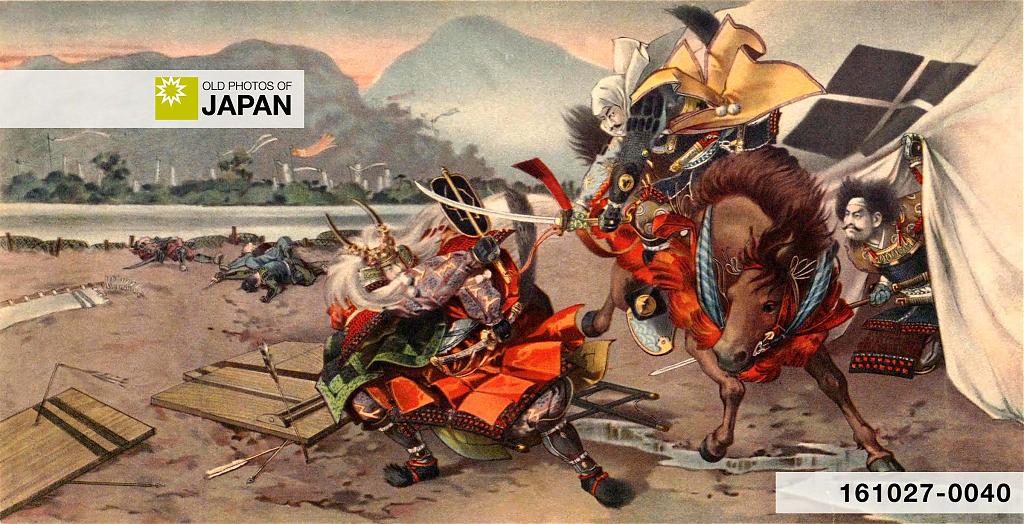
In 1571 (Genki 2), Tenkai escaped the massacre of the Tendai Sect’s headquarters on Mount Hiei by Japan’s first “great unifier” Oda Nobunaga. The sect’s Enryaku-ji Temple had been a political and military powerhouse for centuries. Five hundred years earlier, the powerful Emperor Shirakawa (白河天皇, 1053–1129) already lamented the great military strength of Mount Hiei’s warrior monks:65
The only things that I cannot control are the waters of the Kamo River, the fall of the dice, and the monastic armies from Mount Hiei.
Nobunaga forever broke Mount Hiei’s military strength. He burned down most of its temples and beheaded priests, women, and children. Nearby Mii-dera, where Tenkai had studied earlier in his life, was also destroyed. The siege and escape from this physical and spiritual horror were likely deeply defining life experiences for Tenkai, then in his early 30s.
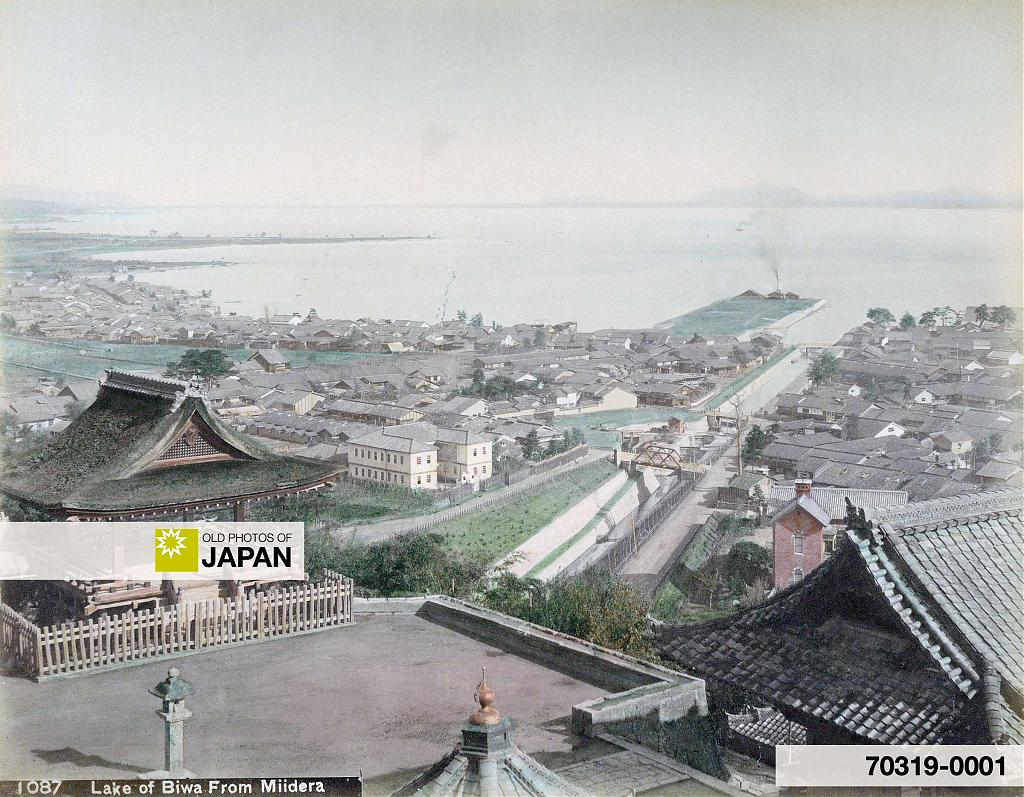
As wars continued to rage, Tenkai survived under the protection of the legendary warlord Takeda Shingen (武田信玄, 1521–1573) and later the Ashina clan in Aizu. Here, he served as both the head priest and Shintō administrator of his first temple, the Inari-dō.
But the chaos of the Sengoku Period continued to catch up with him. In 1584 (Tenshō 12), Lord Ashina Moritaka (蘆名盛隆, 1561–1584) was assassinated. Then, in 1589 (Tenshō 17), the Ashina clan itself was completely destroyed by another legendary warlord, Date Masamune (伊達政宗, 1567–1636).
Once again, Tenkai had to flee for his life. He settled in Ibaraki, where he served as abbot of the Fudōin Temple (不動院) until at least 1597 (Keichō 2).66 He also changed his name from Zuifū (随風), meaning following the wind, to Tenkai (天海), which combines the characters for heaven and sea. While his old name suggested someone at the mercy of powerful forces, his new one evoked a vision of vastness, a surprisingly appropriate name for the man he would become.
The Monk and the Warrior
Over the following decade, Tenkai continued to move. In 1607 (Keichō 12), Ieyasu appointed him to rebuild the Mount Hiei temples, which allowed him to hone his administrative talents.67
Soon, Ieyasu’s and Tenkai’s paths began to merge. Tenkai dreamt of rebuilding the Tendai Sect. Ieyasu understood that religious institutions possessed great power over the masses and saw Buddhism as a powerful force of political and spiritual control. To ensure thorough civil oversight and eradicate Christianity, he embarked on transforming Buddhism into a bureaucratized arm of the state.68 Tenkai became his pathfinder.
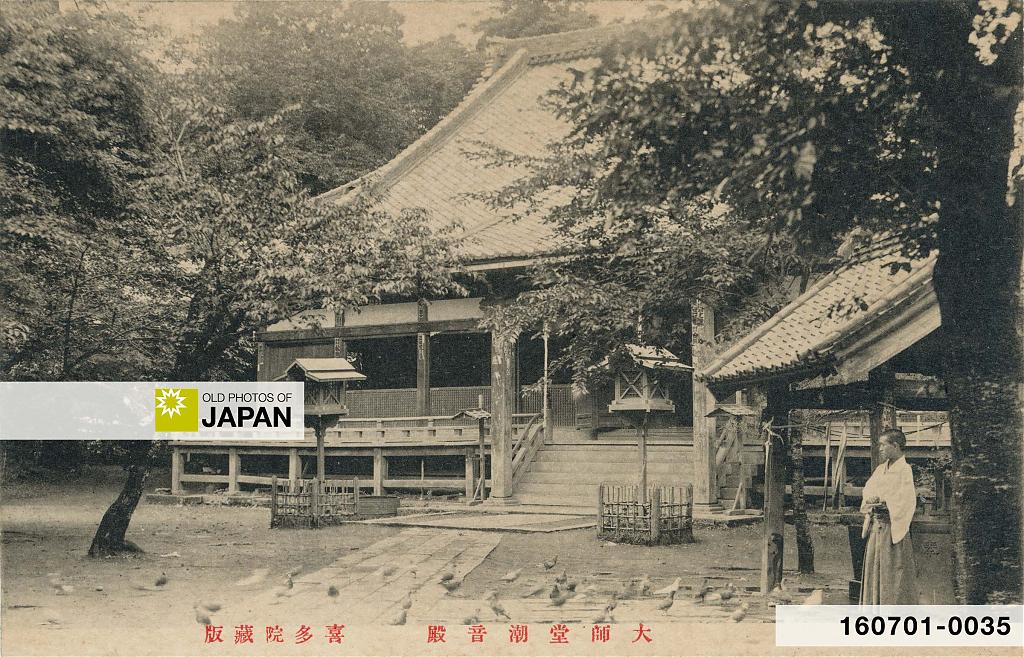
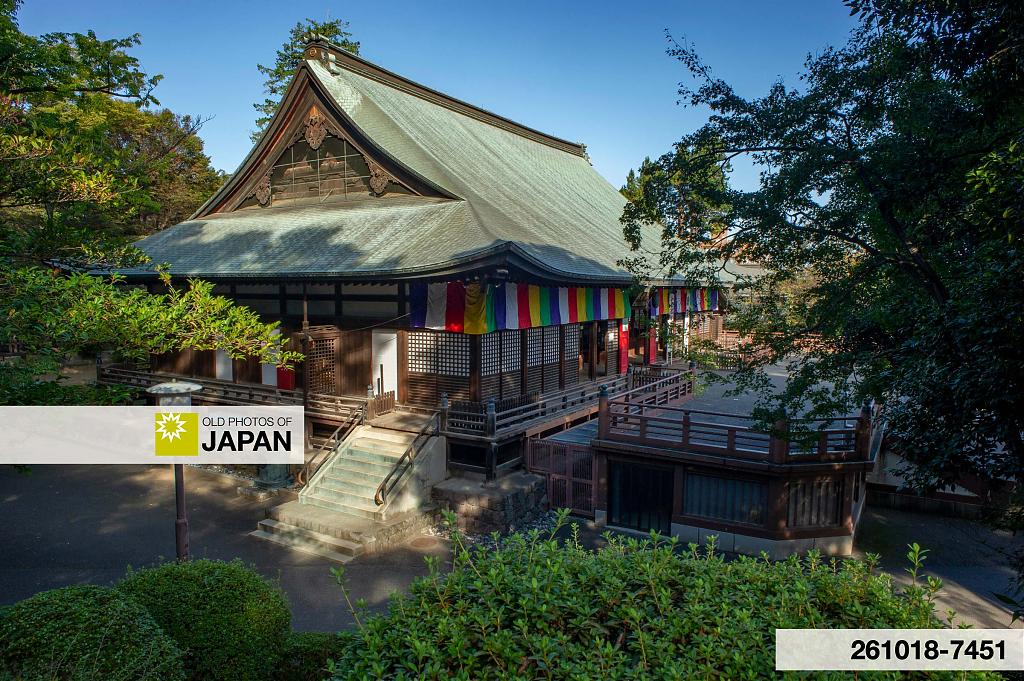
Their ambitious vision began taking shape at Senba Kita-in (千波北院), an almost 800-year-old temple in Kawagoe, 40 kilometers northwest of Edo. It had suffered great damage from Sengoku-period wars and was barely surviving. In 1612 (Keichō 17), Ieyasu granted the temple to Tenkai and funded its reconstruction to turn it into a regional administrative hub.69
To symbolize the temple’s fresh start, Tenkai changed the kanji characters from the plain 北院 (Northern Hall) to the auspicious 喜多院 (Temple of Great Joy), brilliantly preserving the pronunciation of Kita-in.
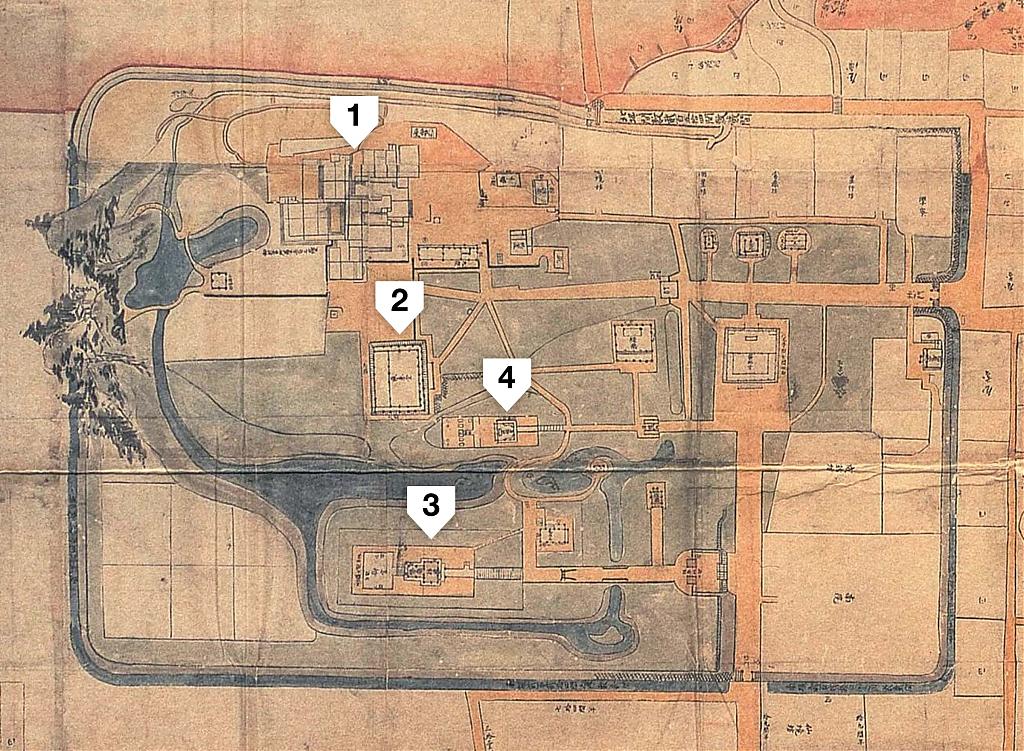
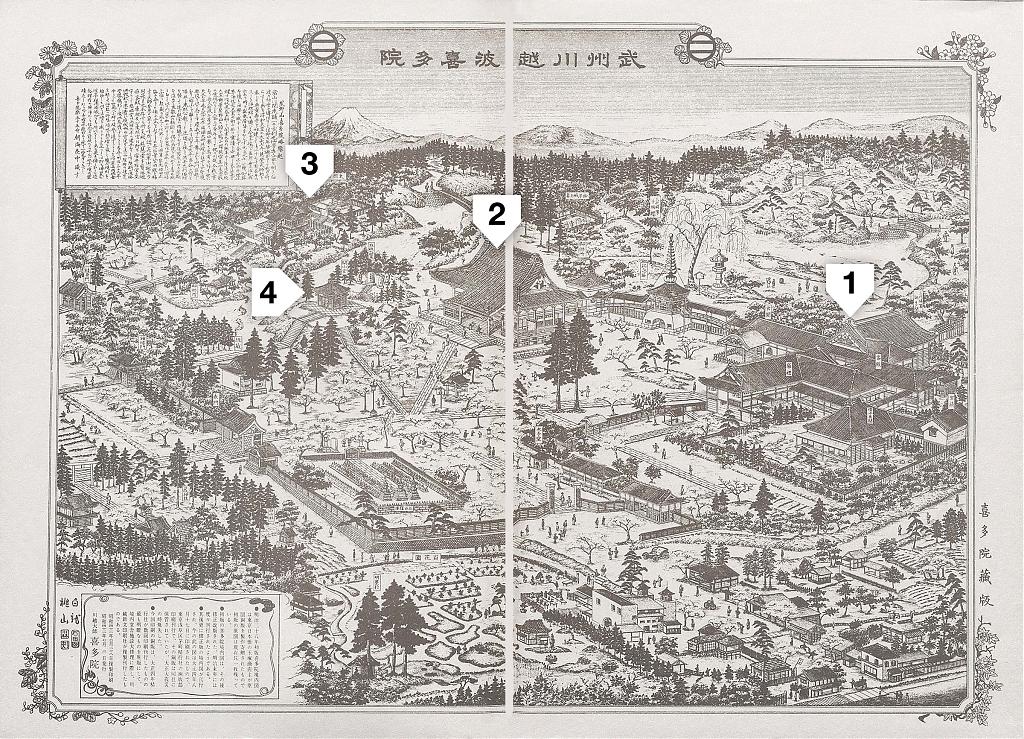
The following year, in 1613 (Keichō 18), the shogunate designated Kita-in as the head temple of the Tendai Sect in the Kantō region. This stripped administrative power away from less cooperative temples, created a clear hierarchy among Tendai temples, and also moved the sect’s center of gravity from Kyoto to Kantō.70
The shogunate reinforced this new status by securing an imperial decree that granted Kita-in the mountain name Tōeizan (東叡山), Eastern Mount Hiei. The authoritative name established Kita-in as the equivalent of Mount Hiei.71
Ieyasu now had a powerful, bureaucratized religious organization with a trusted leader only a one-day journey from his new capital. Meanwhile, by integrating demilitarized Tendai Buddhism into the governing structure, Tenkai ensured that his sect would never again face an existential threat like the 1571 massacre.
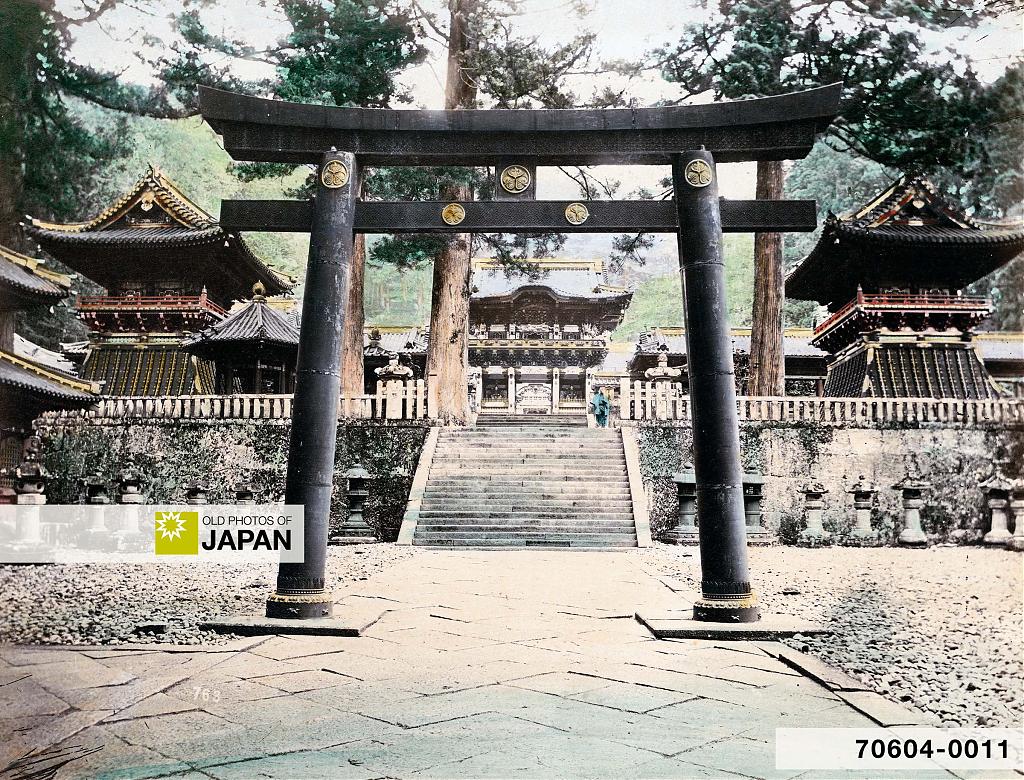
In the same year, Ieyasu also assigned Tenkai to revitalize Nikkōzan (日光山), a vast complex of 300 temples and shrines at Nikkō.72 Founded in 766, it had been an influential center of Shintō-Buddhist mountain worship. But Toyotomi Hideyoshi’s victory over the Hōjō clan in 1590 had cut off its economic lifelines. Nikkōzan had become impoverished and fallen into severe disrepair. Most monks had left.
Granting Nikkōzan to Tenkai had far-reaching political consequences. It gave him a strategically important base in eastern Japan, with the revenues and institutional authority to extend the shogunate’s influence. It also allowed him to build a major, state-sanctioned Tendai center independent of the Buddhist institutions in western Japan.
Following Ieyasu’s death in 1616 (Genna 2), Tenkai used his new base in Nikkō to establish a powerful religious foundation for the shogunate’s political legitimacy. Kita-in served as the administrative center; Nikkōzan projected the awe-inspiring sacred authority.
Sanctifying a New Dynasty
Tenkai was able to establish Nikkōzan’s new role as the spiritual anchor of the Tokugawa dynasty because he won a crucial religious argument over the worship of Ieyasu. This resulted in Ieyasu becoming Tōshō Daigongen, a manifestation of a Buddha in the form of a Shintō kami. A year after Ieyasu’s death, Tenkai enshrined Tōshō Daigongen in a newly built shrine at Nikkōzan. Now known as Tōshōgu (東照宮), the shrine was called Tōshōsha (東照社) until 1645 (Shōhō 2).73
Nikkō was a magnificent location, but Shogun Hidetada told Tenkai that the journey from Edo, which took almost a week each way, made regular worship impossible. He wanted something closer:74
The road from Edo Castle to Nikkō is long, and I cannot personally make the regular visits to perform the rites of worship. I wish to select a suitable site within the castle grounds and build a genbyō [a branch shrine for the worship of a deceased ruler], so that I may express my filial devotion at dawn and dusk. What do you think?
Tenkai replied that Tōshō Daigongen’s presence was “like the moon reflected in water.” One does not need to travel to the moon to be touched by its light. He told Hidetada to build the shrine “without delay.”75
The shrine was completed in 1618 (Genna 4). The enshrinement ceremony appears to have been of considerable religious and political importance. Tenkai himself officiated, using the same rituals employed at Nikkō. Among those attending were court nobles and imperial princes who had entered Buddhist orders.76
The Tokugawa branch houses, headed by Ieyasu’s sons, soon followed. Nagoya built a Tōshōsha in 1619 (Genna 5), and Mito and Wakayama in 1621 (Genna 7).77
Kishū Tōshōgū in Wakayama is the only one of the Tokugawa family shrines that has survived in its original form. The annual festival that the shrine established to honor Ieyasu’s spirit is still held every May. It demonstrates the influential role Ieyasu shrines played in Edo society:
As the veneration of Tōshō Daigongen spread, its political and religious framework became increasingly crucial to the legitimacy and stability of the shogunate. This, in turn, solidified Tenkai’s authority, establishing him as the Tokugawa shogunate’s foremost religious and political advisor.78 Tenkai, therefore, needed a base closer to the political center. This set the stage for Kan’ei-ji Temple.
In January 1623, Shogun Hidetada granted Tenkai land in Ueno to build the new temple.79 It is not entirely clear how Ueno was selected. According to the 1680 foundational history of Kan’ei-ji, Tōeizan Engi, Tenkai himself searched for the location after Shogun Hidetada and future Shogun Iemitsu expressed concern that Kita-in was too far away.
Tōeizan Engi introduces Ueno as a place of destiny, highlighting its surprising resemblance to Mount Hiei. Both locations overlooked a body of water and a village named Sakamoto. Both guarded the northeastern approach to the political center: Hieizan stood northeast of Kyoto; Ueno northeast of Edo Castle.
This position was crucial as it was the kimon, or demon gate (鬼門), from which evil spirits and misfortune were believed to enter. Placing a great temple here offered vital protection:80
Just as Hieizan stands to the northeast of the imperial palace in the western capital, so this place lies to the northeast of Edo Castle. At the eastern foot of the mountain is a settlement called Sakamoto, while to the west lies a pond called Shinobazu. This, too, mirrors Sakamoto at the foot of Hieizan. “Ah, could it be that I am destined to have a bond with this mountain? If I wish to spread the Dharma in the eastern provinces and establish a place of practice to ward off evil and subdue demons, then if not this place, where?”
What makes this account so fascinating is its provocative political message. It compares the brand-new Kan’ei-ji with a temple that for centuries had been one of the most powerful Buddhist institutions in Japan. It even dares to compare Edo Castle with Kyoto’s Imperial Palace, presenting the newly established city of Edo as Japan’s political center. In a subtle yet masterful way, it legitimized the Tokugawa Shogunate, Kan’ei-ji itself, and the temple’s very location in Ueno.
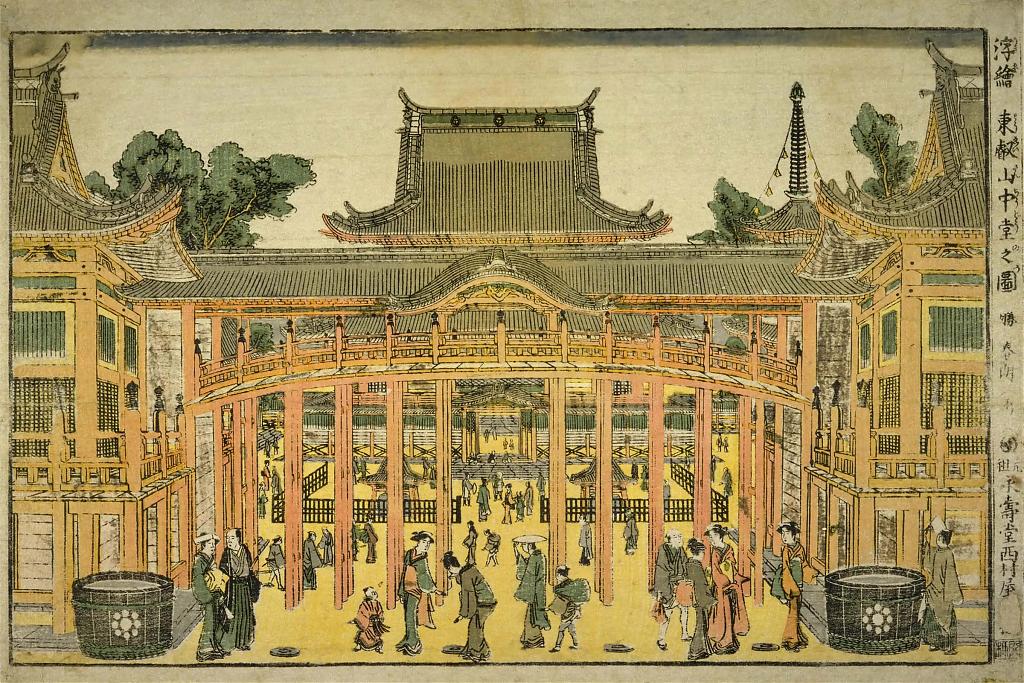
Even the temple’s name was chosen to project legitimacy. Kan’ei-ji took its name from the Kan’ei era (1624–1645). Permission to use the reigning emperor’s era name required special imperial authorization and conferred great prestige.
To further increase the name’s impact, the mountain name Tōeizan, used to position Kita-in as the spiritual twin to Enryaku-ji, was transferred to the new temple in Ueno. It became officially known as Tōeizan Kan’ei-ji.81
Tōeizan Kan’ei-ji was no ordinary Buddhist temple. Its main function was political. Over the following decades it reshaped Ueno into a unique place where religious and political power converged, and brazenly mixed with entertainment.
We discover the start of this transformation in the next article.
Previous Articles
- In Ueno Before the Quake we learned that Ueno in the 1910s was a vibrant maze of geisha houses, rendezvous teahouses, and top-class restaurants, many with a breathtaking view of the lotus-filled Shinobazu Pond.
- In A Castle in a Marsh, we jumped back in time to the 1500s to see how Tokugawa Ieyasu (1543–1616) built a massive castle in a marshy, low-lying wetland.
- Edo: Japan’s New Center of Power described how the matriarch of one of Japan’s most influential clans was taken hostage by Ieyasu just before the pivotal Battle of Sekigahara, starting off a system of sending hostages to Edo.
- Edo: A Metropolis of Hostages explored how sending hostages to Edo developed into a system that turned it into a massive city, reaching Ueno in the 1610s.
- Worshipping a Warrior explained how Tenkai won the religious argument over the worship of Ieyasu.
Notes
57 Steineck, Tomoë I. M. (2020). Kanda Sōtei: The Shogun’s Sacred Painters and their Realm of Influence. Nanzan Institute for Religion and Culture: Japanese Journal of Religious Studies 47/2: 312.
58 田邊潔 (1937)「寛永寺建築論」『建築學會論文集』5, 214–215. According to the Kinenroku (記年録), the Honbō was completed in the eleventh month of Kan’ei 2, which corresponds to November 29–December 28, 1625 in the Gregorian calendar.
59 寛永寺 (1916)『慈眼大師全集 上巻』寛永寺, 695.
「山色寂寞林容幽邃絕俗忘世、實說法開道靈區也」
60 The villa was Takanawa Goten (高輪御殿). It stood on a scenic coastal hill overlooking Tokyo Bay in Takanawa, present-day Minato-ku, Tokyo. 寛永寺 (1916)『慈眼大師全集 上巻』寛永寺, 698.
Tenkai’s date of birth is a “matter of conjecture.” Boot, W.J. (2019). Tenkai in Brill’s Encyclopedia of Buddhism. Volume 2. Leiden: Brill, 1128.
61 After Ieyasu defeated the remaining Toyotomi clan during the Osaka Summer Campaign in 1615, the House of Tokugawa finally held absolute military and political supremacy in Japan.
62 Boot, W.J. (2019). Tenkai in Brill’s Encyclopedia of Buddhism. Volume 2. Leiden: Brill, 1128.
63 ibid.
64 ibid.
Dutch historian W.J. Boot adds a caveat to the accounts of Tenkai’s early life: “To what extent all this is true is difficult to say…”
65 Kitagawa, Hiroshi; Tsuchida, Bruce T. (1977) The Tale of the Heike: Heike Monogatari. Volume I. Tokyo: University of Tokyo Press, 61.
66 Boot, W.J. (2019). Tenkai in Brill’s Encyclopedia of Buddhism. Volume 2. Leiden: Brill, 1128.
67 寛永寺 (1916)『慈眼大師全集 上巻』寛永寺, 405.
「慶長十二年・依家康公命移南光坊、爲探題執行」
In this biography entry, Nankōbō (南光坊) refers to a temple residence at Enryaku-ji. When Tokugawa Ieyasu appointed Tenkai as the Tandai Shikyō (探題執行, overseer or administrator) to lead the reconstruction of Enryaku-ji, Nankōbō served as Tenkai’s headquarters and he came to be called Nankōbō Tenkai. His identity became so closely linked with his successful reconstruction work that the place-name eventually became his name.
68 The shogunate eventually implemented the danka system. It legally required every citizen to register with a local Buddhist temple. This transformed Buddhist temples into a bureaucratized network for state surveillance, census tracking, and civil oversight. It was specifically used as a primary tool to root out Christianity. By forcing everyone to register at a temple, the Shogunate easily identified and persecuted Christians.
69 寛永寺 (1916)『慈眼大師全集 上巻』寛永寺, 405.
「慶長十七年・賜川越仙波於天海、寄五百斛資類」
Tenkai became the 27th abbot of Senba Kita-in. Although Tokugawa Ieyasu granting Kita-in to Tenkai in 1612 is well-documented, the circumstances of Tenkai’s appointment as abbot remain uncertain. Many sources give the year as 1599 (Keichō 4). Almost every tour guide, tourist information office, and website repeats this date. But Dutch historian W. J. Boot notes in Brill’s Encyclopedia of Buddhism, Volume 2, that it “cannot be confirmed from independent sources.”
The chronology is further complicated by independent evidence that Tenkai was abbot of Sōkōji Temple (宗光寺) in Tochigi Prefecture in 1609 (Keichō 14). The Sunpu-ki (駿府記), a chronicle of Ieyasu’s life between 1611 and 1615, notes that Tenkai told Ieyasu of his plans to move to Kita-in when he visited Sunpu Castle in present-day Shizuoka City in 1612. Boot, W.J. (2019). Tenkai in Brill’s Encyclopedia of Buddhism. Volume 2. Leiden: Brill, 1128–1129.
70 Boot, W.J. (2019). Tenkai in Brill’s Encyclopedia of Buddhism. Volume 2. Leiden: Brill, 1130.
These rules effectively made the Tendai Sect in east Japan independent of Enryakuji in the west, and put all Tendai temples in the Kantō under the supervision of the Kita’in, that is Tenkai.
Ieyasu extended this hierarchical model across Buddhist denominations. Temples were placed under the authority of politically compliant head temples, which were themselves subject to state oversight. Whereas Oda Nobunaga had sought to crush the military power of major Buddhist institutions, Ieyasu transformed Buddhism into an instrument of Tokugawa rule. Temple administrators used to be selected by powerful regional clans, now they were selected in Edo, shifting power from the provinces to the capital.
71 The characters for Hieizan (比叡山) consist of 比 and 叡山, the core identity of the mother temple: Eizan (叡山, the Mountain of Wisdom). The first character of Hieizan was stripped and replaced with 東 (Tō, East).
Tōeizan (東叡山), therefore, does not just mean Eastern Mount Hiei. It literally translates to The Eastern Mountain of Wisdom, positioning Kita-in as the ideological and spiritual twin to the original Eizan. It is a genius use of language for political ends.
72 恩田浩孝 (2015),『座禅院昌尊の生涯 : 日光山の終焉と上三川今泉家』随想.
73 The imperial court officially granted the higher-status title of “gū” (宮) to the primary shrine in Nikkō in 1645. The title change was granted to significant branch shrines the following year.
74 寛永寺 (1916)『慈眼大師全集 上巻』寛永寺, 355.
「自江城至日光路遠而不能自勤時祭老享欲相攸於營中營原廟以致孝于晨昏如何」
75 ibid.
76 ibid.
77 Boot, W.J. (2019). Tenkai in Brill’s Encyclopedia of Buddhism. Volume 2. Leiden: Brill, 1131.
78 Tenkai’s standing was further bolstered by his rank as Dai-Sōjo (大僧正), the highest priestly rank within the clerical hierarchy. Emperor Go-Mizunoo (後水尾天皇, 1596–1680) bestowed the rank on him in 1616. The rank of Dai-Sōjo ensured that monks from all over Japan had to obey Tenkai’s orders. This made the religious laws he introduced as the shogunate’s religious advisor legally and spiritually unbreakable.
79 寛永寺 (1916)『慈眼大師全集 上巻』寛永寺, 695.
「元和八年壬戌十二月賜地矣」
“In the eighth year of Genna, the year Mizunoe-Inu, in the twelfth month, he was granted the land.” This is January 1623 on the Gregorian calendar.
80 寛永寺 (1916)『慈眼大師全集 上巻』寛永寺, 695.
「且西都之有比叡也、九重之艮維也、江城之於此地、亦艮隅也、亦東麓有邑名坂本、西麓有池日不忍、是復摸叡之坂本也、嗚呼吾與此山有緣乎今欲興法於東州求辟邪降魔道場則非此地而其何乎」
81 The full official name is Tōeizan Kan’ei-ji Endon-in (東叡山寛永寺円頓院). In the traditional naming structure of Japanese Buddhist temples, a full formal name consists of three parts: a mountain name (山号, sangō), a temple name (寺号, jigō), and a cloister name (院号, ingo).
Published
Reader Supported
Old Photos of Japan aims to be your personal museum for Japan's visual heritage and to bring the experiences of everyday life in old Japan to you.
To enhance our understanding of Japanese culture and society I track down, acquire, archive, and research images of everyday life, and give them context.
I share what I have found for free on this site, without ads or selling your data.
Your support helps me to continue doing so, and ensures that this exceptional visual heritage will not be lost and forgotten.
Thank you,
Kjeld Duits
Reference for Citations
Duits, Kjeld (). Tokyo 1890s: Ueno: From Rice to Lotus, OLD PHOTOS of JAPAN. Retrieved on October 29, 2026 (GMT) from https://www.oldphotosjapan.com/photos/1001/ueno-from-rice-to-lotus


There are currently no comments on this article.