
1890s
Running the Mail
This studio image of a Japanese express courier, or hikyaku (飛脚) is fake. When Kimbei Kusakabe (1841–1934) shot this scene in the 1890s, these near-naked runners had long since vanished.
This studio image of a Japanese express courier, or hikyaku (飛脚) is fake. When Kimbei Kusakabe (1841–1934) shot this scene in the 1890s, these near-naked runners had long since vanished.
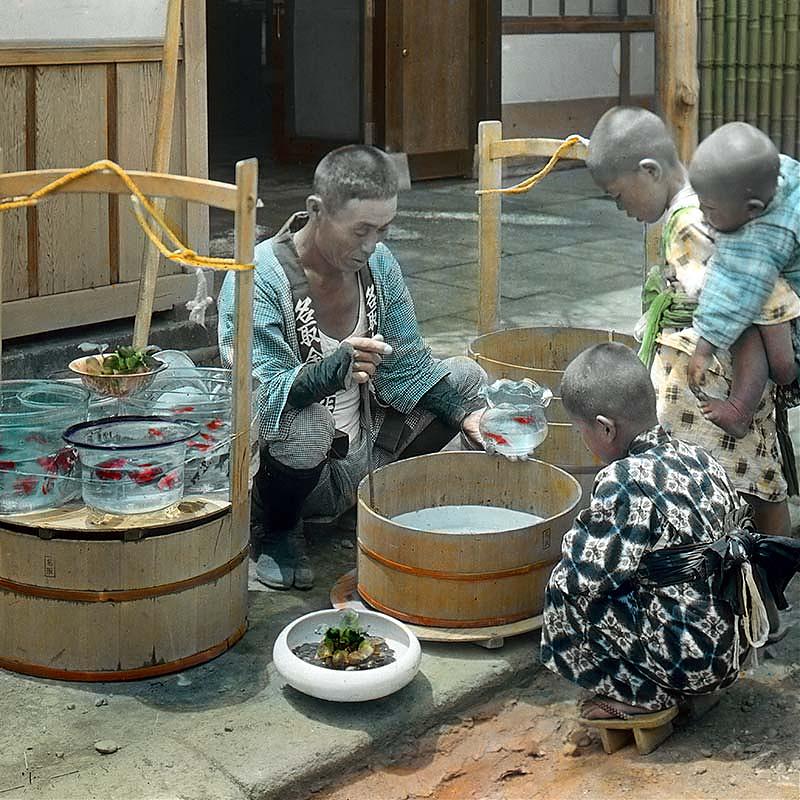
Children admiring the merchandise of a goldfish vendor. From the Edo period (1603–1867) on, street vendors were essential in daily life in Japan. They sold everything from vegetables to gold fish, fireflies and crickets. Even massages and medicine.

Three Japanese women in kimono are doing the laundry. The woman in front is washing clothes in a wooden tub, while the other two are spreading separated kimono on wooden boards. How do you wash a kimono?

A Japanese confectionery shop offering a wide variety of mouth-watering sweets. Notice the space in front of the display boxes. Customers sat here while being served.

Rickshaws on Tokyo’s Ginza avenue in the late 1870s. This intersection, now the location of the luxurious Wako store, was the information center of the Japanese empire.
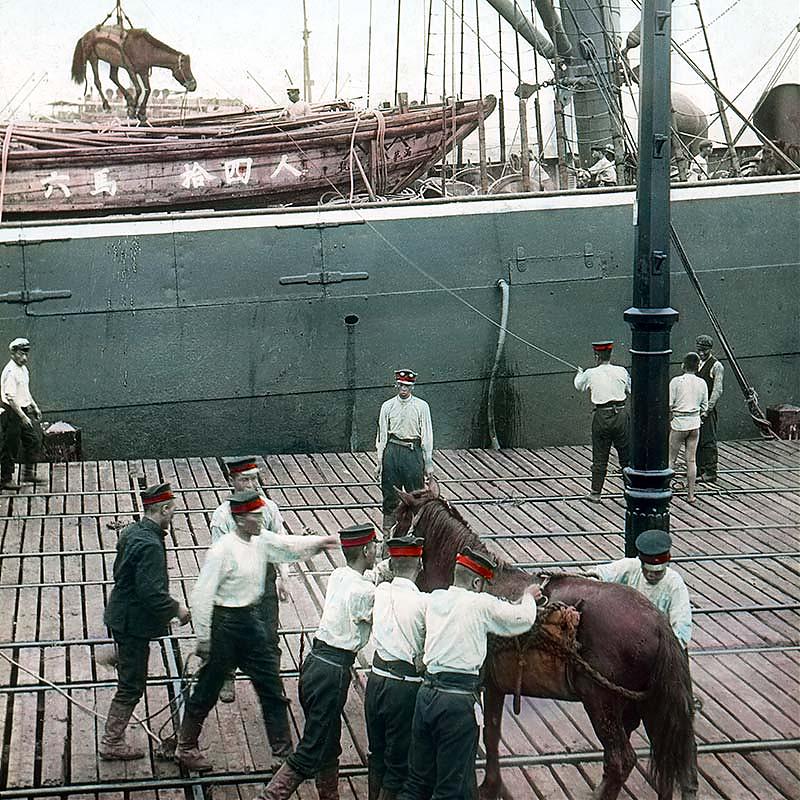
Imperial Japanese troops loading horses at Yokohama Port during the Russo-Japanese War (1904–05). Japan deployed some 223,000 horses during the conflict.