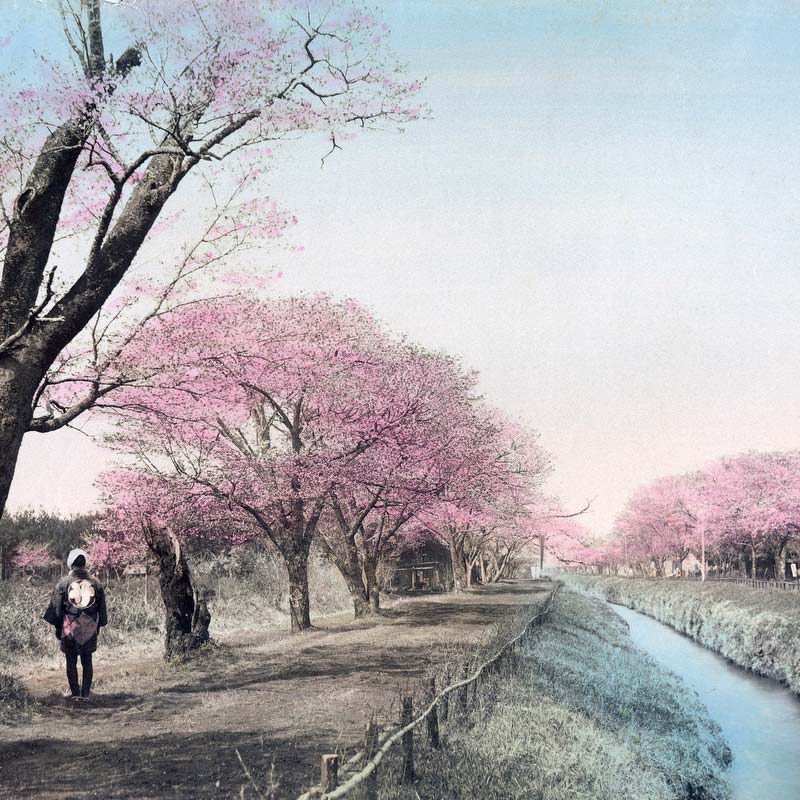
Tokyo 1890s
Koganei
Sakura (cherry blossom) along the Tamagawa Waterway (玉川上水) in Koganei, Tokyo. The stretch of about 4 kilometers of cherry trees was extremely popular for hanami (flower viewing).
Sakura (cherry blossom) along the Tamagawa Waterway (玉川上水) in Koganei, Tokyo. The stretch of about 4 kilometers of cherry trees was extremely popular for hanami (flower viewing).
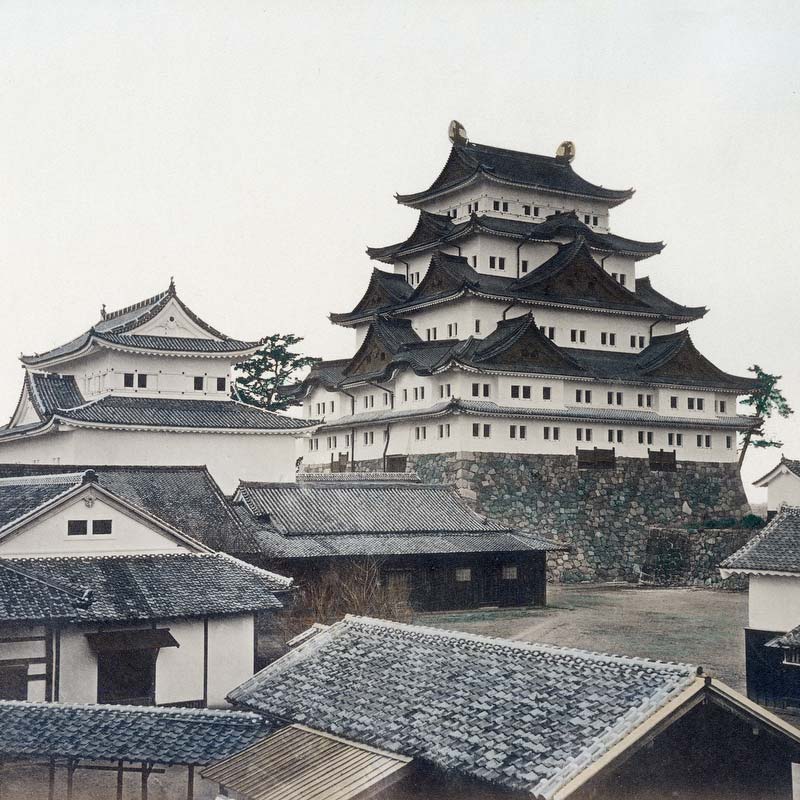
A valuable image of Nagoya Castle because it shows what the castle looked like during the Meiji Period (1868-1912), before many buildings were destroyed or torn down.

From the late 19th century on, Tokyo’s Asakusa Park was a park in the modern sense, an amusement park. This is where the masses went to enjoy themselves.

The Grand Hotel opened on August 16, 1873 (Meiji 6) and was soon considered the height of Western culture and elegance in Japan. It was located on the Bund and overlooked Yokohama Harbor.

Famed antique and art dealer Samurai Shokai (サムライ商会) at Honcho 1-20 in Yokohama, Kanagawa Prefecture. It sold silk, porcelain, lacquerware, jade, cloisonné, damascene and more.
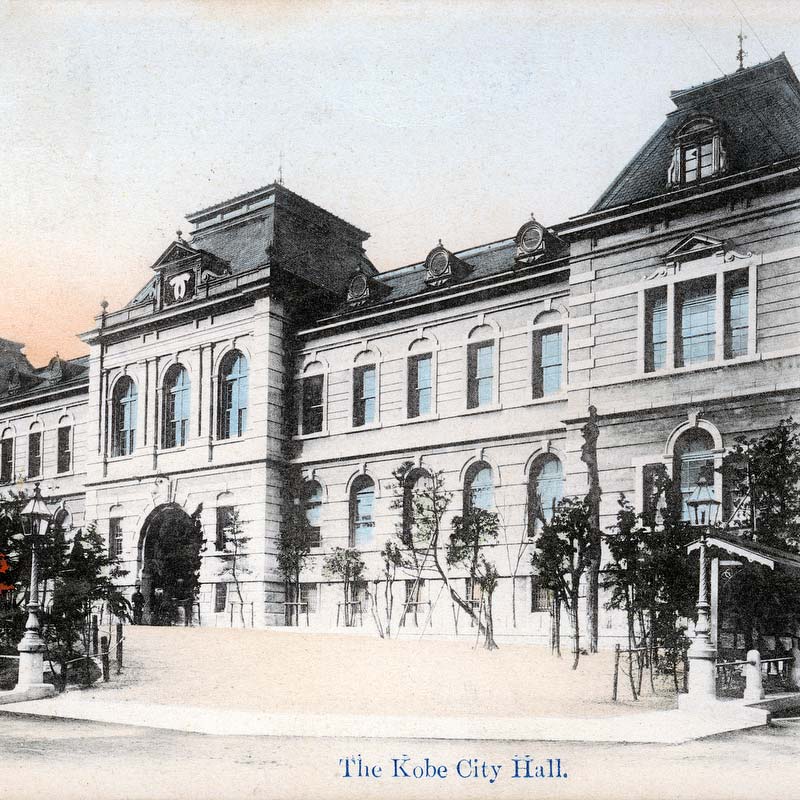
Kobe City Hall was located next to the Local District Court, on the former grounds of Hachinomiya Jinja, a shinto shrine. It was Kobe’s second City Office and completed in 1909 (Meiji 42).