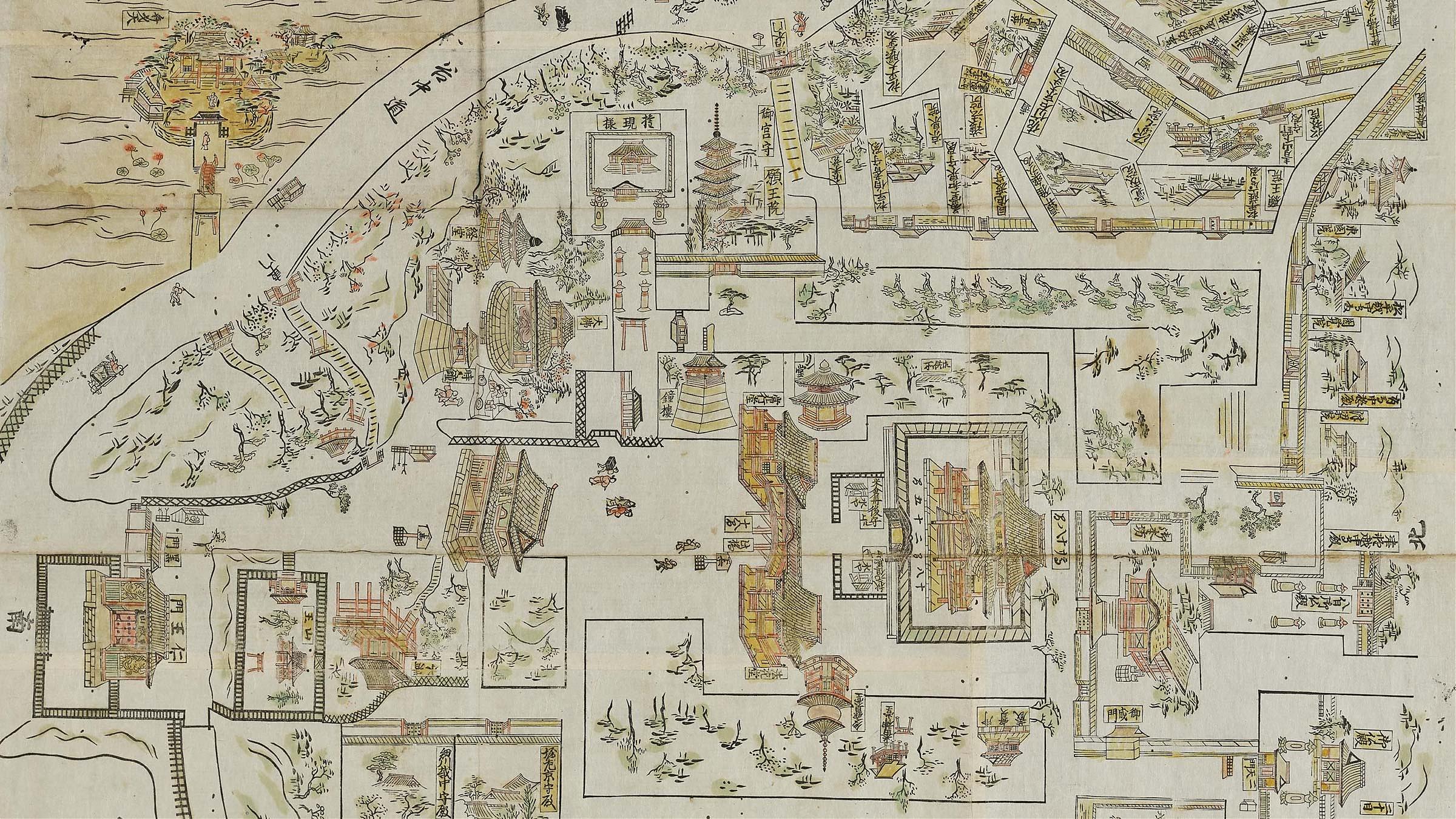
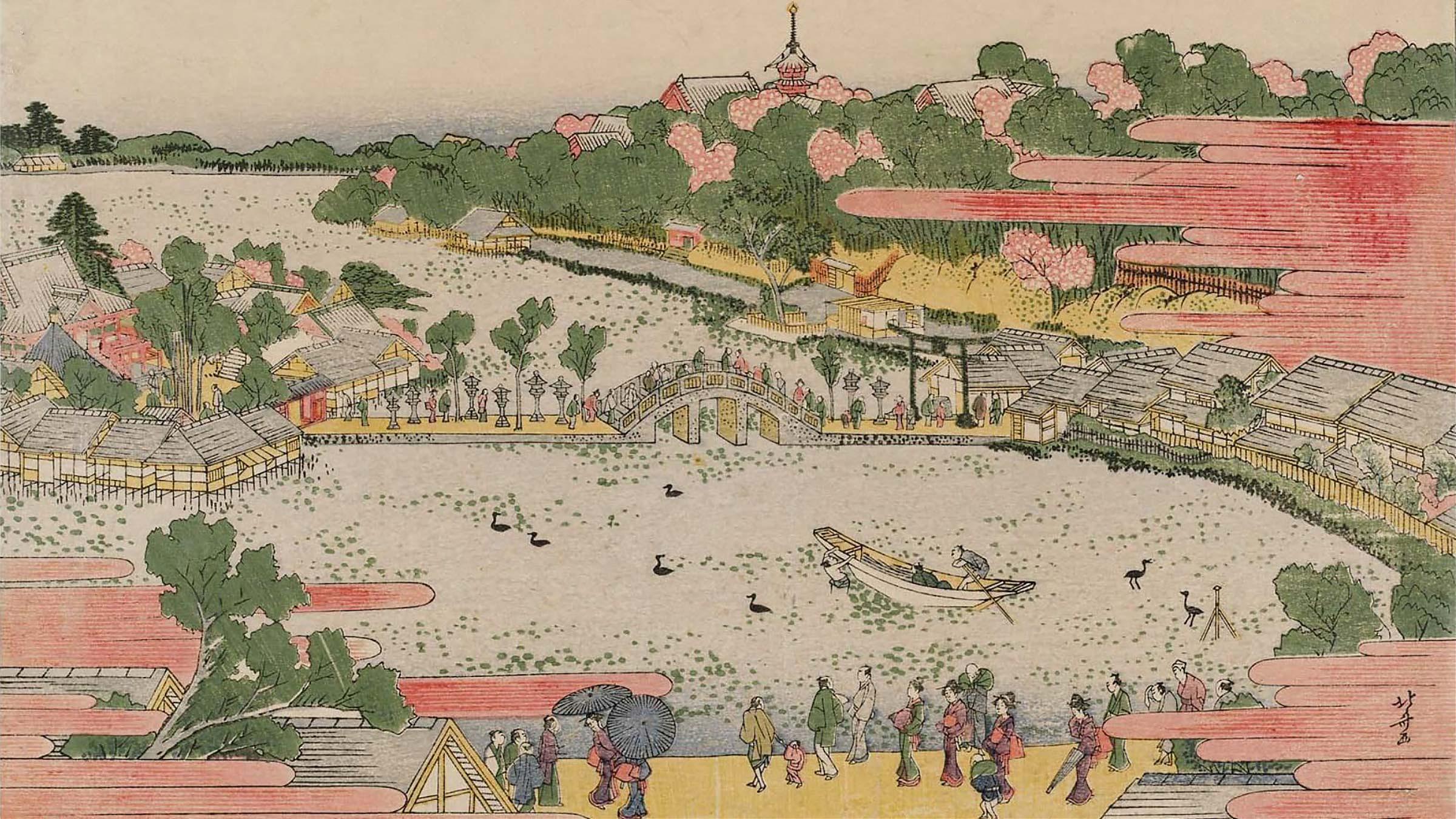
Benzaiten Hall (ca. 1811)
Benzaiten Hall (弁才天, far left) was completed around 1630 on an island built by daimyō Hori Naoyori. Teahouses around the hall offered a stunning view on Shinobazu Pond’s lotus flowers, and its numerous wild geese, herons, cormorants, and other birds. As it was a sacred pond, fishing or hunting wildlife was strictly forbidden.
Katsushika Hokusai, ca. 1811, woodblock print, ink and color on paper, 11.17585, MFA. Detail.
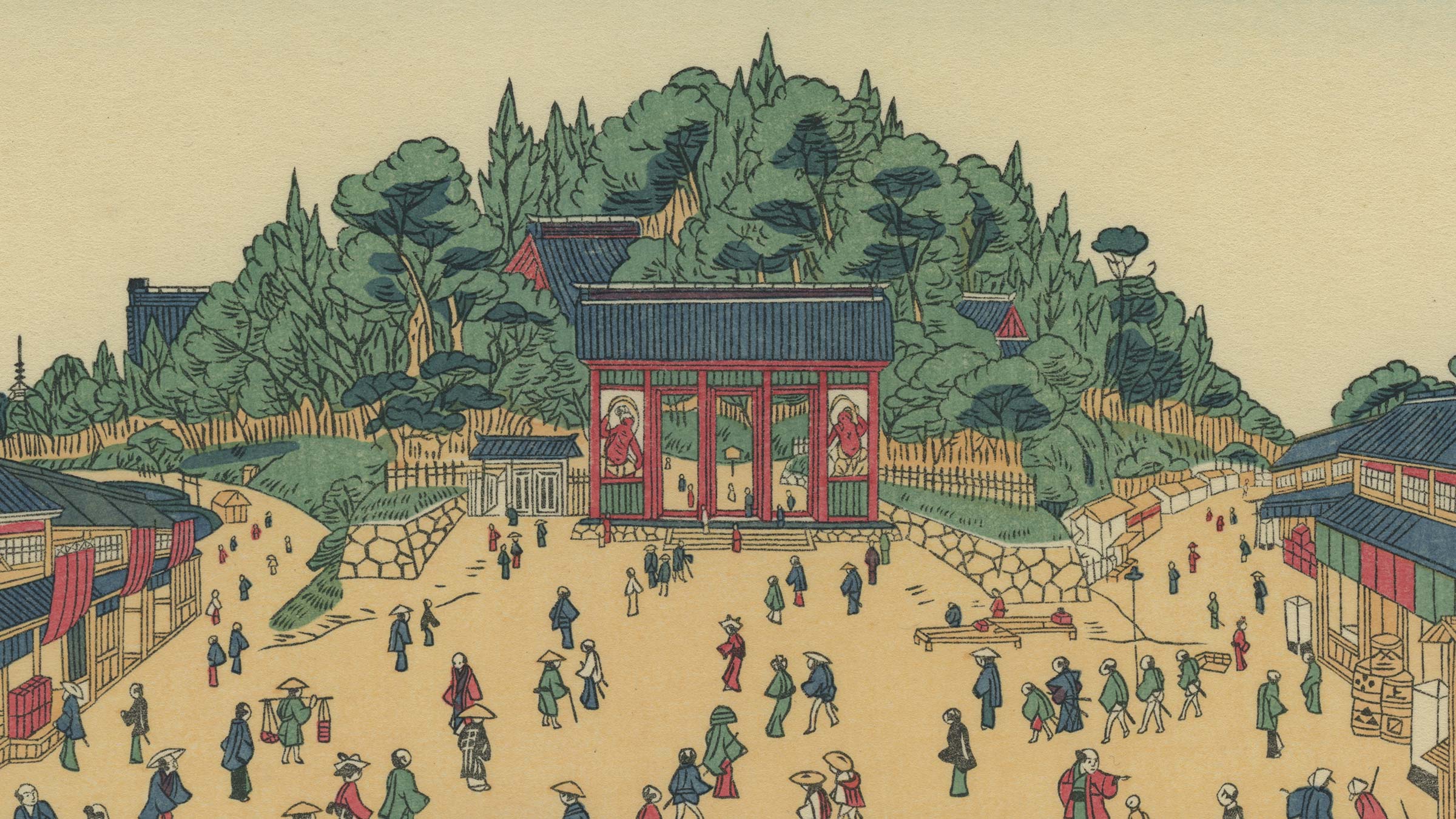
Niōmon Gate (ca. 1770)
Niōmon Gate (仁王門) was originally built in 1627. It faced Hirokōji, the great firebreak flanked by restaurants and shops. The gate was permanently lost in the Great Meiwa Fire of 1772.
Utagawa Toyoharu, 1770–1771, woodblock print, ink and color on paper, 江戸名所上野仁王門之図, Adachi Institute of Woodcut Prints reprint, 1969–1971, Duits Collection. Detail.
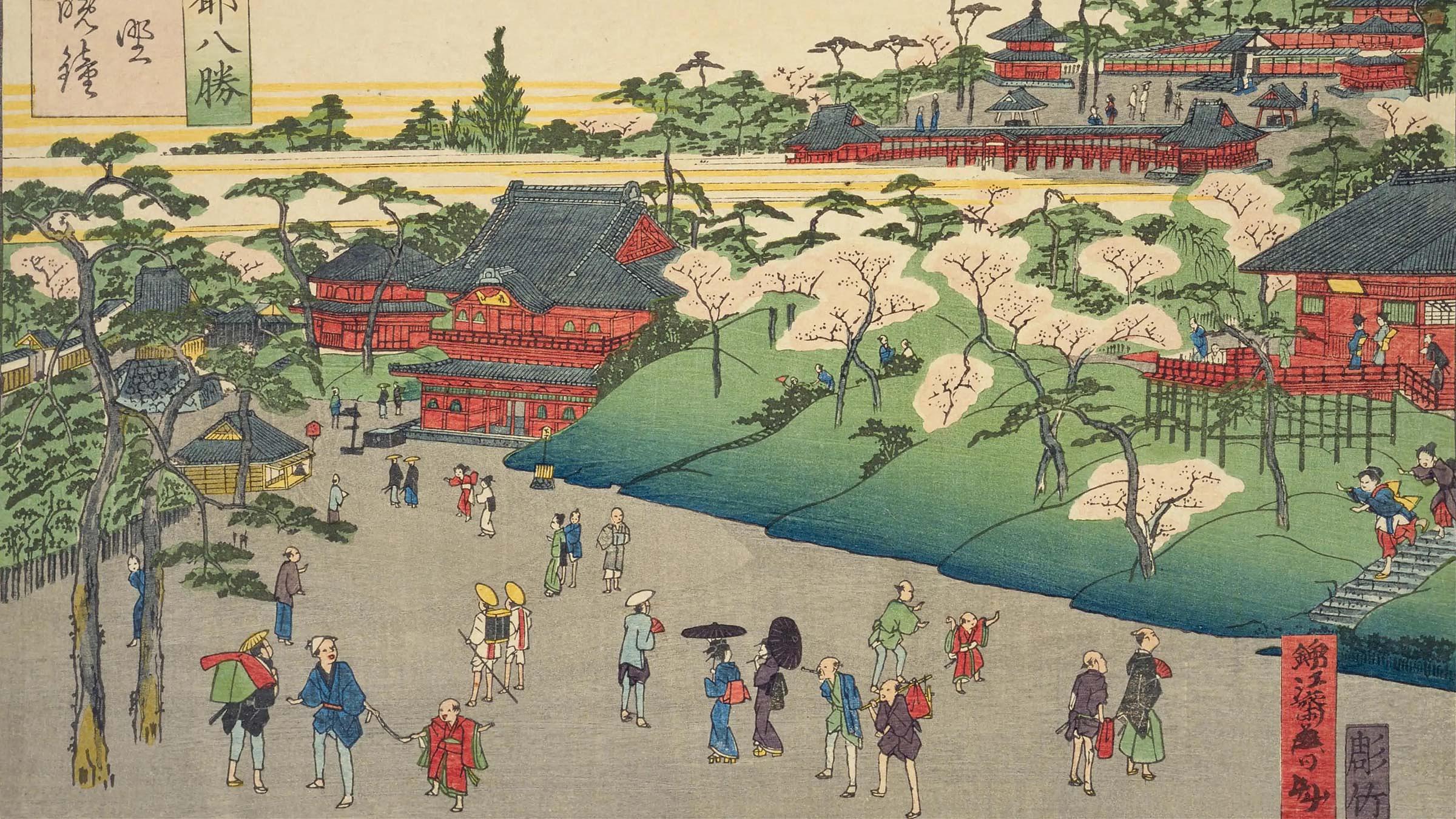
Toeizan Kan'ei-ji (ca. 1860)
A panoramic view on the Toeizan Kan’ei-ji temple complex (東叡山寛永寺) as seen from the entrance. Kiyomizu Kannon-dō is on the right. The Sanmon, the main gate, is in the middle. On its left is Ueno Daibutsu. Kan’ei-ji’s main hall is in the top right corner.
Kinkōsai Shunsō, ca. late 1850s–1860s, woodblock print, ink and color on paper, 東都八勝 上野晩鐘, 寄別1-9-1-8, National Diet Library. Detail.
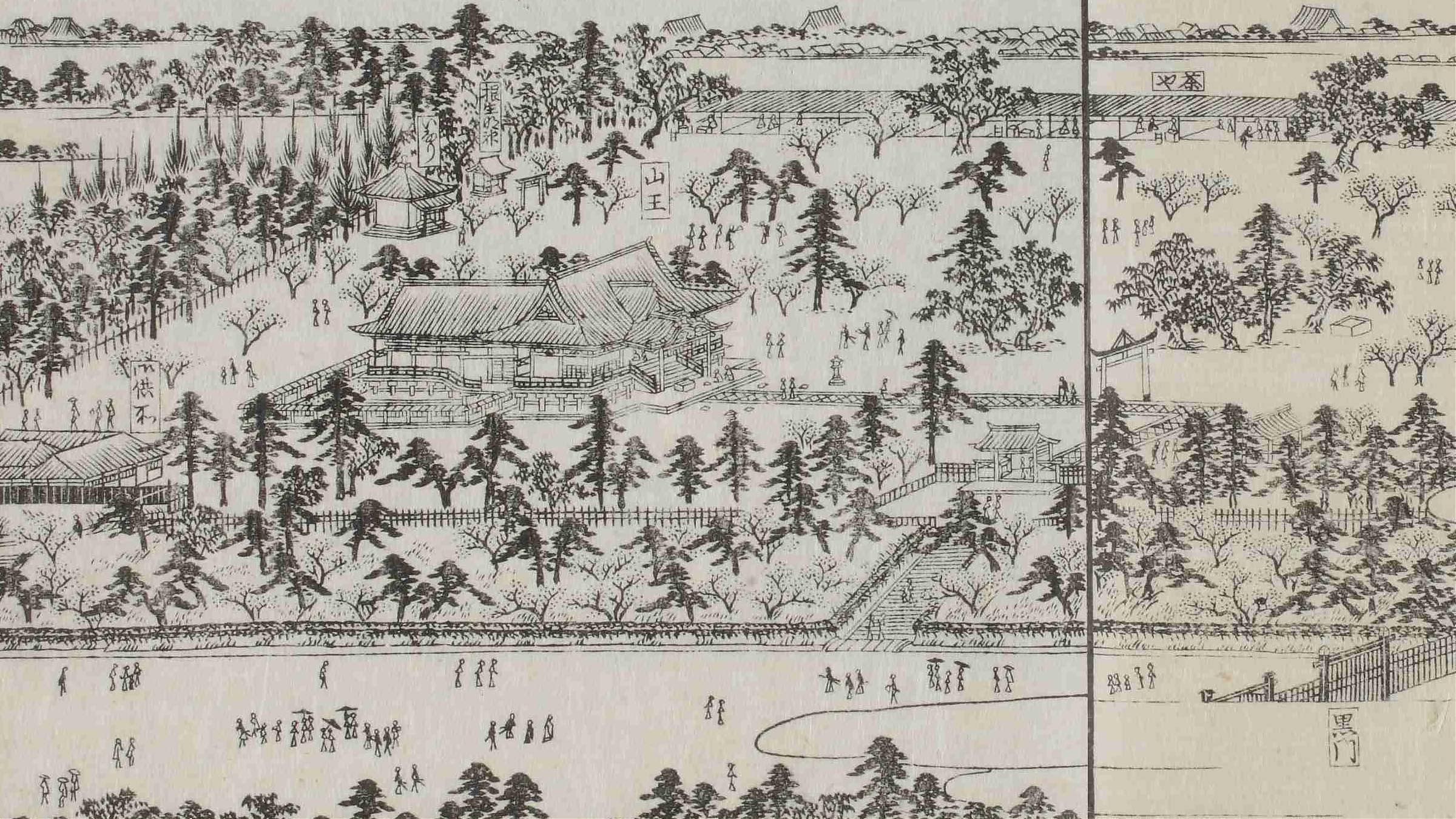
Sannoh Shrine (1836)
Sannoh Shrine (山王社) was first moved to Kan’ei-ji in 1637. It was moved to this location in 1698. Today, Saigō Takamori’s statue stands on this spot.
Hasegawa Settan, 1836, woodblock print, ink on paper, 江戸名所圖會 第5巻, KA256-14/KA00256-014, Tokyo Metropolitan Library. Detail.
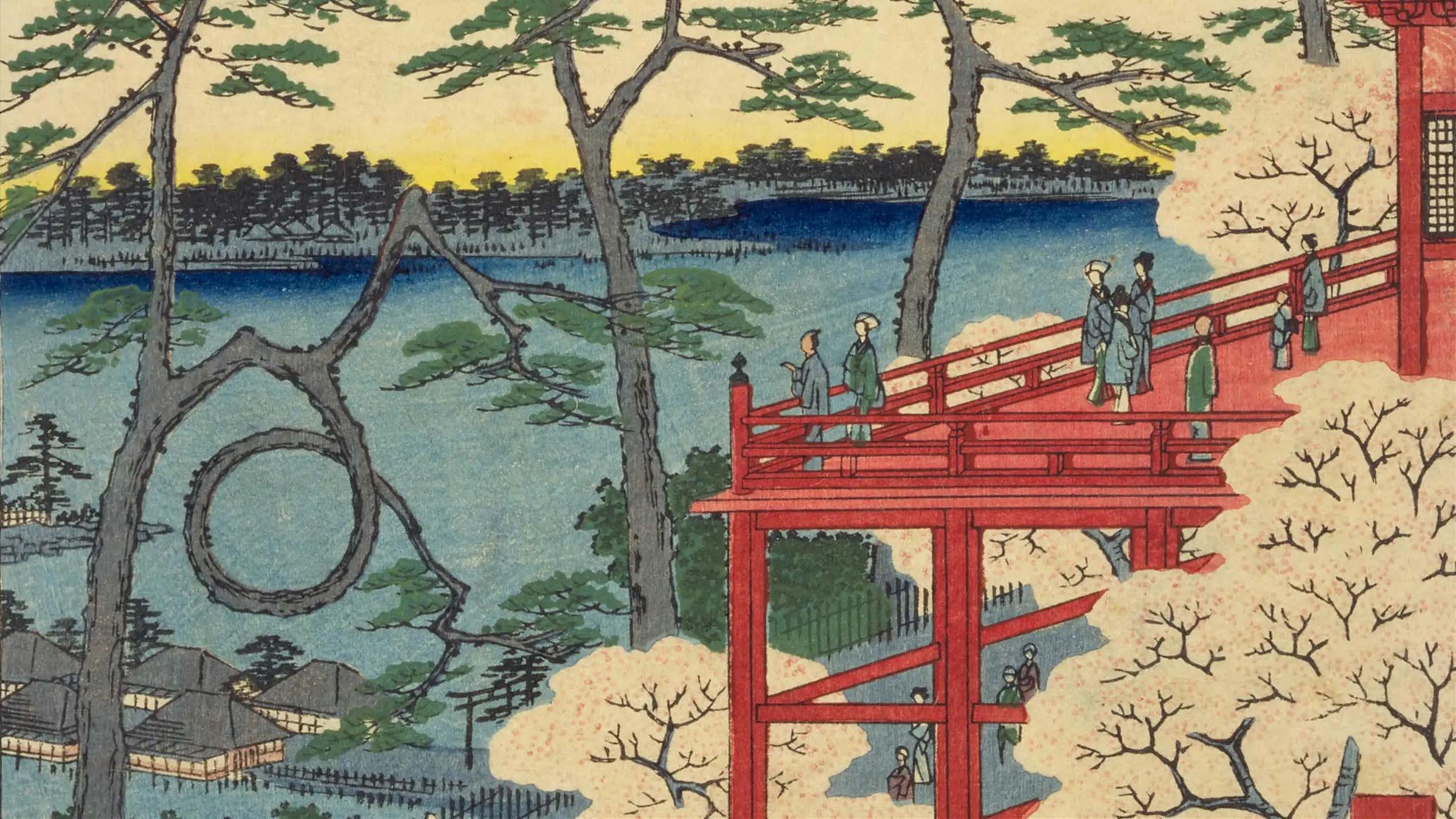
Kiyomizu Kannon-dō (1856)
Kiyomizu Kannon-dō (清水観音堂), modeled after Kyoto’s Kiyomizu-dera, was built in 1631, some 100 meters north of the spot on the map. In 1694, workers dismantled the temple and reassembled it at a spot overlooking Shinobazu Pond. It still stands today, the oldest surviving building in Ueno Park.
Utagawa Hiroshige, 1856, woodblock print, ink and color on paper, 名所江戸百景 上野清水堂不忍ノ池, 寄別1-8-2-1, National Diet Library. Detail.
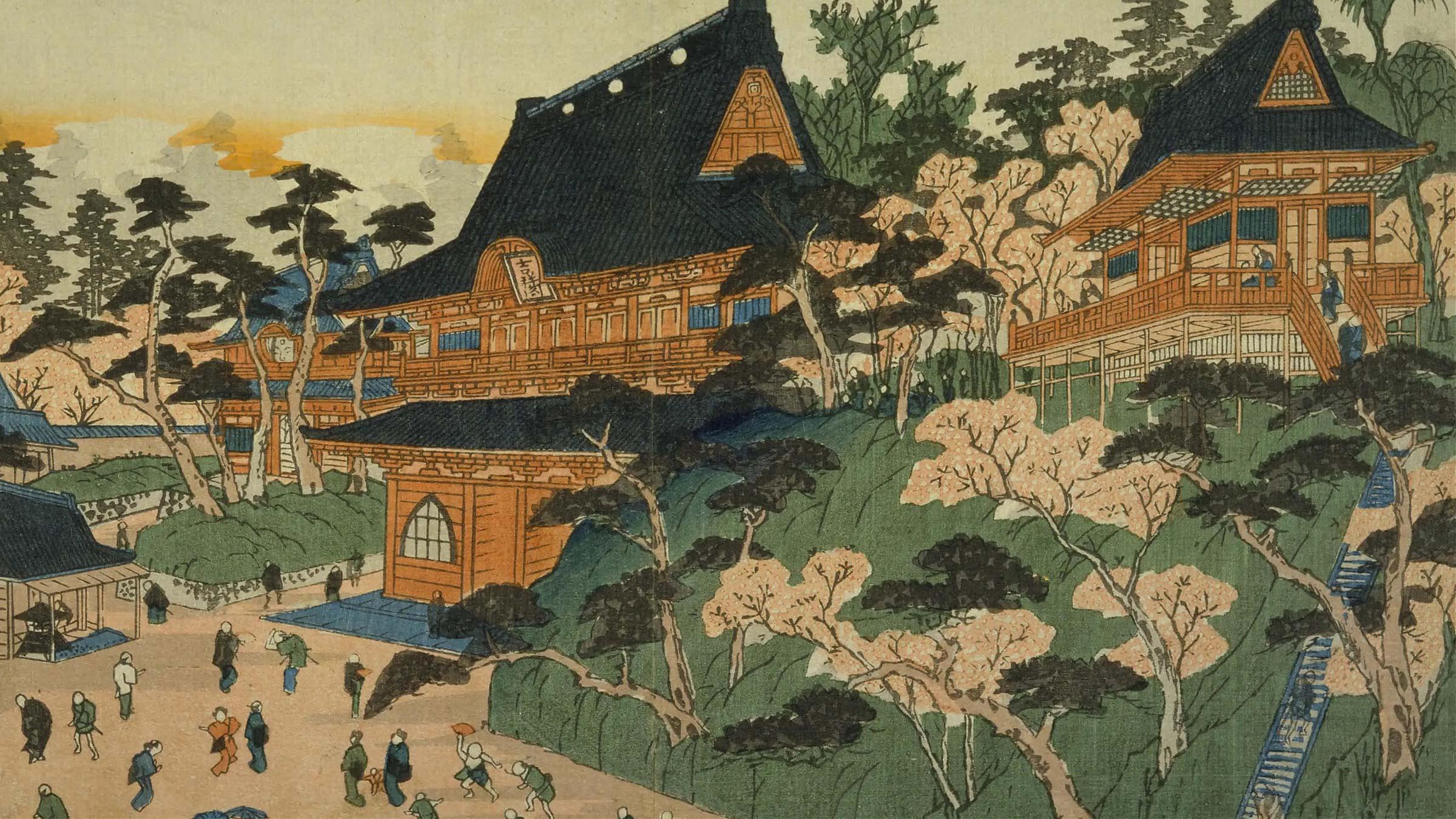
Sanmon Gate (ca. 1840s)
The Sanmon Gate (山門) was Kan’ei-ji’s main gate. A basic gate was erected around 1627 and rebuilt in 1633. The second story housed a statue of Monju Bosatsu, the Buddhist deity of wisdom. It also offered a magnificent panoramic view of the entire temple complex. Notice Kiyomizu Kannon-dō on the right.
Keisai Eisen, 1843–1847, woodblock print, ink and color on paper, 江戸八景 上野の晩鐘, 寄別2-2-2-6, National Diet Library. Detail.
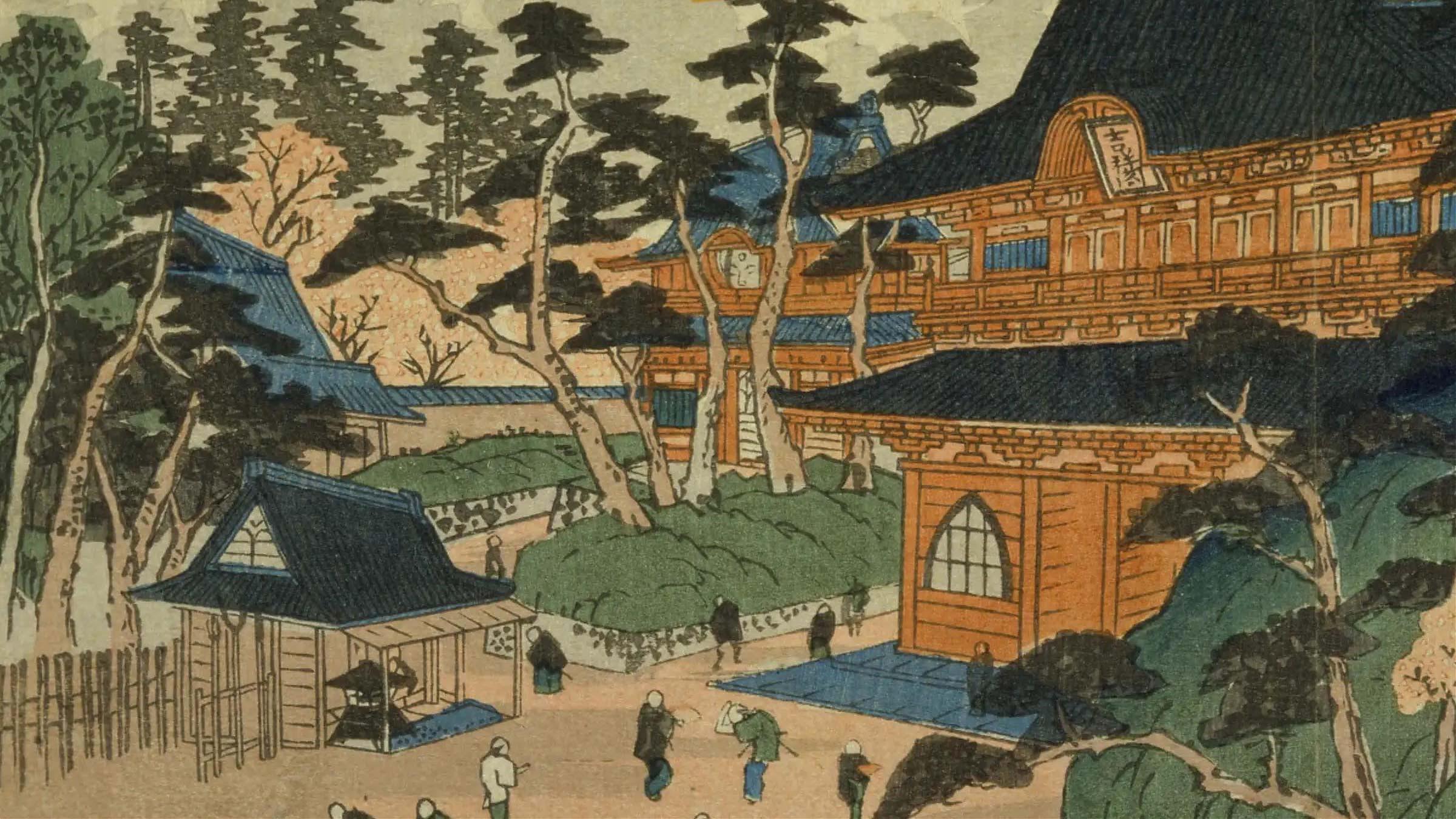
Ueno Daibutsu (ca. 1840s)
The daimyō Hori Naoyori built a 2.8-meter seated Buddha in 1631. After a 1647 earthquake destroyed it, it was replaced by a 3.6-meter statue (1655–1660). In 1698, a hall was raised around it, demolished around 1873–1875. The statue’s head fell off in the 1923 Great Kantō Earthquake, and most of its metal was confiscated during WWII. The face survives.
Keisai Eisen, 1843–1847, woodblock print, ink and color on paper, 江戸八景 上野の晩鐘, 寄別2-2-2-6, National Diet Library. Detail.
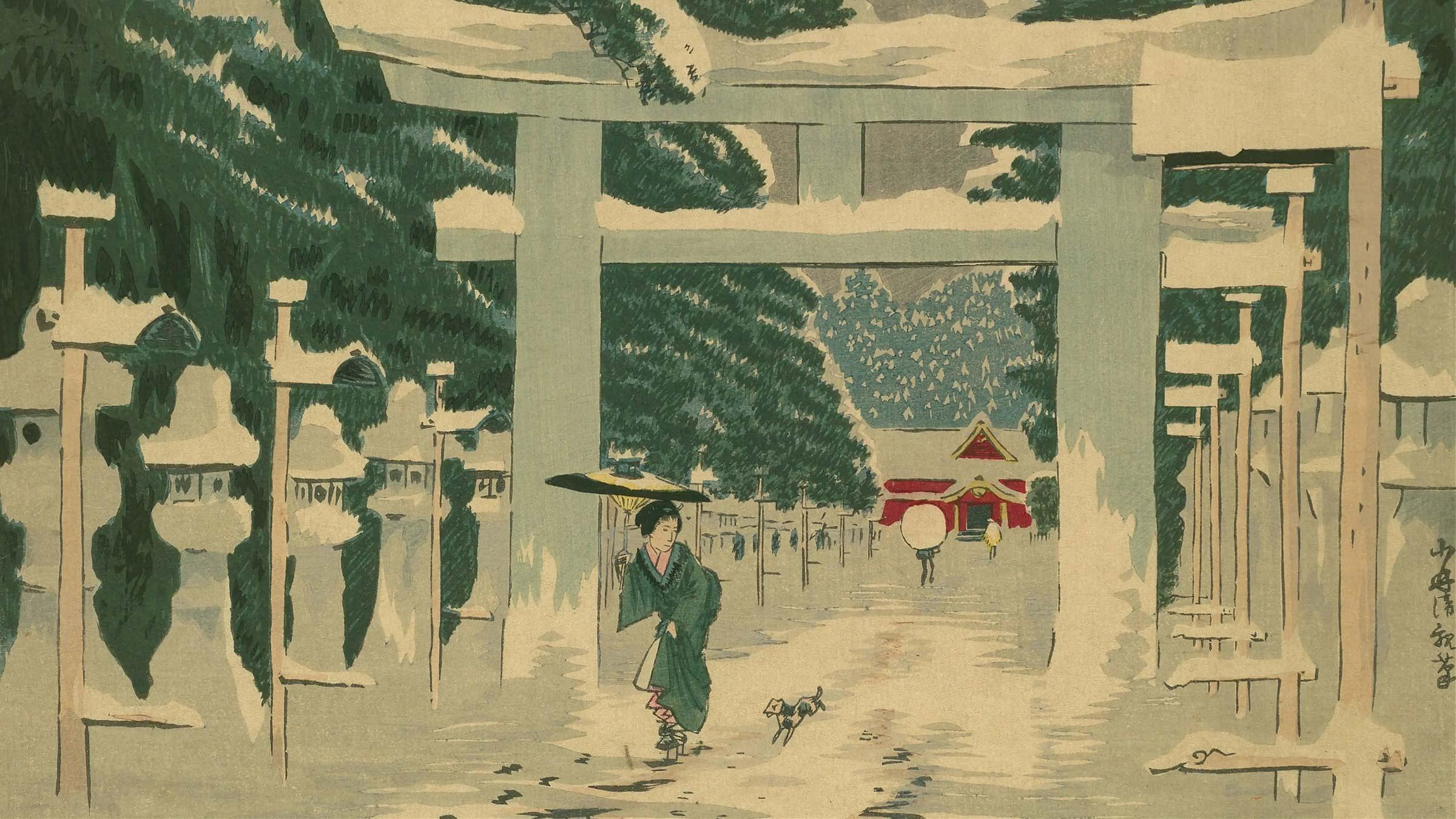
Ueno Tōshō-gū Entrance (ca. 1879)
Ueno Tōshō-gū (上野東照宮) was a high-status Tokugawa shrine closely tied to the ruling shogunate. Few ukiyoe exist of this shrine. The few that do exist tend to keep their distance.
Kobayashi Kiyochika, 1879, woodblock print, ink and color on paper, 上野東照宮積雪之図, 寄別1-9-2-3, National Diet Library. Detail.
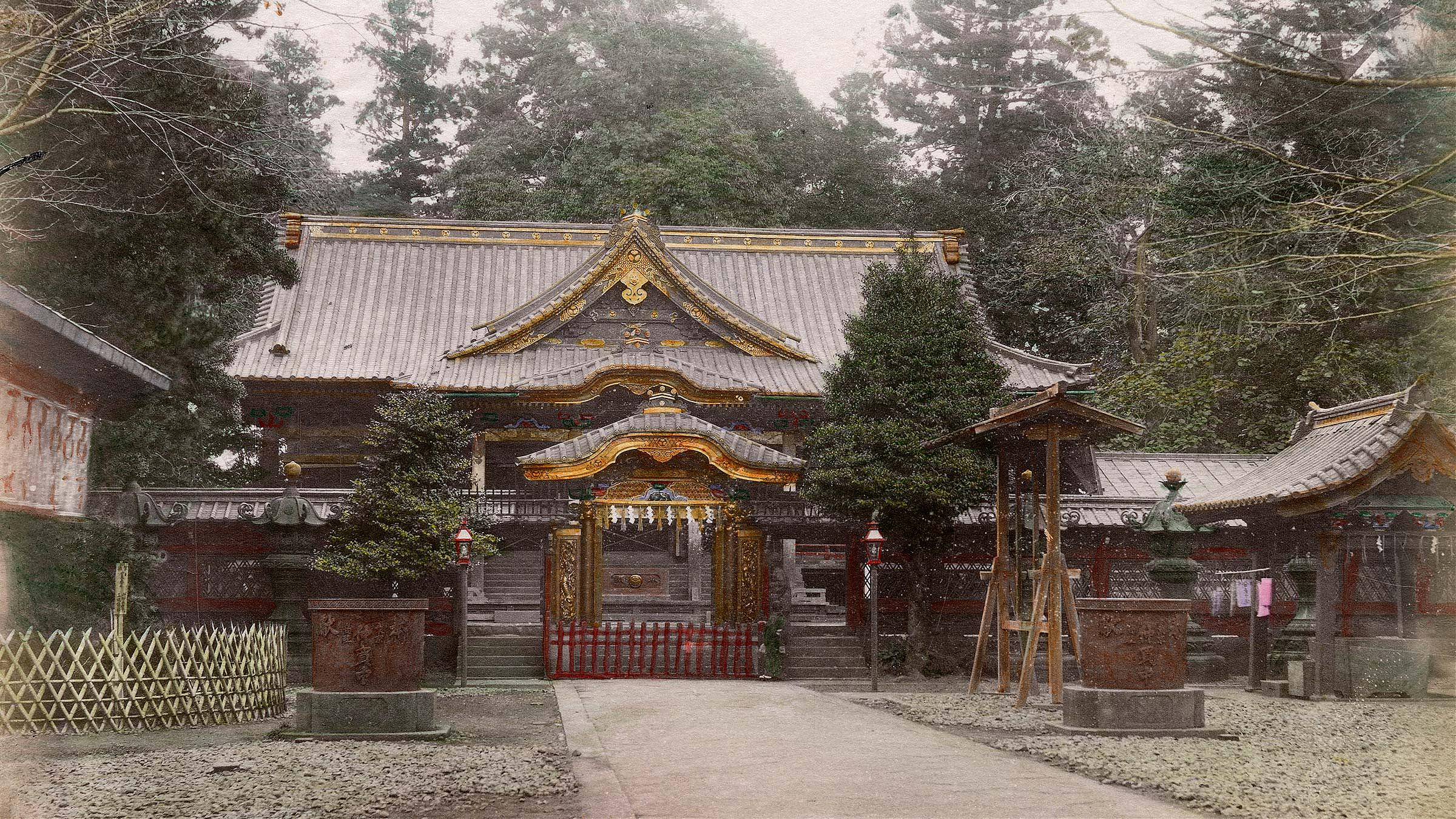
Ueno Tōshō-gū (ca. 1890s)
Daimyō Tōdō Takatora built Ueno Tōshō-gū (上野東照宮) in 1627 to venerate former Shogun Tokugawa Ieyasu. Third Tokugawa Shogun Iemitsu rebuilt the shrine on a grander scale in 1651. It is one of the few Kan’ei-ji structures that has survived.
Kozaburo Tamamura, 1890s, hand colored albumen print, Duits Collection. Detail.

Five-Storied Pagoda (ca. 1890s)
First built in 1631, this five-storied pagoda (五重塔) was rebuilt in 1639. Today, it stands inside Ueno Zoo.
Unattributed, 1890s, hand colored albumen print, Pump Park Collection. Detail.
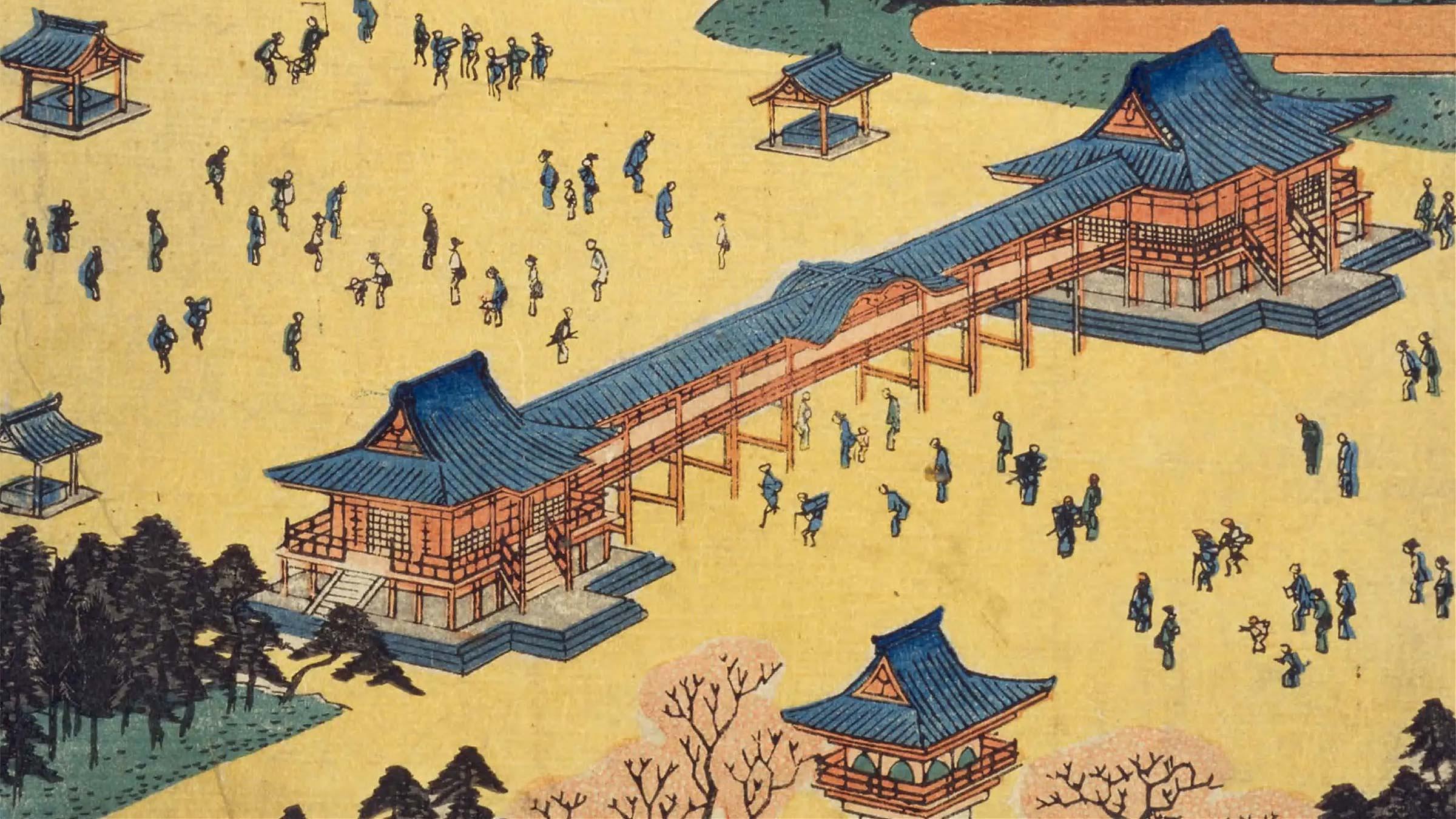
Niō-dō (ca. 1835)
The Niō-dō (二王堂) consisted of the Hokke-dō (法華堂, on the left) and Jōgyō-dō (常行堂), meditation and ascetic training halls linked by an elevated covered corridor. Visitors walked underneath.
Utagawa Hiroshige, ca. 1835, woodblock print, ink and color on paper, 東都名所 上野東叡山全図, 寄別1-9-2-8, National Diet Library. Detail.
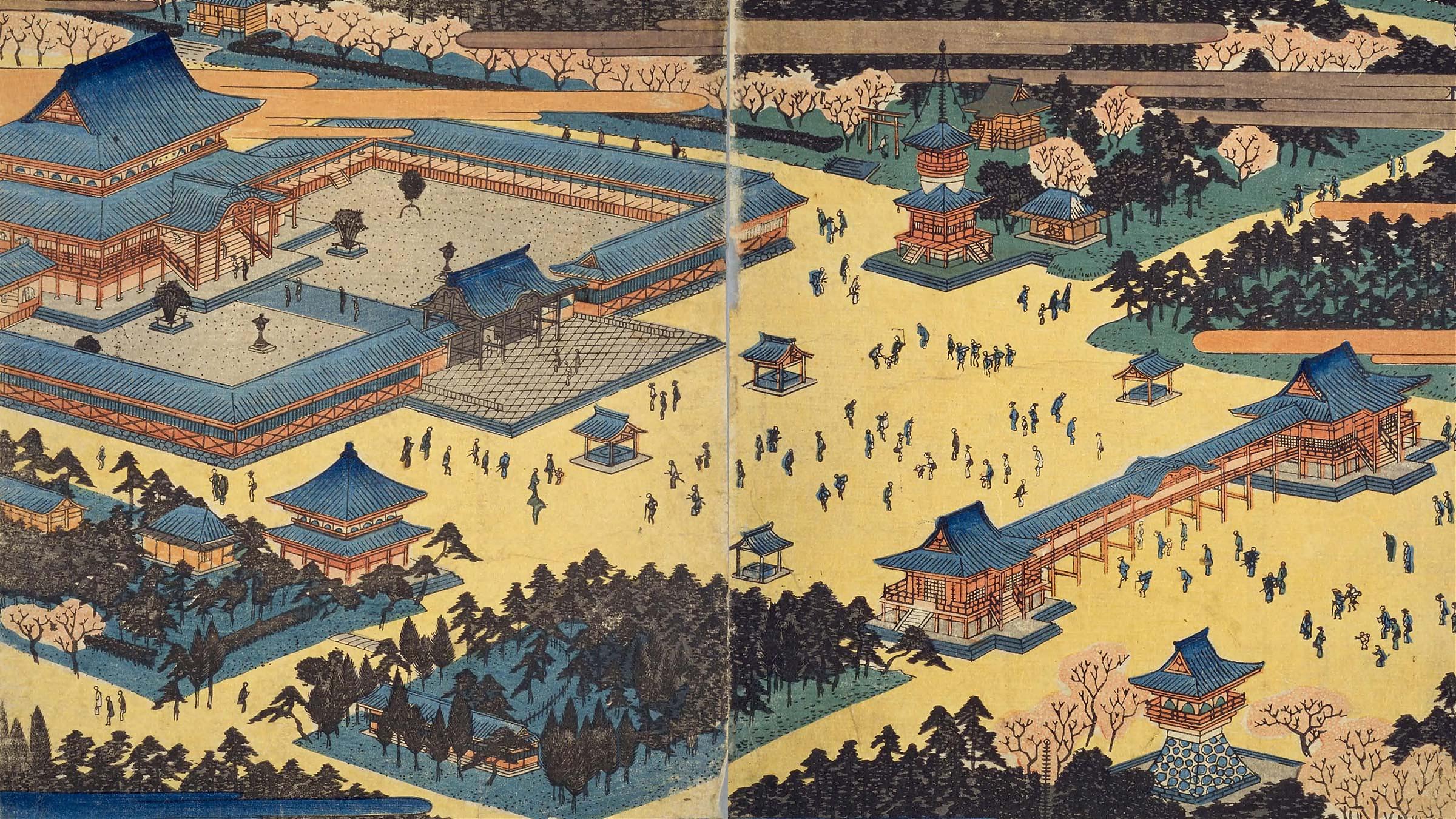
Kompon Chūdō (ca. 1835)
The Kompon Chūdō (根本中堂) was the central main hall and spiritual heart of Kan’ei-ji.
Utagawa Hiroshige, ca. 1835, woodblock print, ink and color on paper, 東都名所 上野東叡山全図, 寄別1-9-2-8, National Diet Library. Detail.